

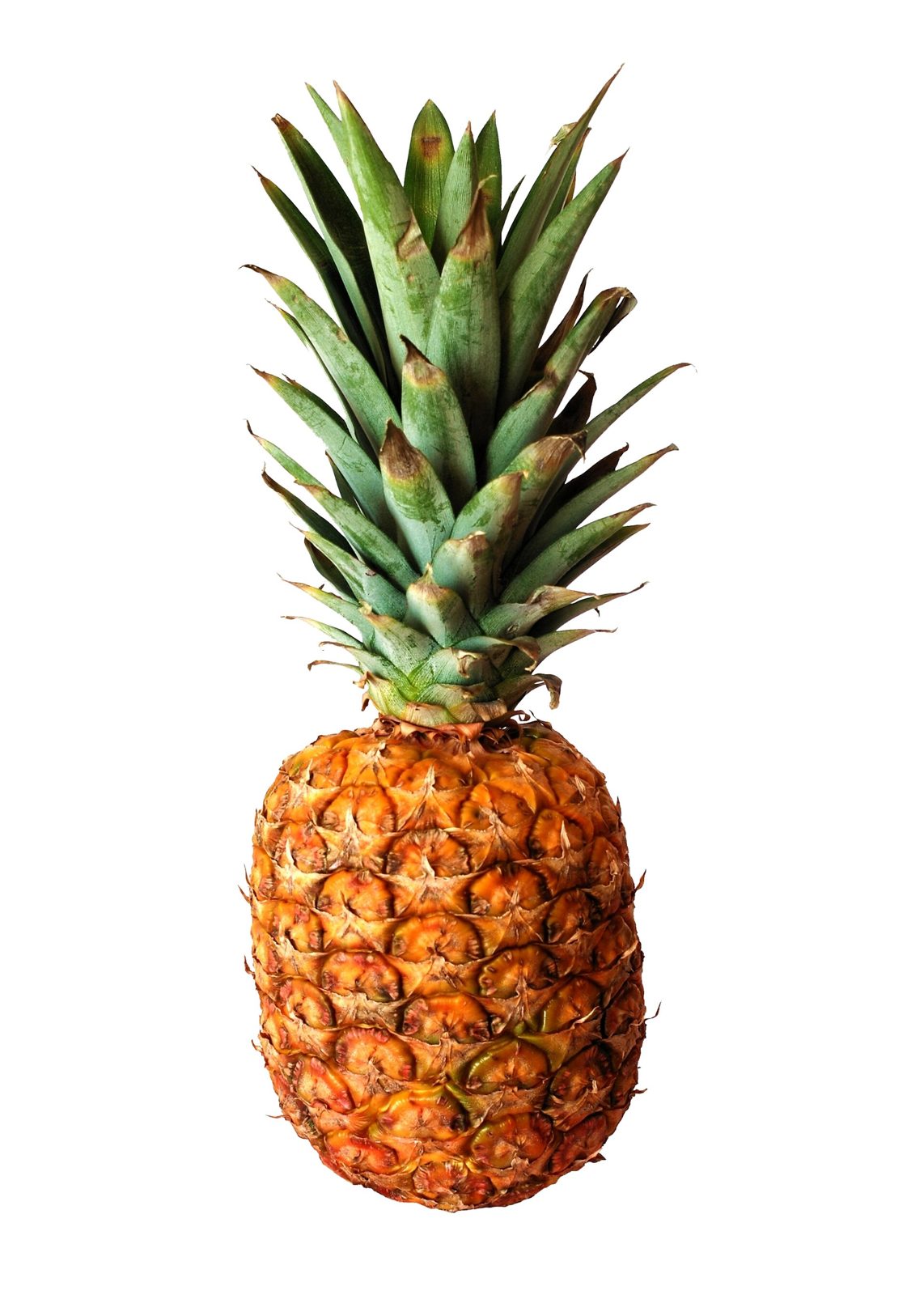
A pineapple is ripe when the peel has turned from green to yellow-green or yellow, the fruitlets (the “eyes”) have flattened, the base smells sweet and the fruit gives a dull, solid sound when you snap it with a finger. UF/IFAS says ripe fruit have a yellow-green to yellow peel and a pleasant aroma, and CRFG describes the sound. This guide covers each cue, when to pick fruit from your own plant and how to store it. If you grow your own, our pineapple plant guide covers how to get a plant that fruits.
How to tell if a pineapple is ripe: 4 cues
Use the cues together. No single one is enough, and the first two are the easiest to check.
Color
Eyes
Smell
Sound
Two more checks help. A ripe pineapple feels heavy for its size, and its flesh gives very slightly when you press the sides. Avoid fruit with soft, wet patches, mold, a leaking base or a sharp, fermented smell, which means it is past its best.
What the peel tells you
Peel color moves from the base upward, so check the bottom first. A fruit that is still green at the base has not started to ripen. A fruit that is yellow at the base and green higher up is partway there, and a fruit that is yellow-green to yellow all over is ready (UF/IFAS).
| What you see | What it means | What to do |
|---|---|---|
| Green all over, tight eyes, hollow sound | Immature (CRFG: a hollow thud means immaturity) | Pick another fruit, or leave it on the plant |
| Yellow at the base, green higher up | Ripening | Wait a few days, or use it soon |
| Yellow-green to yellow, flat eyes, sweet smell, dull sound | Ripe | Cut and eat, or pick it |
| Brown, soft, fermented smell | Past its best | Do not eat it |
Varieties differ in their shade. Natal Queen has golden yellow flesh and keeps well after ripening (CRFG), and Smooth Cayenne turns yellow to yellow-orange (CTAHR), so learn what yours should look like.
When to pick a pineapple from your own plant
Pineapples ripen slowly. UF/IFAS says the time from flower induction to harvest ranges from 5 to 7 months depending on variety, weather and cultural practices, and CTAHR gives 6 to 8 months in Hawaii. So mark the date the flower spike appears, and start looking about five months later.
- Watch the base. When the peel at the base begins to turn from green to yellow, the fruit is close.
- Check the eyes and the smell. Flat, glossy eyes and a sweet aroma at the base mean it is nearly there.
- Pick when the fruit is yellow-green to yellow. Cut the fruit from the plant with a sharp knife, leaving a short length of stalk.
- Ripen it indoors if needed. UF/IFAS says complete ripening may be allowed at room temperature, 78–82°F (26–28°C), before refrigeration.
- Keep the crown and the slips. The crown, and any slips under the fruit, are free planting material. Our guide on how to plant a pineapple top shows how to use them.
Keep a note of the dates. A year of records shows how long your plant takes from flower to fruit in your own climate.
Picking a ripe pineapple in a store
The same cues work in a store, with less information. Smell the base, look at the color and the eyes, lift it to feel the weight, and snap the side with a finger if the store allows. Skip fruit with soft spots, mold or a fermented smell. A bright, green crown does not by itself prove the fruit is ripe, so judge the fruit itself.
How to store a pineapple
- Whole fruit: CRFG says to store fruit at 45°F or above, for no longer than 4 to 6 weeks. UF/IFAS says complete ripening may be allowed at room temperature before refrigeration.
- Cut fruit: keep the pieces in an airtight container in the refrigerator, and use them within a few days. Our guide on how to cut a pineapple shows how to get the pieces out cleanly.
- To keep longer: freeze chunks on a tray, then pack them in a bag.
Common ripeness problems
- Fruit that stays green on the plant: UF/IFAS says time to harvest depends on variety, weather and cultural practices, and that shade reduces fruit quality, so give it more sun and more time.
- Fruit with a blotchy, scorched or flecked peel: UF/IFAS says chilling injury from near-freezing temperatures or light frosts can cause red and white flecked, scorched leaves and rotting pulp in the fruit. Protect the plant on cold nights.
- A plant that never fruits: it may not be mature yet. Our guide on why a pineapple plant is not flowering lists the causes.
Want to grow your own? Start with the pineapple plant guide. For another tropical fruit with its own ripeness cues, see our banana plant guide.
Frequently asked questions
How can you tell if a pineapple is ripe?
Check four things. UF/IFAS says ripe fruit have a yellow-green to yellow peel and a pleasant aroma, and that the individual fruitlets flatten as the fruit matures. CRFG says a good, ripe fruit has a dull, solid sound when snapped with a finger, and a hollow thud indicates an immature or poor-quality fruit.
Does a ripe pineapple have to be fully yellow?
Not necessarily. UF/IFAS describes the color change as green turning to yellow from the base to the top, so a ripe fruit may be yellow-green higher up. Judge the whole fruit, with the smell and the flattened eyes, rather than color alone.
When is a pineapple ready to pick from the plant?
UF/IFAS says a fruit is ready when the individual fruitlets flatten and the peel color begins to change from green to yellow, starting at the base. Fruit takes about 5 to 8 months from flowering to ripeness (UF/IFAS, CTAHR).
Will a pineapple ripen after you pick it?
UF/IFAS says complete ripening may be allowed at room temperature, 78–82°F (26–28°C), before the fruit goes into the refrigerator. Judge by the peel and smell rather than the date.
Does pulling a leaf from the crown tell you a pineapple is ripe?
It is a popular tip, but we do not rely on it. Use color, smell, the flattened eyes and the sound of the fruit instead.
How long does a whole pineapple keep?
CRFG says to store fruit at 45°F or above, for no longer than 4 to 6 weeks. Once you cut it, keep the pieces in an airtight container in the refrigerator and use them within a few days.
Sources
- Pineapple Growing in the Florida Home Landscape (HS7/MG055), UF/IFAS Extension
- Pineapple Cultivation in Hawaii (F&N-7), CTAHR, University of Hawaii at Manoa
- Pineapple Fruit Facts, California Rare Fruit Growers