

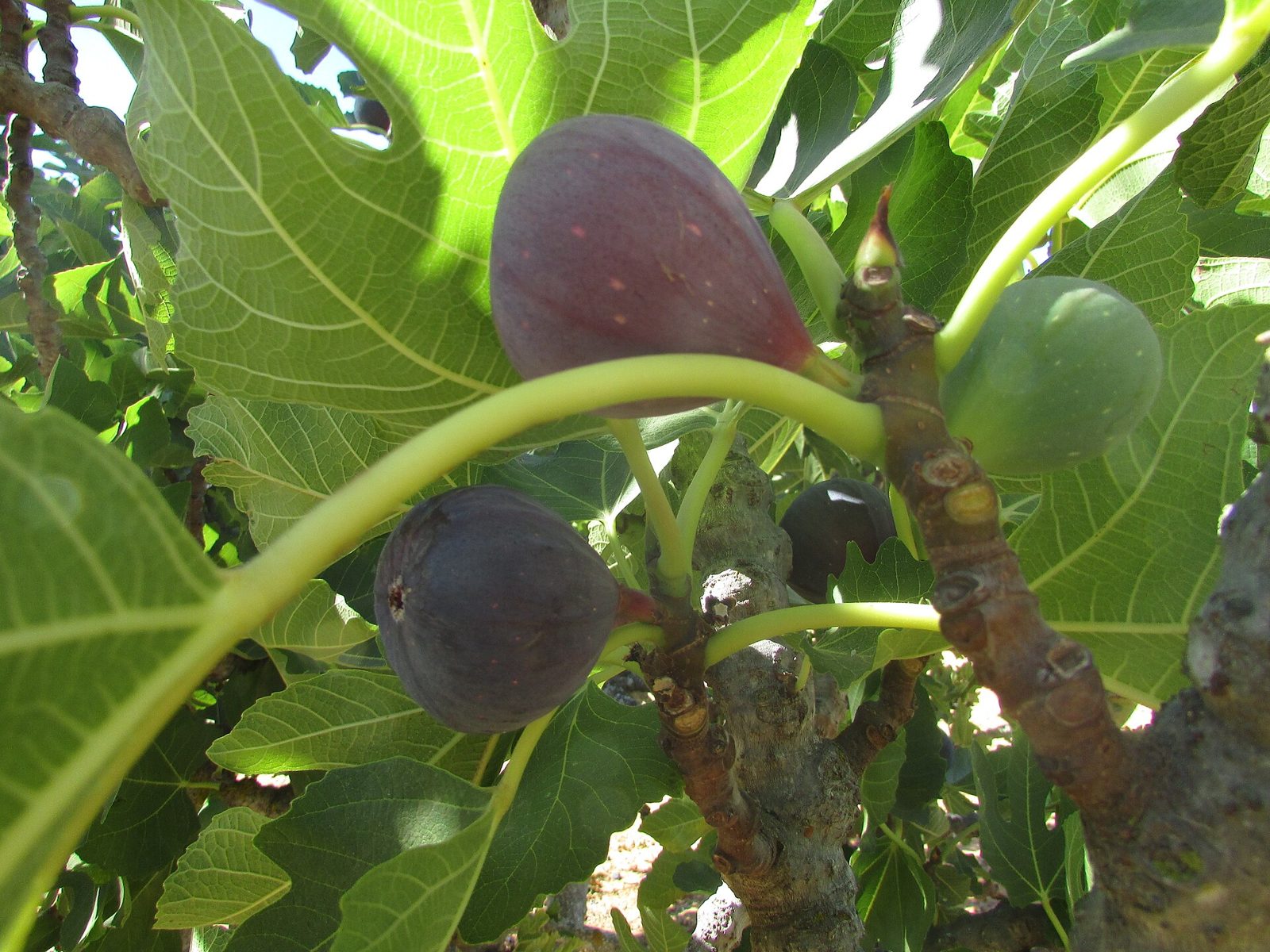
Yes, you can grow a fig tree in most of the US, but your winters decide how. In zones 8–11 a fig planted in the ground fruits reliably. In zones 5–7, grow a hardy variety such as Chicago Hardy: in a cold winter it dies back to the ground and regrows from the roots, or you can wrap it or keep it in a pot. Figs are an easy fruit tree. They want full sun and good drainage, and the common types need no second tree and no pollinator.
- USDA zones
- 8–11 in ground · hardy types 5–10 · any zone in a pot
- Sun
- Full sun · 8+ hours ideal, 6 minimum
- Water
- Moderate
- Difficulty
- Easy
- Lifecycle
- Perennial
- Origin
- Middle East
- Container friendly
- Yes, in a pot 18 in (45 cm) wide or more
- Time to fruit
- 1–3 yrs first figs · 3–4 yrs reliable crops
- Cold limit
- Dormant branches damaged near 15–20°F (−9 to −7°C)
- Pollination
- None needed for common types
Why grow a fig tree
Figs come from the Middle East and have been grown around the Mediterranean for a very long time. Italian immigrants carried their fig trees to the United States and developed the practice of trenching or burying them to get through cold winters (Penn State Extension), which is why you still find fig trees in backyards far north of the Mediterranean.
The best reason to grow your own is the fruit. Figs will not ripen once they are off the tree (Illinois Extension), and fresh ones keep only 2–3 days in the fridge (CRFG). That is why supermarket figs are so different from one picked ripe from your own tree and eaten the same day.
Fig varieties for US growers
Pick by winter first, flavor second. Cold hardiness decides whether a tree gives you figs every year or gets cut back to the ground, and the eye of the fruit decides whether it sours in humid weather. The table below uses extension and California Rare Fruit Growers descriptions.
| Variety | Best for | Size | Flavor | Eye / cold hardiness |
|---|---|---|---|---|
| Chicago Hardy | Cold winters · zones 5–10 (Iowa State) · can fruit in year one | 10–15 ft tall, 9–12 ft wide; can be kept at 6 ft | Ripe fruit deep purple or brown, yields slightly to the touch | Most cold-tolerant fig (Illinois) |
| Brown Turkey | Southeast and southern California · reported more cold hardy than many figs | Small, hardy, vigorous tree (CRFG) | Medium, purplish brown, pinkish amber flesh, good flavor, best fresh | Light breba crop |
| Celeste | Humid Southeast, Piedmont · fruit from early July in Florida | Small, productive, hardy tree (CRFG) | Small to medium, light violet to violet-brown, very sweet, usually dried | Closed eye (UF) · Clemson notes it can drop fruit in hot weather |
| Black Mission | All-round pick (CRFG) · fruit summer to winter (UF) | Very large tree; plant at maximum spacing (CRFG) | Large, black-purple, reddish-pink flesh, fairly good taste | Prolific brebas |
| Kadota | Hot, dry climates (CRFG) | Upright; needs annual pruning to slow growth (CRFG) | Medium-large, yellowish green, amber flesh, rich flavor | Open eye partly sealed with a honey-like substance (UF); CRFG says it resists souring |
| LSU Purple | Louisiana and the Gulf South · three crops a year (LSU) | — | Medium-small, glossy purple, amber-to-pink flesh | Closed eye (UF) |
Compare all six, including where each does best, in our fig varieties guide, or go straight to our two main pages: Chicago Hardy, the pick for cold winters, and Brown Turkey, the most popular fig in the southeastern US according to UF/IFAS.
Where to buy a fig tree
Buy a potted tree from a nursery in your own region, or from a plant sale run by your county extension office or a local fruit-growers club. Fig names are a mess. Clemson warns of considerable confusion over variety names, and the name “Brown Turkey” is used for different figs on the East and West Coasts, so a local nursery that sells what has been proven to grow near you is a safer bet than a random online listing. Check that the label gives the variety name, and ask whether the tree was grown in your zone.
Plant in spring after your last hard frost so the tree has a full warm season to settle in before its first winter. If you will grow it in a container, a fabric pot gives a fig’s roots air and drains well.
How to start a fig tree
For most gardeners the best route is a nursery plant. Here is how to get it off to a good start.
- Choose a variety for your winter. In zones 8–11 you can grow any fig in this guide. In zones 5–7 choose Chicago Hardy, or plan on a pot you can shelter.
- Buy a healthy, labeled plant. Look for a named variety and a firm, well-rooted plant with no wilting or dead tips.
- Plant after the last hard frost. Set it at the same depth it grew in its nursery pot, backfill, firm gently and water it in.
- Mulch and water. Spread mulch over the roots and keep the soil evenly moist while the tree establishes.
- Be patient. Expect a few figs in 1–3 years and reliable crops after 3–4 years (Clemson).
Planting a fig tree
In the ground. Figs perform best in full sun (UF/IFAS). Eight hours a day or more is ideal, and Clemson, Penn State and Iowa State all recommend at least 8, while LSU says at least 6. Choose a spot with well-drained soil. Penn State recommends slightly acidic soil, with a pH of 6.0–6.5. Give the tree room for its mature width: Chicago Hardy spreads 9–12 ft (2.7–3.7 m), and the California Rare Fruit Growers say to plant Black Mission at maximum spacing because it is a very large tree. A spot against a south- or west-facing wall gives extra warmth in cold zones.
In a container. Penn State recommends large pots, at least 18 inches (45 cm) in diameter, filled with a sterile potting mix and compost or other organic matter. A pot lets you move the tree into shelter for winter in any zone. Our fig tree in a pot guide covers pot sizes, watering and pruning.
Fig tree care
Water
Feed
Prune
Overwinter
Common figs need no pollination. UF/IFAS says the cultivars recommended for Florida belong to the common types and are parthenocarpic, meaning the fruit develops without pollination. One tree is enough, and no fig wasp is needed.
Common fig tree problems
Harvesting and eating figs
Pick figs only when they are fully ripe, because they will not ripen off the tree. Penn State gives four signs: the fig changes color, softens, its stem bends downward and the eye (the small opening at the bottom) opens. Fresh figs keep for only 2–3 days in the fridge (CRFG), so pick what you will eat. Wear gloves when you pick if the milky sap bothers your skin.
Learn the signs in how to tell if a fig is ripe, then see how to eat a fig for ways to use a good harvest. Want a fig in a smaller space? Read about a fig tree in a pot. For more fruit that likes dry summers and mild winters, browse the Mediterranean fruit section.
Frequently asked questions
How cold can a fig tree get?
UF/IFAS puts fully dormant trees at about 15–20°F (−9 to −7°C) before the branches are damaged, and the California Rare Fruit Growers put it at 12–15°F (−11 to −9°C). A tree in active growth can be hurt near 30°F (−1°C). The roots of hardy varieties survive much colder and resprout in spring.
Can I grow a fig tree in zone 5, 6 or 7?
Yes, with a hardy variety such as Chicago Hardy, which Iowa State lists for zones 5–10. In cold winters the top dies back to the ground and the tree regrows from the roots, or you can wrap it, bury it or grow it in a pot and shelter it. Iowa State notes that in zone 5a a fig may not always overwinter.
Do you need two fig trees to get fruit?
No. The common-type figs sold for US gardens are parthenocarpic, which means the fruit develops without pollination (UF/IFAS). You do not need a second tree, and you do not need a fig wasp.
How long does a fig tree take to fruit?
A nursery tree can set a few figs in 1–3 years, but Clemson says young figs may take 3–4 years before they bear reliable crops. Chicago Hardy can fruit in its first year, according to Illinois Extension.
When should I prune a fig tree?
For most US gardeners, prune in late winter before growth starts. In warm zones you can also lightly prune after harvest. UF/IFAS and the California Rare Fruit Growers recommend pruning after harvest, while Clemson recommends winter. Prune lightly on varieties that bear a breba crop, because brebas form on last year's wood.
Why are my figs sour or splitting?
Sour, fermented figs come from insects entering the open eye of the fruit. Clemson says the only control is to grow varieties with a tight or closed eye. Rain during fruit development and ripening can also split the fruit (CRFG).
Sources
- The Fig (HS27/MG214), UF/IFAS Extension
- Fig Fruit Facts, California Rare Fruit Growers
- Figs: How to Grow and Care for Figs in South Carolina, Clemson Cooperative Extension HGIC
- Figs in the Home Garden, Penn State Extension
- Winterizing Your Fig Tree, Penn State Extension
- Go Figure: Figs Are a Great Addition to Home Gardens, University of Illinois Extension
- Growing Hardy Figs in Iowa, Iowa State University Extension
 Pomegranate
 Olive
 Persimmon
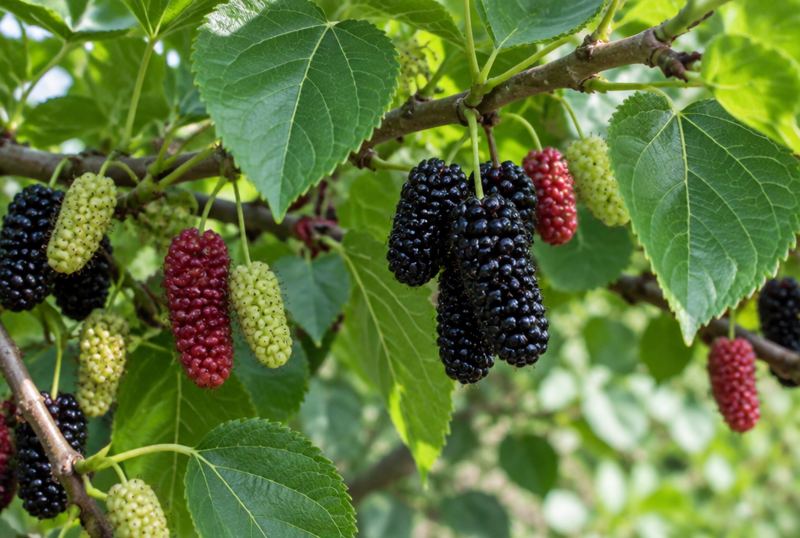 Mulberry