

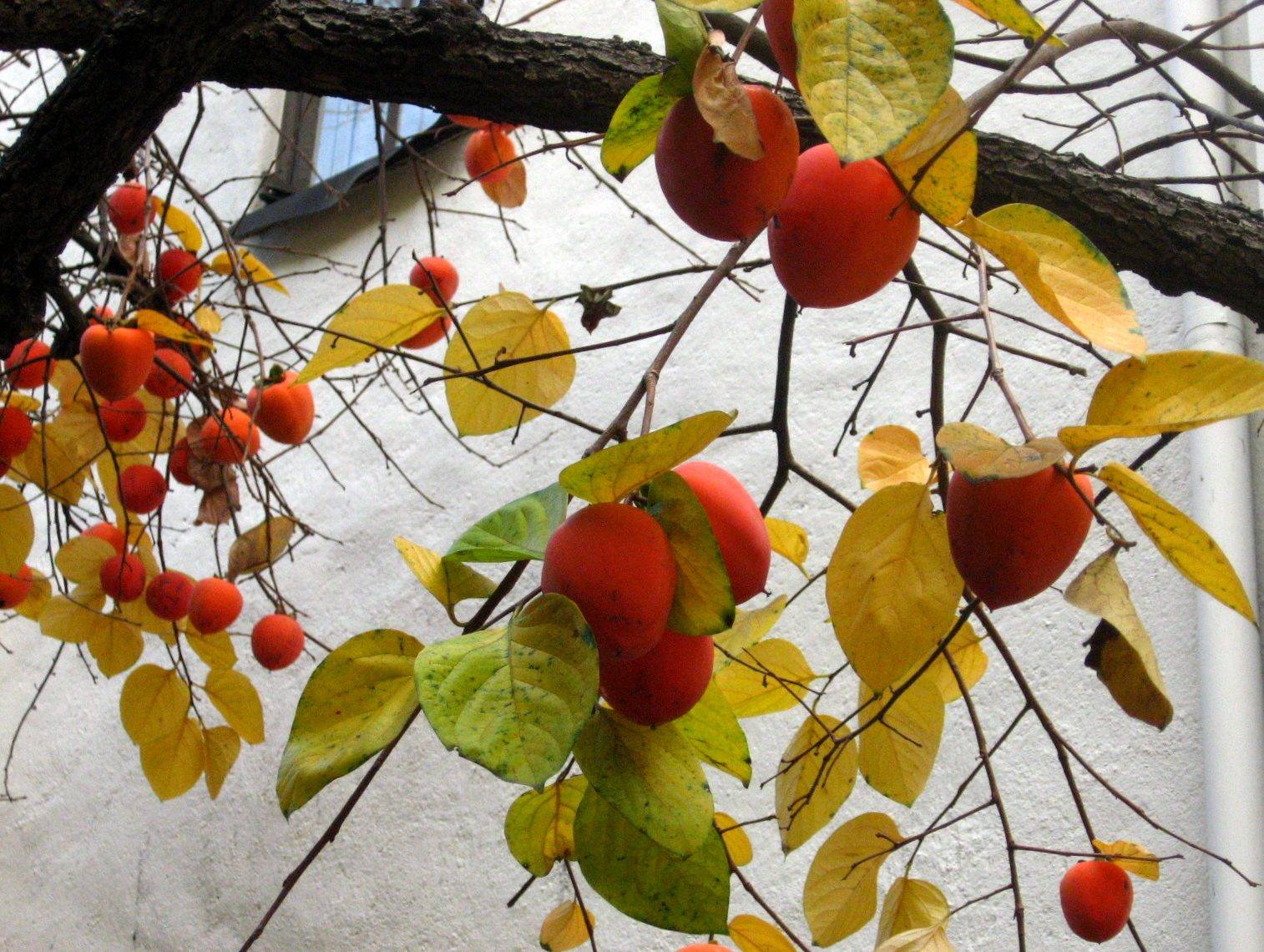
Yes, you can grow a persimmon tree across much of the US: Asian persimmons in zones 7–10, and the native American persimmon as far north as zone 4. It is a deciduous tree that wants full sun and good drainage, and most trees need little fertilizer (CRFG). A tree starts bearing at about 3 years and keeps improving for 8–10 years. The one thing to settle before you buy is astringent or non-astringent, because it decides how you eat the fruit.
- USDA zones
- 7–10 for Asian types (CRFG) · 4B–9B for American persimmon (UF/IFAS)
- Sun
- Full sun, with some air movement inland (CRFG)
- Water
- Moderate
- Difficulty
- Easy
- Lifecycle
- Perennial
- Origin
- Asia
- Container friendly
- Yes, in a large pot
- Time to fruit
- About 3 yrs · full production at 8–10 yrs
- Cold limit
- Dormant Asian trees about 0–10°F · growth killed at 26°F
- Chill
- About 100–200 hours below 45°F (UF/IFAS)
- Pollination
- Many Asian types set seedless fruit without it
- Mature size
- Some reach 30 ft tall and 15–25 ft wide (LSU)
Why grow a persimmon tree
A persimmon gives you something shop fruit rarely does: fruit that ripens in autumn on a tree that colors up as the season turns. In the Hachiya picture above, the orange fruit hangs among yellowing leaves. You choose the variety, so you choose whether to eat it firm or soft.
Be realistic about the wait. It takes about 3 years for a tree to fruit and 8–10 years to reach its full potential (LSU AgCenter), and UF/IFAS agrees on bearing by year 3 and full production in 8–10 years. A tree can reach 30 ft tall and 15–25 ft wide, though varieties vary (LSU AgCenter). If you have the room, that is a good return for a tree that needs little feeding.
Astringent or non-astringent: the one thing to get right
This is where most people go wrong. Persimmons come in two kinds, and the label on the tree matters more than the zone.
- Non-astringent persimmons, such as Fuyu and Jiro, are edible while still firm (CRFG). You can eat them like an apple.
- Astringent persimmons, such as Hachiya, must be soft-ripe before you eat them (CRFG). Bite one early and your mouth puckers.
The non-astringent group splits again by pollination. CRFG says pollination-constant types are always edible when firm, while pollination-variant types are edible when firm only if the fruit has been pollinated. Nishimura Wase is one of those: UF/IFAS says it must be fully seeded to be non-astringent. If you want fruit you can pick and eat the same day, choose a pollination-constant type, such as Fuyu. If you like a soft, jelly-like fruit and do not mind waiting, Hachiya is the classic.
Which zone are you in?
Cold hardiness is not simple. CRFG says a fully dormant Asian tree tolerates about 0°F, but leaves are killed at 26°F while the tree is growing. The danger in practice is a late frost after bud break, because UF/IFAS reports damage at 27°F for one hour. A tree that is hardy in January can still lose its spring growth in April.
The American persimmon is a different tree. UF/IFAS says the fruit is round, 1½–2 inches long and decidedly astringent and not edible before it ripens, which usually happens after a frost. Most American cultivars need both male and female trees to fruit. It is much bigger too, at 40–60 ft tall in UF/IFAS’s description. Killen is one cultivar Clemson lists with good flavor and firm fruit.
Persimmons also need some winter cold. UF/IFAS says they do well in areas with only 100–200 hours below 45°F, so the tree is a low-chill fruit that suits mild winters as well as cold ones.
Persimmon varieties for US growers
Pick by astringency first, then by season and size. The last column shows which kind each variety is. Compare all the types in our persimmon varieties guide.
| Variety | Best for | Size | Flavor | Astringency |
|---|---|---|---|---|
| Fuyu | Eating firm like an apple · late season | Vigorous, spreading tree; medium-large, oblate fruit | Sweet and mild, light orange flesh | Non-astringent (UGA, Clemson) |
| Jiro | A Fuyu alternative · ripens late October and early November | Moderate vigor; large fruit | Excellent quality (CRFG) | Non-astringent (Clemson) |
| Hachiya | Soft, jelly-ripe fruit · commercial in California | Vigorous, upright-spreading; large, conical fruit | Sweet and rich, dark yellow flesh | Astringent until soft |
| Saijo | Colder sites · cold hardy to −10°F (CRFG) | Medium-height tree; small, elongated fruit | Very sweet, one of the sweetest (UF/IFAS) | Astringent |
| American | Zones 4–6 · ripens after a frost (UF/IFAS) | 40–60 ft tree; fruit 1½–2 in. long | Killen: good flavor, firm fruit (Clemson) | Astringent until ripe |
For full profiles, see Fuyu and Hachiya, the two types most gardeners meet first.
Where to buy a persimmon tree
Buy a grafted tree from a nursery in your own region, or from a plant sale run by your county extension office or a local fruit-growers club. Check that the label gives the variety name and says whether it is astringent. Ask what rootstock it is grafted on. UF/IFAS says Japanese persimmons in Florida are nearly all grafted onto Diospyros virginiana, which suckers more and can lack uniformity. CRFG says D. lotus is the California standard, but it is incompatible with Fuyu, Jiro and Izu, so a nursery should match the rootstock to the variety.
Plant after your last hard freeze so the tree has a full season to settle in.
How to start a persimmon tree
- Choose the type for your zone and your taste. Zones 7–10: pick an Asian variety, Fuyu if you want to eat it firm and Hachiya if you want a soft, sweet fruit. Zones 4–6: the American persimmon, or a potted tree you can shelter in winter.
- Pick a sunny, free-draining site. CRFG recommends full sun with some air movement inland, and says the tree tolerates some partial shade. Avoid any spot where water stands, because CRFG lists root rot from waterlogging as a problem.
- Plant at the nursery depth. Set the tree at the depth it grew in its pot or nursery bed, and water it in.
- Cut it back. CRFG says to cut young trees back to about half height, or about 3 feet, at planting, so the tree builds a strong framework of main branches.
- Water, mulch and be patient. Keep the soil evenly moist while the tree settles. Expect the first fruit after about 3 years.
Planting a persimmon tree
In the ground. CRFG prefers a deep, well-drained loam with a pH of 6.5–7.5, and UF/IFAS gives 6–7, so aim for 6–7.5. UF/IFAS notes the tree is sensitive to salinity. Give it room for a canopy up to 30 ft tall and 15–25 ft wide in a big variety (LSU AgCenter).
In a pot. A persimmon tree can live in a large container, which suits zone 6 and colder, a patio or a small yard. Our persimmon tree in a pot guide covers pot size, mix, watering and winter.
Persimmon tree care
Water
Feed
Prune
Protect
Pollination. CRFG says many Asian cultivars are parthenocarpic, meaning they set seedless fruit without pollination, although some climates need pollination for adequate production. Pollinated fruit has seeds and may be larger, with a different flavor and texture. For a pollination-variant type, plant a pollinator with abundant male flowers. UF/IFAS lists Nishimura Wase as a common pollinator for that reason.
Common persimmon tree problems
Harvesting and eating persimmons
Wait until the fruit is fully colored. For astringent types, CRFG says pick when they are hard but fully colored, while UF/IFAS says pick at full color when soft or nearing softness. Then let them soften to a jelly on the counter, or leave them on the tree until soft if the birds allow. Non-astringent Fuyu and Jiro are ready when fully colored and are eaten firm, although CRFG says a little softening after harvest improves flavor.
Astringent fruit ripens equally on or off the tree (TAMU), and CRFG says mature, hard astringent fruit keeps at least a month in the refrigerator. UF/IFAS says Fuyu lasts up to 30 days at room temperature. Jiro ripens late October and early November in California (CRFG). American persimmons ripen in mid to late fall, usually after a frost (UF/IFAS).
Learn the signs in how to tell if a persimmon is ripe, then see how to eat a persimmon. For another tree that is happy in a pot and fruits late, try our fig tree guide, or browse the temperate and unusual fruit section.
Frequently asked questions
What zones can you grow a persimmon tree in?
The California Rare Fruit Growers say Asian persimmon suits USDA zones 7–10. UF/IFAS lists the native American persimmon, Diospyros virginiana, for zones 4B–9B. In zones 4–6, the American persimmon is the realistic choice, and its fruit is astringent until it ripens.
What is the difference between astringent and non-astringent persimmons?
Non-astringent types such as Fuyu and Jiro are edible while still firm. Astringent types such as Hachiya are only edible once soft-ripe, and the fruit is puckery before that (CRFG). Know which type you are buying before you plant.
How cold can a persimmon tree get?
A fully dormant Asian persimmon tolerates about 0°F (−18°C), according to the California Rare Fruit Growers, though Clemson and UGA warn of injury below about 10°F (−12°C). The bigger risk is a late frost, since UF/IFAS reports damage at 27°F (−3°C) for an hour after bud break.
How long does a persimmon tree take to fruit?
About 3 years to the first fruit, and 8–10 years to full production (LSU AgCenter, UF/IFAS). Expect yields to build over those years.
Do you need two persimmon trees to get fruit?
Not for most Asian types. The California Rare Fruit Growers say many cultivars are parthenocarpic, meaning they set seedless fruit without pollination. American persimmons are different, because most cultivars need both male and female trees (UF/IFAS).
Why is my persimmon tree dropping fruit?
A first drop after petal fall is normal, and lighter drops in June are common (UF/IFAS). Too much nitrogen fertilizer, water excesses, drought stress, shade in the canopy and a heavy crop the year before make it worse. Our [persimmon fruit drop guide](/temperate-unusual/persimmon/not-fruiting/) covers what to check.
Sources
- Persimmon Fruit Facts, California Rare Fruit Growers
- Japanese Persimmon Cultural Practices (HS1389), UF/IFAS Extension
- Japanese Persimmon Cultivars in Florida (MG242), UF/IFAS Extension
- Diospyros virginiana, Common Persimmon (ST231), UF/IFAS Extension
- How to Grow Persimmons in South Carolina, Clemson Cooperative Extension
- Persimmons, LSU AgCenter
- Persimmons, Texas A&M AgriLife Extension
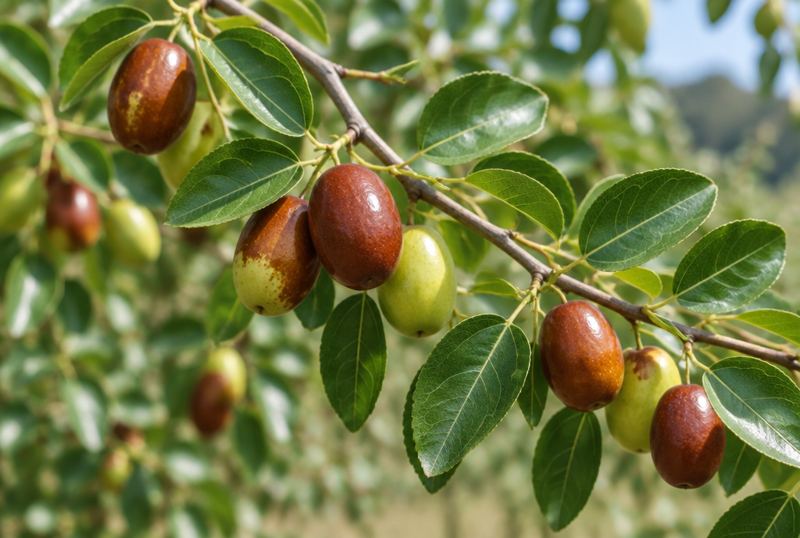 Jujube
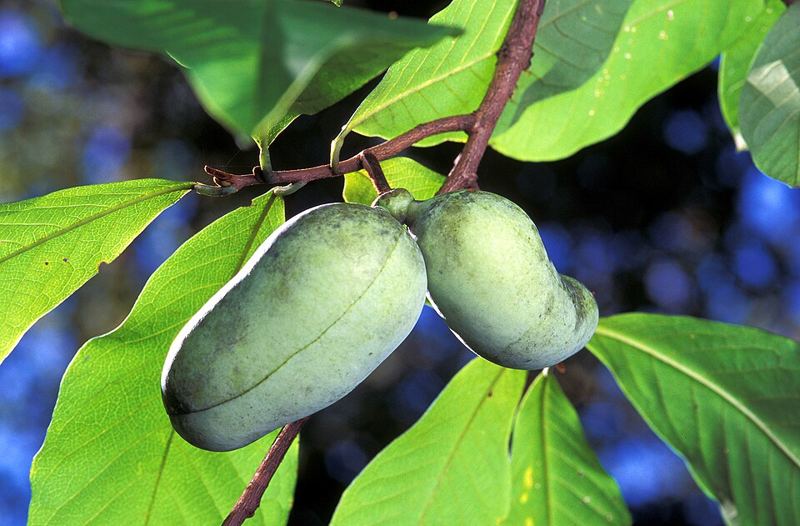 Pawpaw
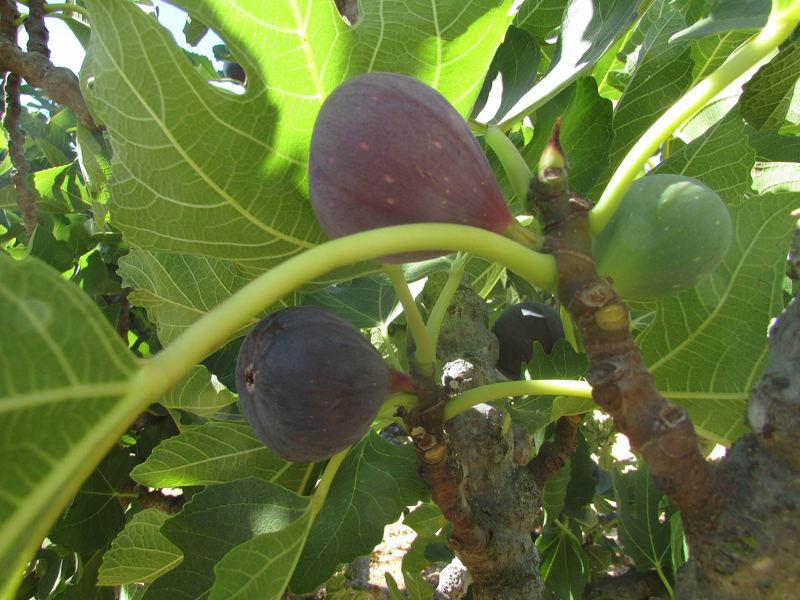 Fig
 Pomegranate