

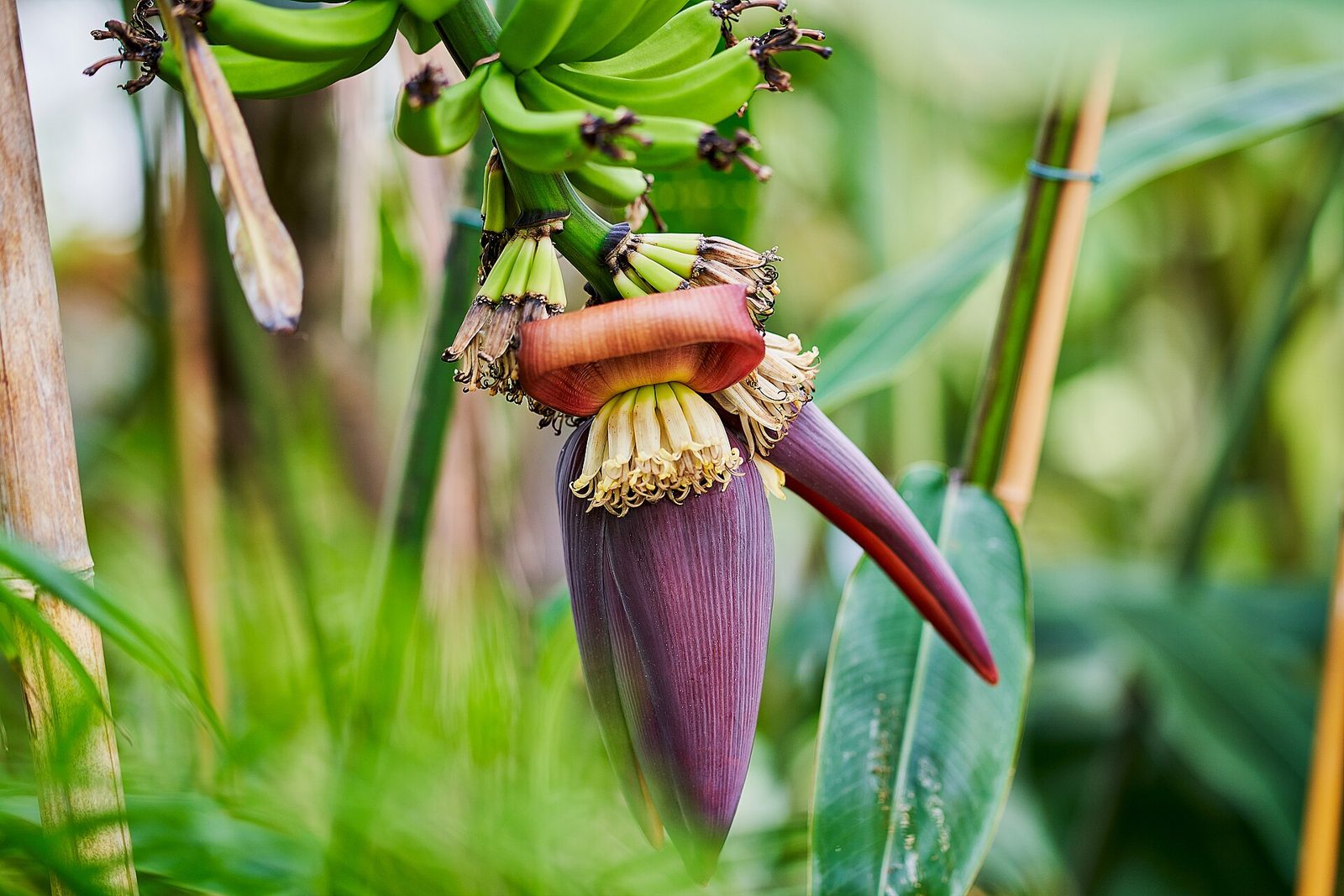
You can grow a banana plant in the ground in USDA zones 9–11, in a pot almost anywhere, and a hardy ornamental type in zones 5–8. It is not a tree, though. TAMU calls banana a tropical herbaceous plant, with an underground corm and a “trunk” of tightly wrapped leaf sheaths, and it grows fast, wants sun, water and food, and rewards you with a bunch of fruit about a year or more after planting. UF/IFAS says the flower stalk emerges 10 to 15 months after planting.
- USDA zones
- 9–11 in the ground for fruiting types · hardy ornamental Musa basjoo dies back in zones 5–8 (NC State)
- Sun
- Full sun grows best (CRFG)
- Water
- Regular deep watering in warm weather (CRFG)
- Difficulty
- Easy
- Lifecycle
- Perennial
- Origin
- Asia
- Container friendly
- Yes, especially dwarf types (CRFG)
- Time to fruit
- Flower stalk 10–15 months after planting (UF/IFAS) · fruit matures 3–6 months later (LSU)
- Cold limit
- Growth stops at 50°F · leaf damage at about 32°F · below 28°F may kill to the ground (UF/IFAS)
- Soil
- Deep, well-drained, rich in organic matter · pH about 5.5–6.5 (CRFG), up to 7.0 (UF/IFAS)
- Wind
- Winds above 25 mph can topple tall types and 45 mph short ones (UF/IFAS)
Is a banana plant a tree?
If you have wondered whether a banana grows on a tree, the answer is no, although it looks like one. TAMU describes banana as a tropical herbaceous plant: an underground corm topped by a trunk, called a pseudostem, made of concentric layers of leaf sheaths. There is no wood in it. A banana plant is a giant herb.
That explains a habit that surprises new growers. The pseudostem grows, flowers, fruits once and is then finished (TAMU). Meanwhile new shoots, called suckers, rise from the corm and take its place, so a healthy clump renews itself without replanting.
Where banana plants grow in the US
Bananas are tropical, and the number to watch is the cold. UF/IFAS says plant growth slows below 60°F (16°C) and stops at 50°F (10°C), and that chilling and irreversible freeze damage may occur at or below 32°F (0°C).
UF/IFAS says temperatures below 28°F (−2°C) may kill plants to the ground, while CRFG says plants can survive 28°F for short periods, and that the underground rhizome usually survives if the temperature stays above 22°F and the cold spell is short. The corm is the insurance policy.
Banana varieties for US growers
Pick by size and purpose first. Dwarf Cavendish is the compact, store-type banana, Lady Finger gives small, sweet fruit on a tall plant, and Blue Java is the “ice cream” banana.
| Variety | Best for | Size | Flavor | Cold tolerance and Panama disease |
|---|---|---|---|---|
| Dwarf Cavendish | Small yards and pots · recommended for south Florida (UF/IFAS) | 4–7 ft (CRFG) | Large bunches of medium-sized fruit typical of the store (UF/IFAS, TAMU) | Fair cold tolerance · resistant to Panama disease (UF/IFAS) |
| Lady Finger | Cooler spots · excellent-quality fruit (CRFG) | 20–25 ft (CRFG) | Thin-skinned, about 1 in. by 4 in., sweet (TAMU, UF/IFAS) | Good cold tolerance · susceptible to Panama disease (UF/IFAS) |
| Blue Java | A creamy dessert banana for patient growers | 15–20 ft (CRFG) | 7–9 in. fruit, aromatic, said to melt in the mouth like ice cream (CRFG) | Fair to good cold tolerance · susceptible to Panama disease (UF/IFAS) |
| Apple (Manzano) | A dessert banana in about 15 months (CRFG) | 10–12 ft (CRFG) | Pleasant sub-acid apple flavor when fully ripe (CRFG) | Fair cold tolerance · susceptible to Panama disease (UF/IFAS) |
| Goldfinger | Disease resistance · an excellent dessert banana (UF/IFAS) | — | Dessert type (UF/IFAS) | Good cold tolerance · resistant to Panama disease and Sigatoka (UF/IFAS) |
| Orinoco | Cooking · more cold hardy than any other (CRFG) | 16 ft (CRFG) | Coarse fruit about 6 in. by 2 in., mainly for cooking (TAMU) | Fair to good cold tolerance · susceptible to Panama disease (UF/IFAS) |
| Musa basjoo | Cold-climate gardens · an ornamental, not for eating | Pseudostems to 6 ft (Arkansas Extension) | — | Rhizomes hardy to −10°F if pruned and mulched (NC State) |
For the full comparison, see our banana varieties guide, or go straight to Dwarf Cavendish or Blue Java.
Where to buy a banana plant
Buy a container-grown plant, or a sucker with roots, from a nursery near you, or from a plant sale run by your county extension office or a local fruit-growers club. Check that the label gives the variety name, because a banana is sold by name, like an apple. A neighbor with a healthy clump is another good source.
You cannot grow a fruiting banana from a store banana. Our guide on how to grow a banana tree from a banana explains why, and what to plant instead.
How to grow a banana tree
The most common planting material is suckers, or pieces of the rhizome (UF/IFAS). That is how nearly every banana plant gets started.
- Choose a variety for your space. Pick a dwarf type for a small yard or a pot, and a taller one only if you have room.
- Find a sunny, sheltered, well-drained spot. Full sun grows best (CRFG), and shelter from wind protects the big leaves.
- Plant a sucker or a nursery plant. Dig a hole wider than the root ball, set the plant at the depth it grew, firm the soil and water it in deeply.
- Mulch, water and feed. Mulch around the plant, keep it off the stem, and water and feed regularly, as described below.
- Thin the clump and wait for flowers. Keep a few stalks of different ages.
How to plant a banana tree
Site and soil. UF/IFAS says bananas do best on flat, well-drained, deep soils that are high in organic matter, with a pH of 5.5–7.0. CRFG prefers an acid soil with a pH of 5.5 to 6.5, so aim for about 5.5–6.5 and know that a little higher is tolerated. Drainage matters most. TAMU says to avoid standing water, because bananas do not tolerate overly wet conditions. CRFG adds that the banana is not tolerant of salty soils, and UF/IFAS lists yellowing and dying leaf margins as a sign of salt damage. In heavy soil, plant on a low mound.
Wind. UF/IFAS says winds above 25 mph may topple tall banana cultivars and winds above 45 mph may topple short ones. Plant in the lee of a wall, fence or hedge, and lean toward a dwarf type, since TAMU says wind damage is less severe on Dwarf Cavendish.
Taking a sucker. Not every sucker is equal. UF/IFAS says to remove sword suckers from vigorous clumps with a spade when they are 4–5 ft (1.2–1.5 m) tall, and CRFG says at least 3 feet, so about 3–5 ft is the working range. Sword suckers have narrow, spear-like leaves and are well attached to the corm. UF/IFAS says water suckers, which are not well attached, produce weak plants and less fruit. Our from-scraps guide shows how to tell them apart and divide a clump.
In a pot. CRFG says bananas, especially dwarf varieties, make good container specimens. Use a large pot with drainage holes, such as a 10-gallon fabric pot to start. See our banana plant in a pot guide for the details.
Banana plant care
Most banana plant care comes down to water, food, sun and keeping the clump tidy.
Water
Feed
Sun
Mulch
Watch the leaves. UF/IFAS says drought stress shows as folded leaves, a pale green to yellow color and premature leaf death.
How to fertilize a banana plant
Banana plants grow fast, and a plant that is fed well fruits sooner and bigger. UF/IFAS says the potash requirement is high, so use a fertilizer that is high in potassium, such as one with a nitrogen, phosphate and potash ratio of 3-1-6. Look for one that also contains magnesium.
UF/IFAS gives a schedule you can follow:
- Young plants: start with 1/2 lb (0.23 kg) of a 6-2-12 or similar formula, with 2–3% magnesium, every 2 months.
- As the plant grows: increase the amount gradually, up to 5–6 lb (2.3–2.7 kg) at flowering and fruiting time, which comes 10 to 18 months later.
- Frequency: UF/IFAS says to apply fertilizer containing nitrogen, phosphate, potash and magnesium every 4 to 8 weeks throughout the year.
Spread it in a ring around the plant, away from the pseudostem, and water it in. Other extension guides use more balanced fertilizers at different rates, so follow the label of whatever product you buy.
Managing the clump
A banana plant sends up new suckers all the time, and left alone they crowd the clump. UF/IFAS says to maintain 3 to 4 pseudostems of different ages: one that is flowering or fruiting, one about half to two-thirds that size, and one or two sword suckers, 6 inches to 3 ft tall, throughout the year. Remove the extras at the base, or dig them up to plant elsewhere, so there is always a stalk coming along behind the one that fruits.
Common banana plant problems
Banana plants in cold weather
- Mulch the rhizomes. LSU says a good layer of mulch over the rhizomes can help them survive.
- Bank soil around the trunk. TAMU says to do this just before a projected cold spell, to protect the underground buds so the plant regenerates in spring.
- Dig and store the plant. TAMU says some people dig it up, remove the leaves and store it dry in a heated area.
- Be patient about cutting back. After a freeze, remove only pseudostems that are clearly dead and mushy. TAMU cuts plants off at ground level once there is no doubt they were killed, while LSU warns that trunks that may still be alive should not be cut down, because new leaves and flower stalks can emerge from the top. Wait until you can tell.
For the full routine, including the hardy Musa basjoo, read our banana overwintering guide.
Harvesting bananas and cutting down after fruiting
LSU says fruit generally takes three to six months to reach maturity after flowering. Cut the whole bunch when the individual bananas are plump, full and rounded (TAMU). LSU says the fruit changes from an angular cross section to a rounded one as it matures, with a slight yellow tint that can be hard to see.
LSU says to harvest before the fruit is fully ripe, because it often splits if left on the plant. Ripen it indoors:
- Hang the stem in a cool, shaded place. TAMU says ripening proceeds naturally in a few days if the bunch is properly harvested.
- To hasten it, enclose the bunch in a plastic bag with a sliced apple for about a day (TAMU).
- Do not refrigerate bananas before they ripen. UF/IFAS says this causes chilling injury.
Then deal with the plant. The pseudostem that bore fruit never fruits again, so cut it down. TAMU says to cut it off near ground level. CRFG says to cut the fruiting stalk back to about 30 inches and remove the stub several weeks later. Both work. The younger stalks in the clump carry on.
Want another tropical fruit that does well in pots? Try our mango tree guide. For a showpiece cactus fruit, see the dragon fruit guide, or browse the tropical fruit section.
Frequently asked questions
Does a banana grow on a tree?
Not a true tree. TAMU describes banana as a tropical herbaceous plant with an underground corm and a trunk, called a pseudostem, made of concentric layers of leaf sheaths. It is the world's largest herb rather than a woody tree, which is why one stalk fruits once and is then cut down.
What zones can you grow a banana plant in?
Fruiting bananas grow in the ground in zones 9–11, and they fruit most reliably in the warmest of those areas. Colder than that, grow one in a pot you can shelter, or choose Musa basjoo, a hardy ornamental that NC State says dies back to the ground in zones 5 to 8 and regrows. Its fruit is not for eating.
How long does a banana plant take to fruit?
UF/IFAS says the flowering stalk emerges 10 to 15 months after planting. LSU adds that fruit then takes three to six months to mature, depending on temperature, variety, moisture and culture. Plan on well over a year from planting to harvest.
How cold can a banana plant get?
Growth slows below 60°F (16°C) and stops at 50°F (10°C), and UF/IFAS says leaves are damaged at or near 32°F (0°C). Below 28°F (−2°C) plants may be killed to the ground. CRFG says short dips to 28°F can be survived, and the underground corm usually regrows if it was protected.
What is the best fertilizer for a banana plant?
UF/IFAS says the potash requirement is high and recommends a high-potassium fertilizer in a 3-1-6 ratio, such as 6-2-12, with 2–3% magnesium, applied every 4 to 8 weeks through the year. Follow the label rate for the product you buy.
Do you cut down a banana plant after it fruits?
Yes. Each pseudostem fruits once and never produces again (TAMU). Cut it down after you harvest, either at ground level (TAMU) or to about 30 inches and then remove the stub several weeks later (CRFG). A younger stalk from the same clump carries on.
Sources
- Banana Growing in the Florida Home Landscape (HS10/MG040), UF/IFAS Extension
- Banana, Texas A&M AgriLife Extension
- Louisiana Bananas, LSU AgCenter
- Banana Fruit Facts, California Rare Fruit Growers
- Musa basjoo, NC State Extension Plant Toolbox
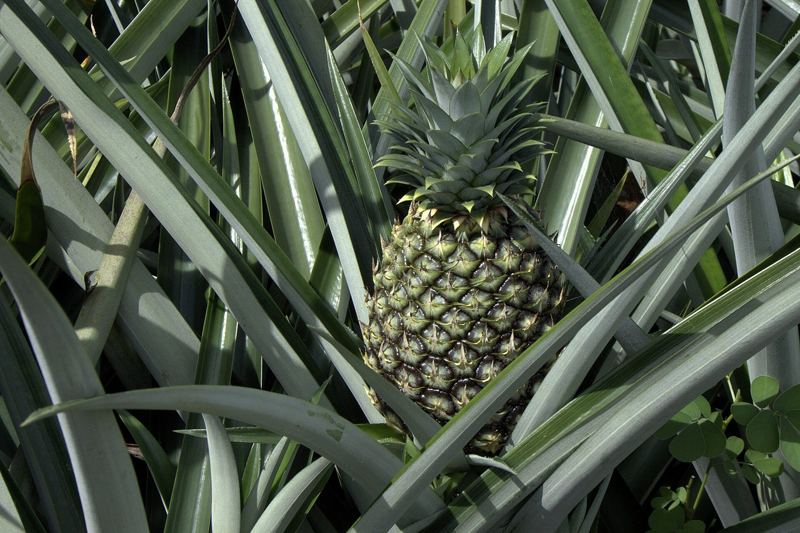 Pineapple
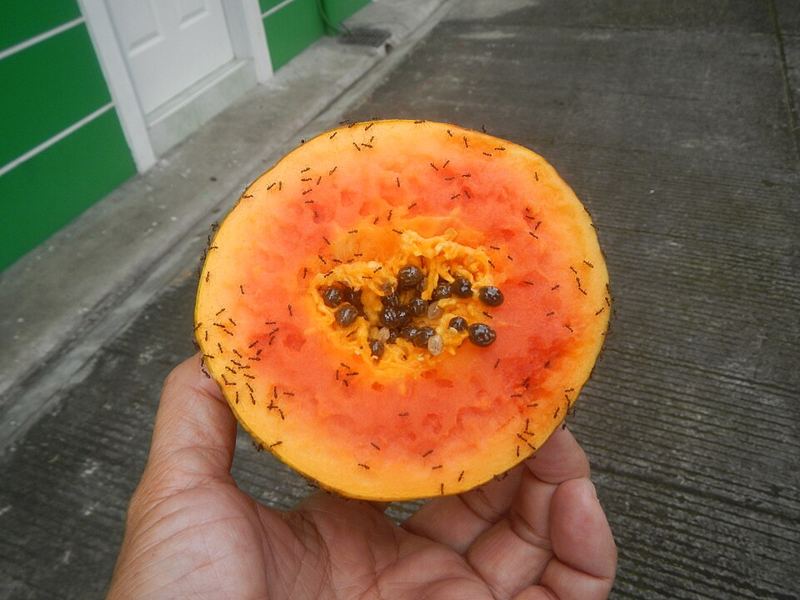 Papaya
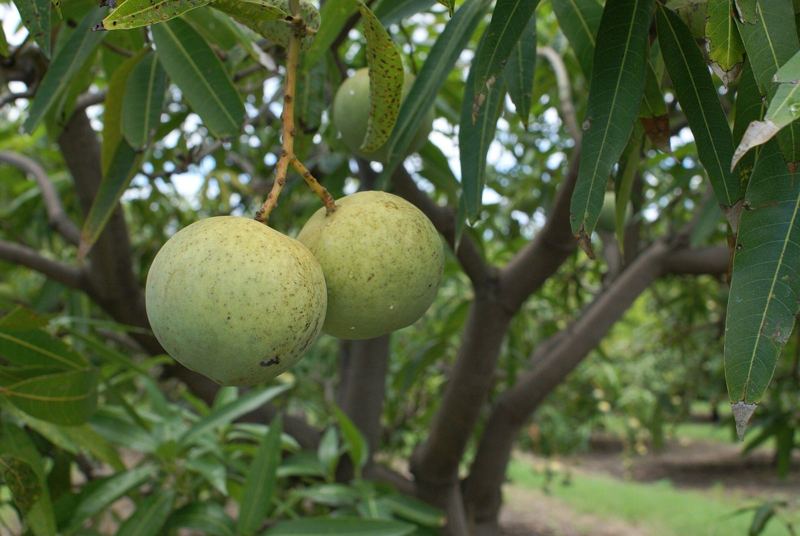 Mango
 Dragon Fruit