

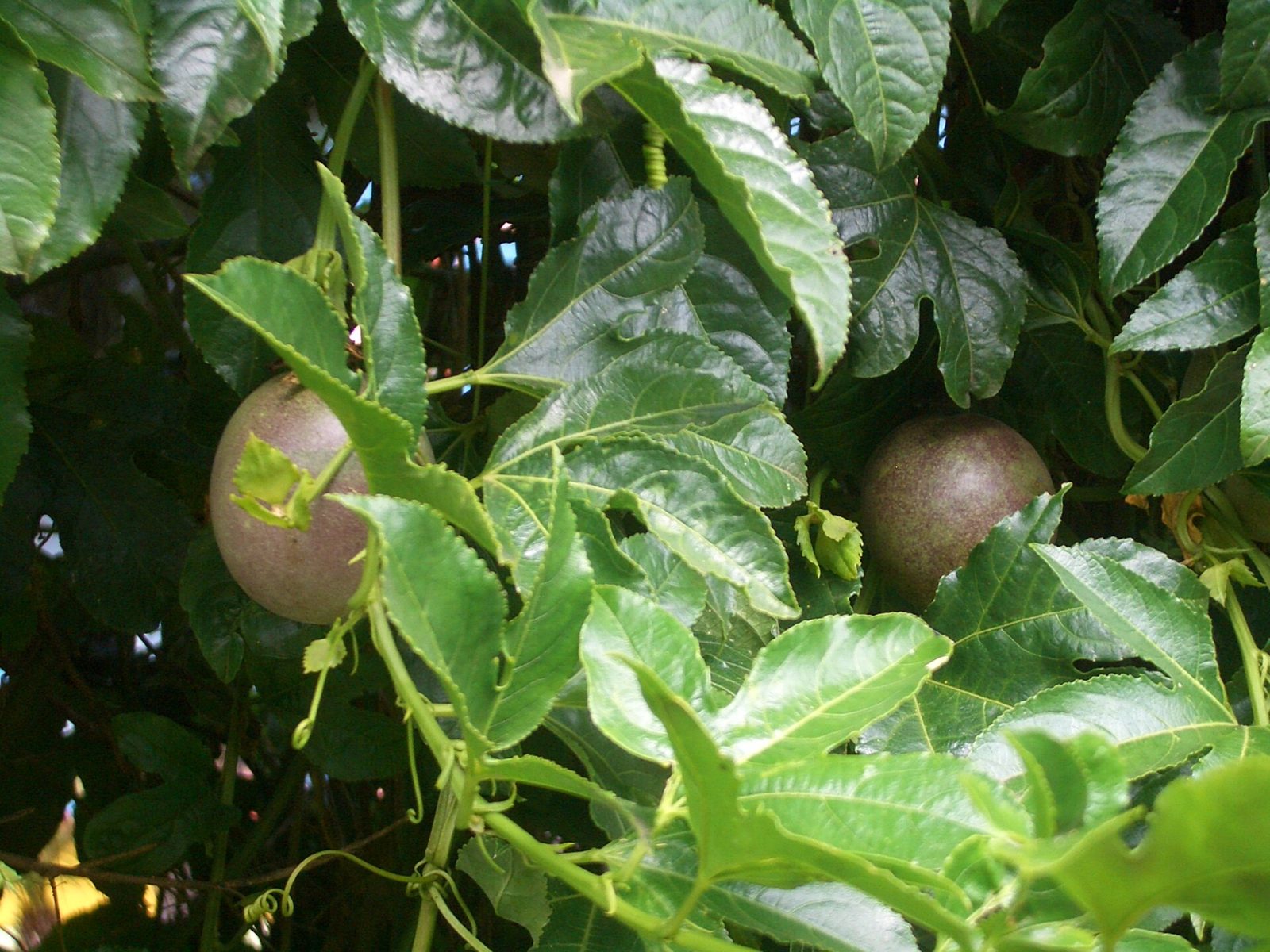
You can grow a passion fruit plant in the ground in USDA zones 9b–11, and in a pot almost anywhere. It is a fast, woody vine that climbs by tendrils, wants full sun and a strong trellis, and follows a pretty flower with a round fruit full of aromatic pulp. UF/IFAS puts the time from flower to harvest at 70 to 75 days. This guide covers the vine you see in shops, Passiflora edulis, which Hawaii calls lilikoi, and a hardy native cousin for colder gardens.
- USDA zones
- 9b–11 in the ground for Passiflora edulis (UF/IFAS) · maypop zones 7b–11 (UF/IFAS)
- Sun
- Full sun, or a spot where the vine can climb into full sun (UF/IFAS)
- Water
- Small, frequent watering; moist but not saturated (UF/IFAS)
- Difficulty
- Easy
- Lifecycle
- Perennial
- Origin
- The Americas
- Container friendly
- Yes, in a big pot or grow bag on a stand (UF/IFAS)
- Flower to harvest
- 70–75 days (UF/IFAS)
- Best temperature
- About 65–90°F for growth and fruiting (UF/IFAS)
- Soil
- Well drained, slightly acid is best, pH 6–7.5 tolerated · shallow roots (UF/IFAS)
- Support
- A strong fence or trellis that stands up to wind (UF/IFAS)
What is a passion fruit plant?
UF/IFAS describes passion fruit as perennial lianas, or woody vines, that grow to great length. In the garden that means long stems that grip whatever they can reach with tendrils.
Two forms are grown for fruit. The purple passion fruit and, to a lesser extent, the yellow form are the types most commonly cultivated in the United States (UF/IFAS). They are one species, Passiflora edulis. The yellow form is called P. edulis f. flavicarpa, and UF/IFAS says the evidence now treats the two as the same species. The difference matters in the garden, mostly for pollination, as the next section explains.
Where passion fruit plants grow in the US
Passion fruit is a tropical vine, and cold sets the limit. UF/IFAS says temperatures between about 65°F and 90°F are best for vine growth and fruit production, and it suggests zones 9b and above for P. edulis.
Purple or yellow passion fruit?
Choose by climate and by how you want the flowers pollinated. UF/IFAS says purple passion fruit flowers are self-fertile, while yellow vines are not self-fertile and need pollen from a compatible, genetically different vine. Many purple-yellow hybrids may or may not be self-fertile. UF/IFAS also notes that yellow types and purple-yellow hybrids are better adapted to lower, warmer elevations, while the true purple passion fruit is said to be adapted to high-elevation environments in the tropics.
| Variety | Best for | Size | Flavor | Self-fertile? |
|---|---|---|---|---|
| Purple (P. edulis) | Most home growers · the most commonly cultivated type in the US (UF/IFAS) | — | Ripens from dark purple or burgundy (UF/IFAS) | Yes, flowers are self-fertile (UF/IFAS) |
| Possum Purple | South Florida, where it is the most widely grown and propagated cultivar (UF/IFAS) | 2.5–3.5 in. long, about 2 in. across (UF/IFAS) | Pleasant aroma, sweet, moderately strong juice (UF/IFAS) | Yes, flowers are self-compatible (UF/IFAS) |
| Yellow (P. edulis f. flavicarpa) | Lower, warmer elevations (UF/IFAS) | — | Ripens yellow (UF/IFAS) | No, needs pollen from a genetically different vine (UF/IFAS) |
| Maypop (P. incarnata) | Cold gardens · zones 7b–11 (UF/IFAS) | — | Yellow to green fruit, insipid to slightly sweet (UF/IFAS) | — |
For the full comparison, see our passion fruit varieties guide, or go straight to Possum Purple or maypop.
Where to buy a passion fruit plant
Buy a container-grown vine from a nursery near you, or from a plant sale run by your county extension office or a local fruit-growers club. Check the label for the type: yellow needs a second, genetically different vine, and purple can fruit alone.
You can also start your own. UF/IFAS says seeds germinate in about a week and a half to three weeks if kept warm, at about 85°F, and that cuttings can be taken from productive, healthy plants, chosen carefully to avoid passing on a virus. UF/IFAS adds that purple passion fruit can be grafted onto a yellow passion fruit rootstock to reduce root disease problems.
How to grow a passion fruit plant
- Choose a type for your climate. Purple for most gardens, yellow for the warmest sites, maypop for cold winters.
- Build the trellis first. It gets heavy and catches wind, so set the support before you plant.
- Pick a sunny, well-drained site. Full sun, or a spot where the vine can climb into full sun (UF/IFAS).
- Plant after the last frost. In cold-risk areas, UF/IFAS says to plant young plants in early spring, once the chance of frost is over.
- Water, mulch and feed. Small, frequent watering, and a mulch to protect the shallow roots, as described below.
- Prune in late winter and wait for flowers. Then watch for bees, or pollinate by hand.
Trellis and support for a passion fruit vine
The support matters as much as the plant. For home landscapes, UF/IFAS says a simple but strong fence or trellis that can withstand high winds when covered with the vine may be used. Wire on posts, a pergola, or a fence with mesh added all work.
Commercial growers use a vertical trellis with rows 10 to 15 feet apart (UF/IFAS), a useful guide if you plant more than one vine. Tie the main stems to the support early so they have something to follow.
How to plant a passion fruit vine
Site and soil. UF/IFAS says passion fruit prefers well-drained soil and has shallow root systems. It tolerates near-neutral to alkaline conditions, pH 6 to 7.5, but slightly acid soils are best. Full sun is the goal. In heavy soil, plant on a low mound so water drains away from the roots.
Timing. Where temperatures can drop below 50°F, plant young vines in early spring after the chance of frost is over (UF/IFAS).
Planting. Dig a hole wider than the root ball, set the plant at the depth it grew, firm the soil, tie the stem to the trellis and water it in. Mulch the area around the vine, keeping the mulch off the stem.
In a pot. UF/IFAS says container-grown plants are typically placed on a stand, such as cinderblocks, so the container drains and does not sit on the ground. Use a large pot or grow bag with drainage holes and a trellis in the pot or beside it, and bring it into shelter before a frost. A fabric pot is an easy way to get good drainage.
Passion fruit plant care
Most care comes down to water, sun and feeding in the right amounts.
Water
Sun
Feed
Mulch
How to fertilize a passion fruit plant
A young vine needs nitrogen to grow, but a mature one that makes only leaves will not fruit well. UF/IFAS says that after the first year of growth the amount of nitrogen fertilizer should be substantially reduced to encourage flowering rather than excessive vegetative growth. Common fertilizers such as 10-10-10 or 8-3-9 may provide adequate nitrogen, phosphorus and potassium (UF/IFAS).
UF/IFAS says to make the first fertilizer application after pruning. Follow the rate on the label for the product you buy, spread it away from the stem, and water it in.
How to prune a passion fruit vine
UF/IFAS says vines should be pruned in late winter, when they are not actively growing. Cut out dead and tangled growth, thin crowded stems so light and air reach the center, and tie in the strongest shoots. Then feed the plant, as above.
Pollination: why a passion fruit plant may not set fruit
Pollination is the step that most often goes wrong. UF/IFAS says the primary pollinators of passion fruit are honey bees and carpenter bees, and that the large carpenter bee, which looks like a bumblebee, is the most effective. If your vine is yellow, or a hybrid that is not self-fertile, you need a genetically different vine nearby as well as the bees. UF/IFAS says hand pollination with a clean cotton glove or paintbrush is a labor-intensive but effective way to make sure fruit sets.
Our guide on why a passion fruit flower does not turn into fruit covers the flower, the bees, hand pollination and the other causes in detail.
Harvesting passion fruit
UF/IFAS says the time from flowering to harvest is generally 70 to 75 days. Mature fruit ripens into colors from dark purple or burgundy to yellow, depending on the type, so pick when the skin has taken on its full ripe color. A one-year-old vine can be expected to produce between 5 and 15 lb of fruit (UF/IFAS).
Fresh fruit may be stored for up to two or more weeks in plastic bags at 41–54°F and 85–90% relative humidity (UF/IFAS), so a crop does not need to be eaten all at once. To get the pulp out and decide what to do with it, see our guide on how to eat a passion fruit.
Passion fruit plants in cold weather
- Know your limit. UF/IFAS says chilling injury is possible below about 59°F, and that the mid-20s°F can kill the whole aboveground vine.
- Wrap the base. UF/IFAS says high-insulation wraps around the base of the vine may protect it from freeze damage.
- Move pots. A vine in a container can go into a bright, sheltered place before the first frost.
Common passion fruit plant problems
UF/IFAS says passion fruit is affected by several insect pests, mites, nematodes, and fungal and viral diseases. Start with healthy planting material and good drainage.
Grow more tropical fruit
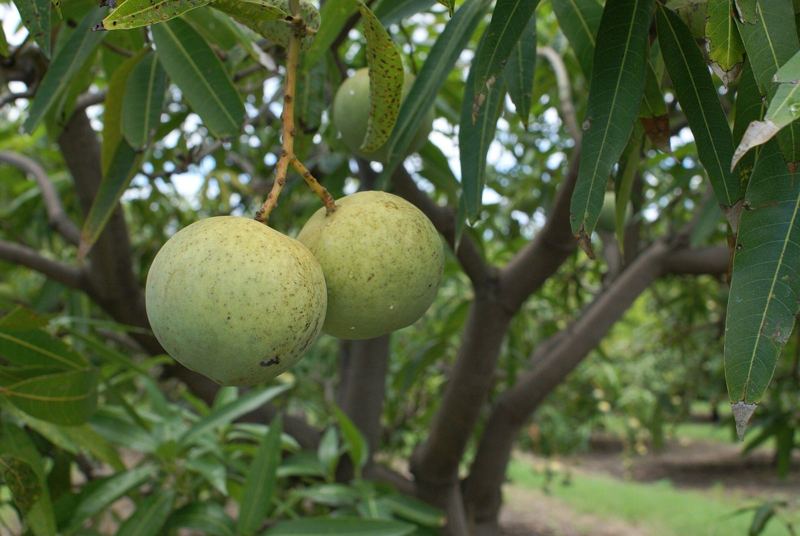
For another climbing fruit that needs a post, sun and sometimes a brush, try the dragon fruit guide. For a bigger plant, see the banana plant guide or the mango tree guide, or browse the tropical fruit section.
Frequently asked questions
What zones can you grow a passion fruit plant in?
UF/IFAS suggests USDA zones 9b and above for Passiflora edulis, the common purple and yellow passion fruit. Colder than that, grow the vine in a pot you can shelter, or try maypop (Passiflora incarnata), a different, native species that UF/IFAS lists for zones 7b through 11.
How long does a passion fruit plant take to fruit?
UF/IFAS says the time from flowering to harvest is generally 70 to 75 days, and that a one-year-old vine can be expected to produce 5 to 15 lb of fruit. How soon a young vine flowers depends on your climate and how well it is grown, so plan around a warm season and steady care.
Do you need two passion fruit plants to get fruit?
Not always. UF/IFAS says purple passion fruit flowers are self-fertile, but yellow vines are not and need pollen from a genetically different vine. Purple-yellow hybrids vary. If you grow a yellow type, plant two vines or hand-pollinate.
Why does my passion fruit vine flower but not fruit?
The usual reasons are a yellow vine with no compatible partner, too few pollinators, too much nitrogen, and cold or too little sun. Our guide on [why a passion fruit flowers but does not fruit](/tropical/passion-fruit/not-fruiting/) works through each one.
What do passion fruit vines climb on?
A simple but strong fence or trellis. UF/IFAS says it must withstand high winds once it is covered with the vine. The plant climbs with tendrils, so give it wire, mesh or slats it can wrap around.
How cold can a passion fruit plant get?
UF/IFAS says chilling injury is possible below about 59°F (15°C), and mature vines with plenty of foliage may tolerate a few degrees below freezing. Prolonged freezing and temperatures in the low to mid 20s°F (about −5°C) can kill the vine to the ground.
Can you grow a passion fruit plant in a pot?
Yes. UF/IFAS describes container-grown plants in grow bags or pots set on a stand, such as cinderblocks, so water drains and the roots do not sit on the soil. You still need a trellis, and a pot lets you bring the plant in before frost.
Sources
- The Passion Fruit in Florida (HS1406), UF/IFAS Extension
- Passion Fruit Problems in the Home Landscape (HS1397), UF/IFAS Extension
- Passiflora incarnata: Wild Passion Flower, Maypop (FP457), UF/IFAS Extension
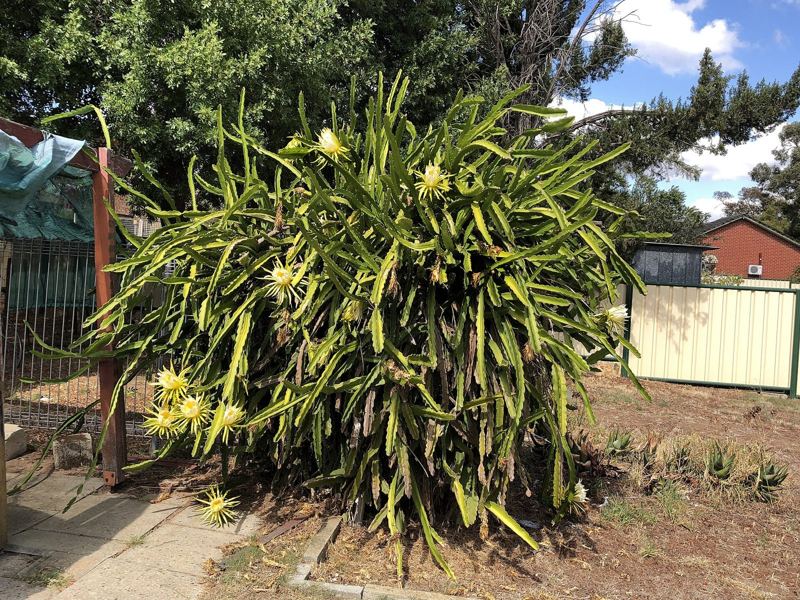 Dragon Fruit
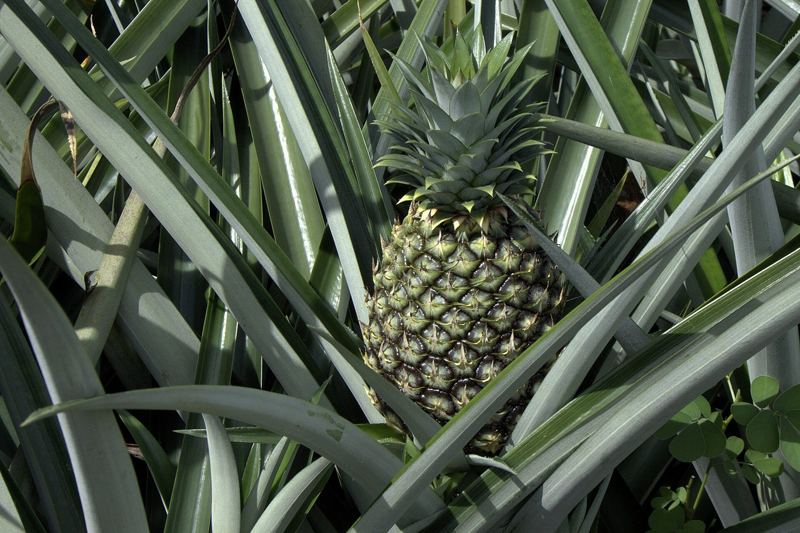 Pineapple
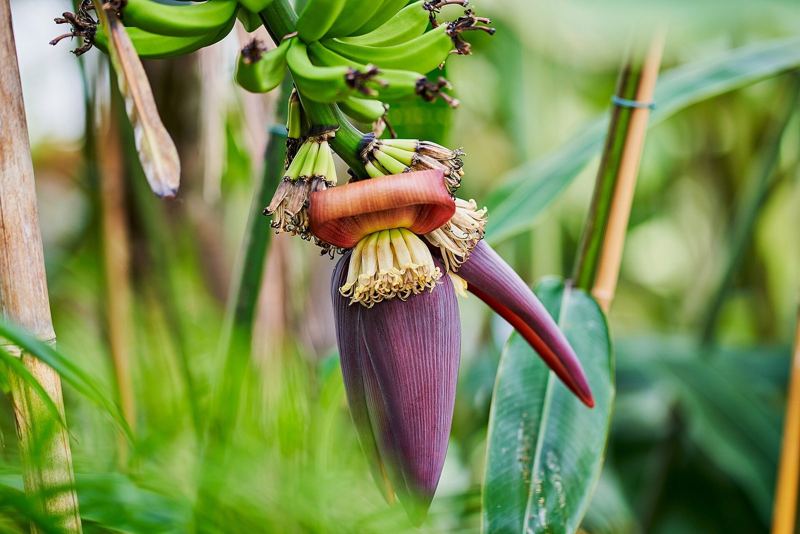 Banana
 Mango