

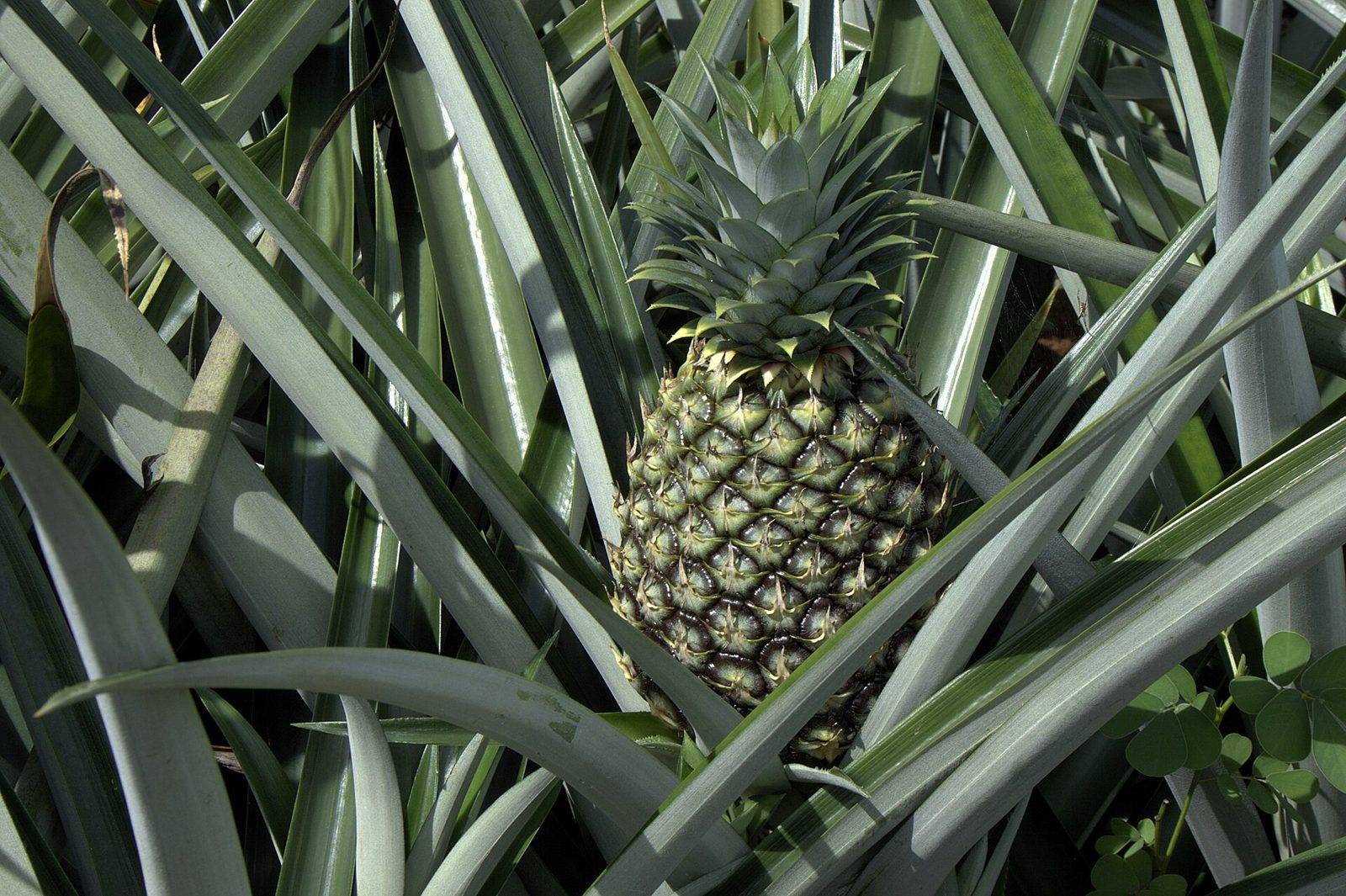
You can grow a pineapple plant in the ground in USDA zones 10–11, and in a pot almost anywhere if you bring it inside before frost. It is not hard, but it is slow. UF/IFAS says it takes 18 to 24 months from planting to harvest, and CTAHR gives about 18 months for a crown planted in the ground. The fun part is the starting material: the leafy top you twist off a store-bought pineapple is the planting material most home gardeners use (CRFG).
- USDA zones
- 10–11 in the ground, year-round planting (UF/IFAS) · a pot elsewhere, indoors in winter
- Sun
- Full sun for best growth and fruit production (UF/IFAS)
- Water
- Drought tolerant, but fruit needs adequate soil moisture (CRFG) · never waterlogged
- Difficulty
- Easy
- Lifecycle
- Perennial
- Origin
- The Americas
- Container friendly
- Yes · a 3–7 gallon pot with drainage holes (UF/IFAS)
- Time to fruit
- About 15–24 months from planting (CTAHR, UF/IFAS) · fruit ripens 5–8 months after flowering starts
- Cold limit
- Growth slows below 60°F · does not tolerate freezing below 28°F (UF/IFAS)
- Soil
- Well-drained, sandy and slightly acidic to neutral · pH 4.5–6.5 (CRFG)
- Starting material
- Crown, slip, sucker or ratoon (UF/IFAS)
Do pineapples grow on trees?
No, although “pineapple plant tree” is a common search. UF/IFAS describes the pineapple as a herbaceous perennial with long, sword-like leaves arranged in a spiral around a central stem and a terminal flower spike. It belongs to the bromeliad family, alongside plants such as Spanish moss.
So the plant is a low, spiky rosette, and the fruit forms on a stalk rising from the center. One plant carries one pineapple at a time. Nothing hangs from a branch, which surprises people who expect a tree.
Where pineapple plants grow in the US
UF/IFAS lists zones 10 and 11 for year-round planting, and those are the places a pineapple lives outdoors for good. The limit is cold. UF/IFAS says plants do not tolerate freezing below 28°F (−2°C), and that growth slows below 60°F (15.5°C) and above 90°F (32°C). CRFG says plants will usually tolerate brief exposures to 28°F.
Pineapple varieties you’ll see
The pineapple in a supermarket is usually MD-2, sold as Del Monte Gold, along with Tropical Gold; UF/IFAS says both are common in US grocery stores. If you plant your crown, you are growing whatever that fruit was.
Named types are harder to find. UF/IFAS says Red Spanish, Singapore Spanish, Green Spanish, Sugarloaf and Queen may be difficult to find for planting. CRFG describes a few of them:
- Smooth Cayenne has pale yellow to yellow flesh in fruit of 5 to 6 lb, and UF/IFAS says its foliage has no spines, which makes it the friendlier choice in a landscape.
- Sugarloaf (also called White Sugarloaf or Kona Sugar Loaf) is a cylindrical, 5 to 6 lb fruit with white flesh and high sugar content but no acid (CRFG).
- Natal Queen makes 2 to 3 lb fruit with golden yellow, crisp flesh and a delicate mild flavor, and it keeps well after ripening (CRFG).
- Red Spanish is a squarish, 2 to 4 lb fruit with pale yellow flesh and a pleasant aroma (CRFG).
Where to buy a pineapple plant
The cheapest plant is the one on your kitchen counter. A crown from a store-bought pineapple is free, and our guide on how to plant a pineapple top shows how to turn it into a plant. For a named variety, look for slips or suckers from a grower or a plant sale run by your county extension office or a local fruit-growers club, or buy a young potted plant from a nursery.
How to grow a pineapple plant
UF/IFAS lists four types of common planting material, and the bigger the piece, the faster the plant grows and fruits (UF/IFAS).
- Crown: the leafy top of the fruit. This is the one most home gardeners use (CRFG).
- Slips and hapas: shoots that arise from the stalk below the fruit.
- Suckers: shoots that arise from the leaf axils.
- Ratoons: shoots that arise underground.
CRFG says slips and suckers are preferred, with crowns the main material for home gardeners. Slips can be stored butt end up in a dry place for up to a year, though CTAHR says to plant them within a month of harvest for best results.
- Choose your planting material. A crown from a fresh pineapple is the easy start. A slip or sucker from a healthy plant is better if you can get one.
- Prepare it. Remove the bottom leaves and let the crown dry for two days (CRFG).
- Pick a sunny, well-drained spot or pot. Full sun, in soil that does not flood.
- Plant it at the right depth. Set crowns about 2 inches deep, and suckers and slips 3 to 4 inches deep (CRFG). Firm the soil and water it in.
- Water lightly and wait. Keep the soil barely moist while roots form, then ease off.
How to plant a pineapple
Site and soil. UF/IFAS says pineapple grows best in moderately fertile, sandy loam soils of neutral to mildly acid pH, and CRFG gives a pH range of 4.5 to 6.5. Aim for slightly acidic to neutral soil, and put drainage first: UF/IFAS says to grow pineapple in well-drained soil and in areas of the landscape that do not flood, because plants are not tolerant of excessively or continuously wet soil. In heavy ground, plant on a raised bed or mound.
Sun. UF/IFAS says plants should be in full sun for best growth and fruit production, and that shade reduces plant growth, time to flowering, and fruit size and quality.
Wind and salt. UF/IFAS says pineapples are generally tolerant of wind, though hurricane-force winds may topple or uproot them, and that wind-borne salt spray causes blackish spots near the leaf tips.
In a pot. UF/IFAS recommends a 3- to 7-gallon (11- to 26-liter) container with drainage holes, in full sun. It adds that a bigger container allows a bigger plant and fruit, while a small one restricts both. Our pineapple plant in a pot guide covers soil, watering and winter.
Pineapple plant care
Water
Feed
Sun
Leaves
Do not overwater. UF/IFAS says too much water applied too often causes root rot, and CRFG’s description of a drought-tolerant plant is a good reminder that a pineapple forgives a dry spell more readily than a soggy one.
How to fertilize a pineapple plant
UF/IFAS says dry mixtures containing 6 to 10% nitrogen, 6 to 10% phosphoric acid, 6 to 10% potash and 4 to 6% magnesium give satisfactory results. It gives a starting rate for young plants:
- Young plants: 1 to 2 oz (28–57 g) or less of fertilizer every 8 weeks, increasing the amount as the plant grows.
- Foliar feeding: UF/IFAS says plants may also be fed through the leaves with mild solutions that include nitrogen, phosphorus, potassium and magnesium.
- Nitrogen for fruit size: CRFG says nitrogen is essential to increase fruit size and total yield, and should be added every four months.
- Iron in alkaline soil: UF/IFAS says plants in high-pH soils may be given chelated iron, drenched around the base or sprayed on the leaves.
Follow the label of whatever product you buy.
Flowering, and how to make a pineapple plant fruit
A pineapple flowers when it is mature, not on a schedule. UF/IFAS says a plant that has produced 70 to 80 leaves is ready to flower, and that flowering can be induced by short day lengths, cool weather or dry conditions. The first flowers open about 50 days after induction, and flowering continues for 20 to 40 days.
UF/IFAS says shade slows growth and reduces fruit size and quality, so the best thing you can do is grow a large, healthy plant: full sun, steady feeding and patience. Commercial growers also force fruiting with growth-regulator treatments (CRFG). UF/IFAS does not recommend calcium carbide, because some sources have impurities that are toxic to people and can contaminate the soil and water. A popular home trick is to enclose a mature plant with a few ripe apples, which give off ethylene, though results are inconsistent. Our guide on why a pineapple plant is not flowering has a full checklist.
When to harvest a pineapple
From flower induction to harvest takes 5 to 7 months (UF/IFAS), or 6 to 8 months in Hawaii (CTAHR). Check the color, the shape of the fruit and the smell:
- UF/IFAS says a fruit is mature when the individual fruitlets flatten and the peel turns from green to yellow, starting at the base and moving up.
- UF/IFAS says ripe fruit have a yellow-green to yellow peel and a pleasant aroma.
- CRFG says a good, ripe fruit has a dull, solid sound when you snap it with a finger, and a hollow thud suggests immaturity or poor quality.
Cut the fruit with a short length of stalk. UF/IFAS says complete ripening may be allowed at room temperature, 78–82°F (26–28°C), before refrigeration. CRFG says to store fruit at 45°F or above, for no longer than 4 to 6 weeks. For the full set of cues, read our guide on how to tell if a pineapple is ripe, and then see how to cut a pineapple.
After the harvest: slips, suckers and a second crop
The harvest is not the end. UF/IFAS says the ratoon, or second, crop is produced by a sucker that arises below the fruit and is allowed to grow. Leave one sucker and remove the rest, or dig the extras and plant them. The crown on the fruit and any slips under it are also free planting material. CRFG says the plants usually produce for about four years, so use the shoots to start the next generation.
Pineapple plants in cold weather
- Watch the thermometer. UF/IFAS says growth slows below 60°F, so bring pots in well before frost.
- Know what light frost does. UF/IFAS says near-freezing temperatures or light frosts may cause chilling injury, with red and white flecked, scorched-looking upper leaves and rot in the fruit pulp.
- Cover outdoor plants. UF/IFAS says an insulating material such as blankets or mulch gives some protection on a cold night.
- Water less in winter. Cut watering back to every 10 to 14 days (UF/IFAS).
Common pineapple plant problems
Grow more tropical fruit
If you like growing something warm and spiky, try a banana plant in the ground beside it, or a dragon fruit on a trellis. For more to grow, browse our tropical fruit section.
Frequently asked questions
Do pineapples grow on trees?
No. A pineapple is a herbaceous perennial in the bromeliad family. UF/IFAS describes long, sword-like leaves arranged in a spiral around a central stem, with a single flower spike at the top. Each plant carries one fruit at its center, so the pineapple sits on the ground, not up in a tree.
How long does a pineapple plant take to fruit?
Plan on about 15 to 24 months from planting to harvest. UF/IFAS gives 18 to 24 months, CTAHR gives 15 to 20 months for the first crop, and CTAHR puts a newly planted crown at about 18 months before it first fruits. After flowering starts, the fruit takes roughly 5 to 8 months to ripen.
What zones can you grow a pineapple plant in?
In the ground, zones 10 and 11. UF/IFAS says pineapple plants do not tolerate freezing below 28°F (−2°C), and CRFG says they usually tolerate brief exposures to 28°F. Anywhere colder, grow one in a pot in full sun and bring it inside before frost.
How often do you water a pineapple plant?
Less often than most people expect. UF/IFAS says to water during dry periods lasting more than 6 or 7 days in hot weather, and every 10 to 14 days in cooler winter months. Too much water applied too often causes root rot.
Can you grow a pineapple plant from the top of a pineapple?
Yes. CRFG says crowns from store-bought fruit are the main planting material of home gardeners. Twist the crown off, strip the bottom leaves, let it dry for two days, then plant it about 2 inches deep. Our guide on how to plant a pineapple top has every step.
Does a pineapple plant produce more than one pineapple?
Yes, over time. Each plant bears one fruit, but a sucker that arises below the fruit can be left to grow into a second, or ratoon, crop (UF/IFAS). CRFG says the plants usually produce for about four years. The fruit also gives you a crown and often slips or suckers to plant.
Sources
- Pineapple Growing in the Florida Home Landscape (HS7/MG055), UF/IFAS Extension
- Ananas comosus: Pineapple (FP039), UF/IFAS Extension
- Pineapple Cultivation in Hawaii (F&N-7), CTAHR, University of Hawaii at Manoa
- Pineapple Fruit Facts, California Rare Fruit Growers
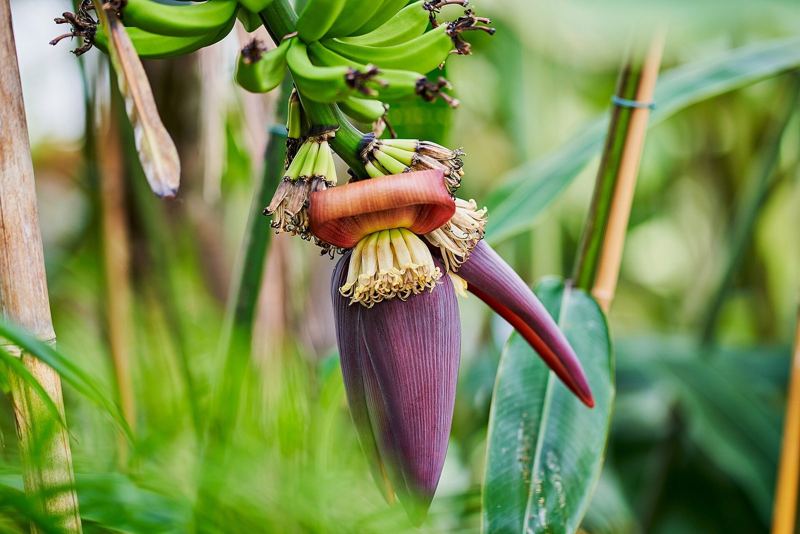 Banana
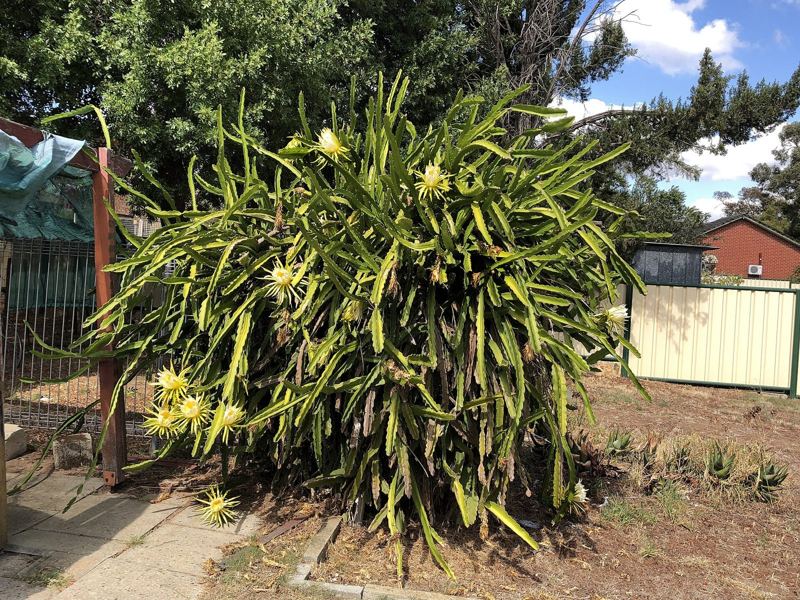 Dragon Fruit
 Papaya
 Mango