

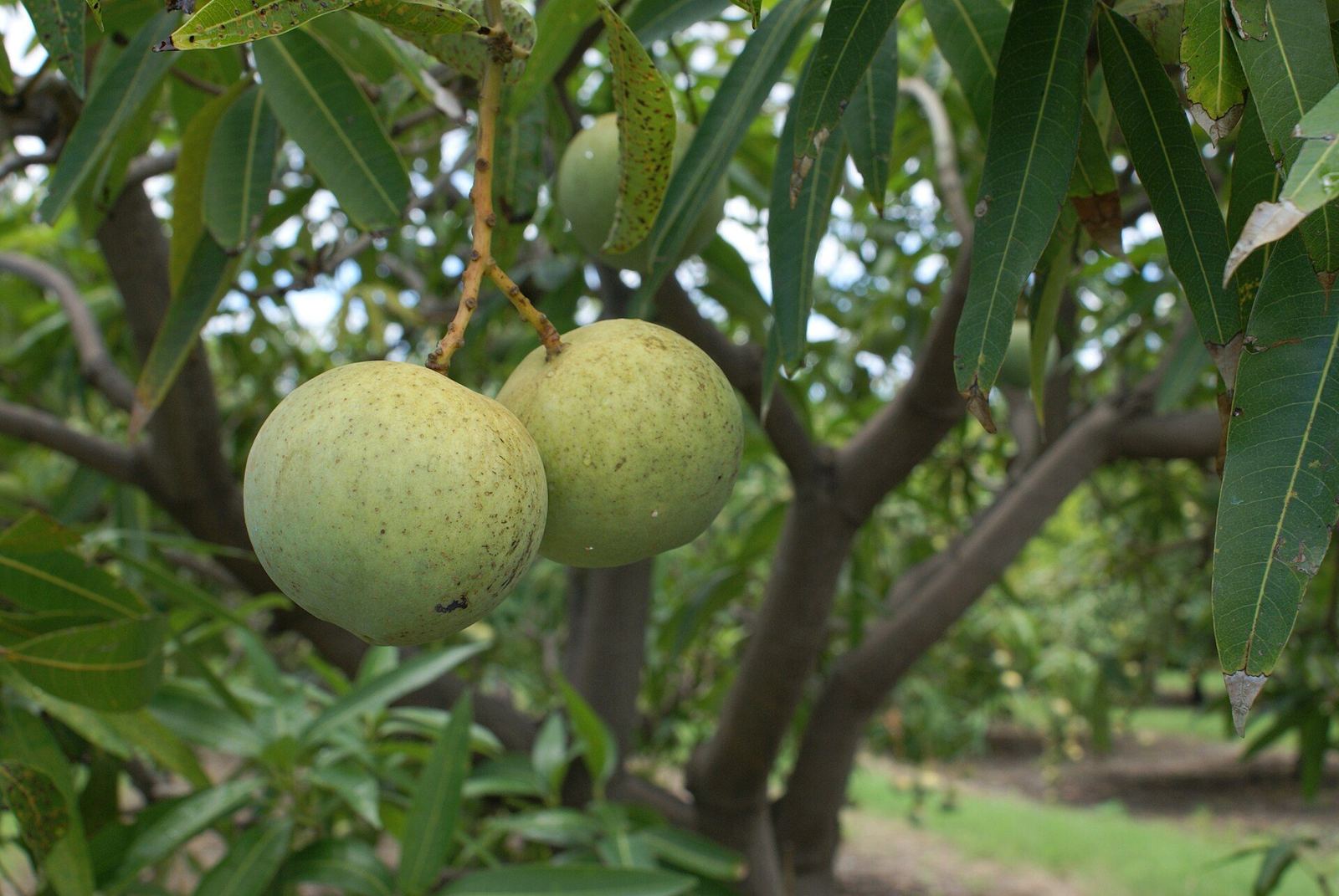
Yes, you can grow a mango tree in the US, but where you live decides how. In zones 10–11 (South Florida, coastal Southern California, Hawaii, Puerto Rico) a grafted mango planted in the ground will fruit in three to five years. Everywhere else, grow a dwarf variety in a big pot, keep it outside from late spring to fall and bring it in when nights drop below 40°F (4°C). It is a medium-difficulty fruit: easy to keep alive, harder to make flower outside the tropics.
- USDA zones
- 10–11 in ground · any zone in a pot
- Sun
- Full sun
- Water
- Moderate
- Difficulty
- Medium
- Lifecycle
- Perennial
- Origin
- Asia
- Container friendly
- Yes
- Time to fruit
- 3–5 yrs grafted · 5–8 from seed
- Mature size
- 30–40 ft · dwarfs kept at 6–10 ft
- Cold limit
- Young trees die at 29–30°F
Why grow a mango tree
Mangoes have been grown in India for at least 4,000 years and reached Florida in the 1800s. A homegrown, tree-ripened mango tastes nothing like the hard fruit shipped to supermarkets, which is picked green so it survives the trip. Grow your own and you get varieties you will never see in a store, from the mild, coconut-like Pickering to the very sweet Thai Nam Doc Mai.
Mango belongs to the cashew family, the same family as poison ivy. The sap and the skin of unripe fruit can cause an itchy rash in sensitive people, so wear gloves when you prune or pick and wash skin that gets sap on it.
Mango varieties for US growers
Pick by your climate and space first, flavor second. “Condo” mangoes are naturally compact varieties that stay 6–10 ft with yearly pruning, and they are the only realistic choice for pots and small yards.
| Variety | Best for | Size | Flavor | Disease |
|---|---|---|---|---|
| Carrie | Pots and small yards · June–July | Compact (dwarf per CRFG) | Fiberless, rich, spicy aroma | Moderately resistant to anthracnose |
| Nam Doc Mai | Growing from seed (comes true) · June–July | Medium to large; prune yearly | Fiberless, very sweet, spicy | Moderately susceptible |
| Glenn | Early-summer fruit · June–July | Moderate | Fiberless, rich, spicy | Moderately susceptible |
| Keitt | Late fruit · August–September | Medium to large | Little fiber, sweet, mild | Moderately resistant |
| Kent | Dry climates · July–August | Large, vigorous | Little fiber, sweet, rich | Very susceptible |
| Valencia Pride | Big fruit · July–August | Large, vigorous | Little fiber, mild, sweet | Susceptible |
Seasons are for South Florida; disease ratings are UF/IFAS anthracnose ratings. In humid areas, anthracnose resistance matters more than flavor: a susceptible variety such as Kent often loses its whole crop in a rainy spring, while it does well in dry Southern California.
Compare all of them, with zones and where to buy each, in our mango varieties guide, or go straight to our two favorites: Carrie, the compact pick for pots and small yards, and Nam Doc Mai, the Thai mango whose seeds come true.
Where to buy a mango tree
Buy a grafted tree in a 3-gallon pot from a nursery that ships to your state. Grafted trees fruit years sooner than seedlings and come true to the variety on the label. Order in spring so the tree has a full warm season to settle in before its first winter.
How to start a mango tree
You have two routes: a grafted nursery tree (fruit in 3–5 years, the right choice if you want mangoes) or a seed from a mango you ate (a free experiment that may take 8 years and may never give good fruit). For the seed route:
- Use a seed from a ripe, fiberless mango. Ataulfo (honey) mangoes from the grocery store sprout reliably. Scrub off the flesh and let the husk dry for a day.
- Open the husk. Cut along the thin edge with kitchen shears and lift out the kidney-shaped seed inside. Peel off the papery skin if it comes away easily.
- Plant it shallow. Set the seed on its side in a 1-gallon pot of free-draining potting mix, with the curved edge up and the top just showing.
- Keep it warm and evenly moist. At 75–85°F (24–29°C) the seed sprouts in 2–4 weeks. A heat mat helps indoors.
- Give it all the sun you have. Move the seedling to your sunniest window or outside once nights stay above 55°F (13°C). Water when the top inch of mix is dry.
Planting a mango tree
In the ground (zones 10–11). Choose the sunniest, warmest spot you have, at least 25–30 ft from buildings and other trees for a standard variety or 10–15 ft for a condo type. Mangoes grow in sand, loam and even the limestone soils of South Florida, but they will not survive standing water. If your yard floods after storms, plant on a mound 2–3 ft high and 4–10 ft across. Dig a hole three to four times the width of the root ball and no deeper than it, set the tree at the same depth it grew in the pot, backfill with the native soil and water it in well.
In a container. Start a grafted dwarf tree in a 10-gallon pot with drainage holes and move it up to 15–25 gallons over a few years. Fabric pots breathe and are lighter to move. Use a fast-draining mix made for citrus or palms, or cut regular potting soil with one-third pine bark fines or perlite.
Mango tree care
Water
Feed
Prune
Overwinter
Mangoes are self-fertile, so one tree is enough. Flowers are pollinated mostly by flies and other small insects, not just bees, which is why fruit set is poor indoors. If your potted tree flowers inside, gently brush the open flowers with a soft paintbrush every few days.
Common mango tree problems
Scale insects and mealybugs also show up on stressed and indoor trees. Wipe small infestations off with a cloth dipped in soapy water, or spray horticultural oil.
Harvesting and eating mangoes
Mangoes ripen 100–150 days after flowering; in Florida most varieties are picked between May and September. Pick when the fruit has filled out at the “shoulders” near the stem and the color starts to change, or when the first fruit drops on its own. A mango picked mature but still firm ripens on the kitchen counter in 3–8 days. Learn the signs in how to tell if a mango is ripe, then turn it into cubes with how to cut a mango.
Frequently asked questions
Can I grow a mango tree in a pot?
Yes. Choose a grafted, naturally compact variety such as Carrie, start in a 10-gallon pot and move up to 15–25 gallons. Keep it in full sun outside from late spring to fall and bring it into a bright spot when nights drop below 40°F (4°C).
How long does a mango tree take to fruit?
A grafted tree usually fruits 3–5 years after planting. A tree grown from seed takes 5–8 years, and some seedlings never produce fruit worth eating.
How cold can a mango tree get?
Young trees can be killed at 29–30°F (−1.5°C). Mature trees may survive a few hours at 25°F (−4°C) with leaf and branch damage. Cold snaps while the tree is flowering cut that year's crop.
Do you need two mango trees to get fruit?
No. Mangoes are self-fertile. Flies, bees and other insects move pollen between flowers on the same tree.
Why is my mango tree not flowering?
The usual causes are too much nitrogen or water in fall, pruning too late in the year, too little sun, or a young seedling that is simply not old enough. Mangoes flower best after a cool, dry spell in winter.
Sources
- Mango Growing in the Florida Home Landscape (HS2/MG216), UF/IFAS Extension
- Mango Fruit Facts, California Rare Fruit Growers
- Mango, in Fruits of Warm Climates (Julia F. Morton), Purdue University NewCROP
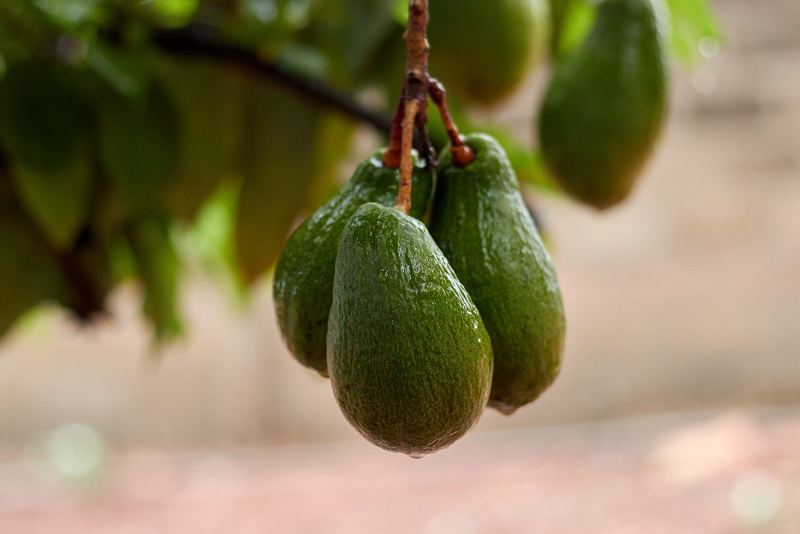 Avocado
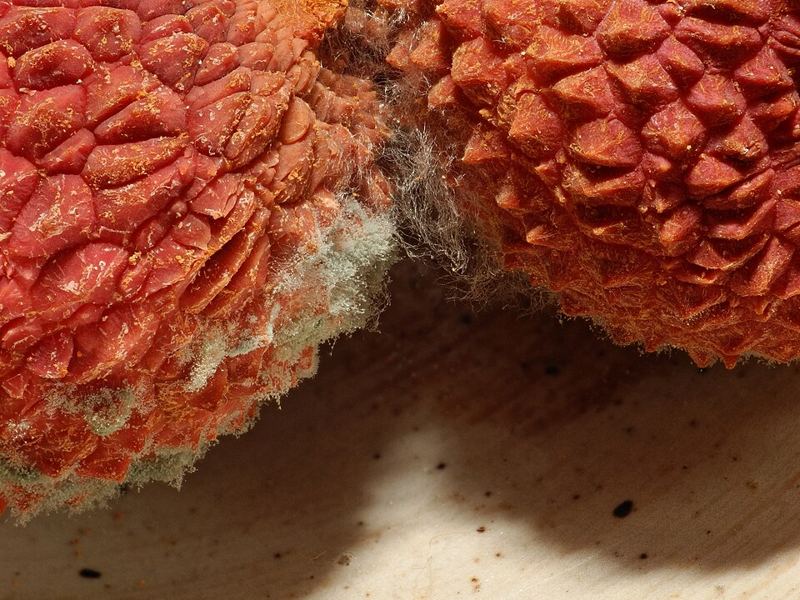 Lychee
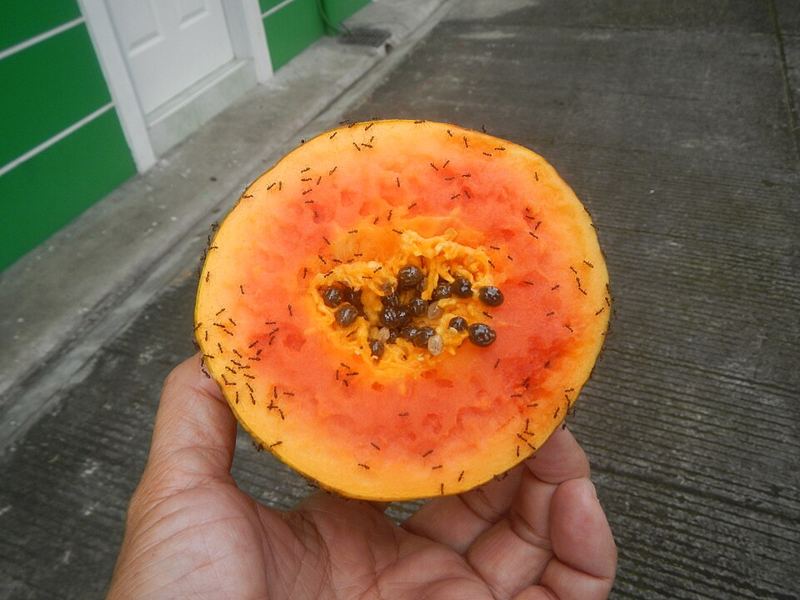 Papaya
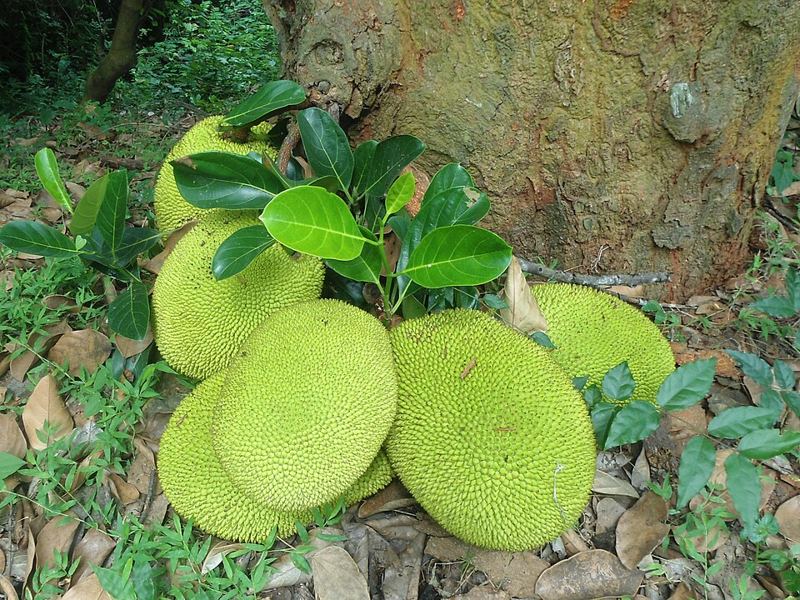 Jackfruit