

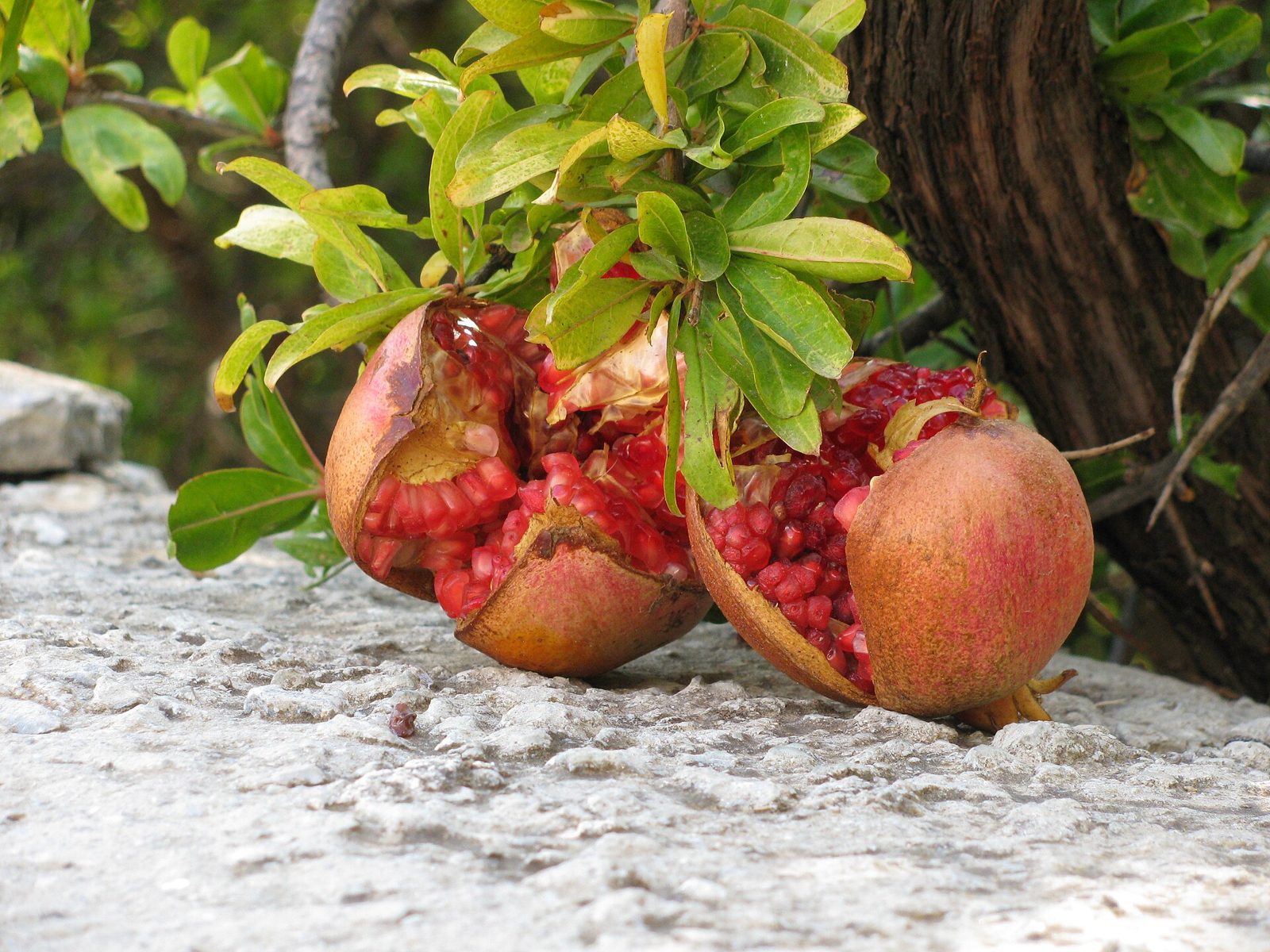
Pomegranates split because the water supply swings: a dry spell followed by a sudden soaking makes the fruit swell faster than the skin can stretch. UF/IFAS says sudden changes in irrigation often lead to splitting, especially in the weeks before harvest, and UGA says splitting follows when rain returns after a drought. The fix is steady watering and a gradual taper as the fruit matures. This page covers the causes, the fixes and what to do with fruit that has already cracked. For planting and care, see our pomegranate tree guide.
Why pomegranates split
A pomegranate fruit grows through the season inside its skin. If the plant is dry for weeks and then gets a drenching, the fruit takes up water quickly and swells. The skin cannot keep up, so it cracks, and the arils can show through the gap.
Two things from the sources explain the pattern:
- Sudden changes in irrigation. UF/IFAS says this often leads to splitting, especially in the weeks before harvest.
- Rain after drought. UGA says providing adequate water throughout drought periods will help minimize the amount of fruit splitting when the rain returns.
So the problem is not too much water or too little. It is the change from one to the other.
Match what you see to the cause
| What you see | Likely cause | What to do |
|---|---|---|
| Fruit cracks after a heavy rain that follows a dry spell | Rain after drought (UGA) | Water steadily through dry weather, so the soil is never bone dry before the rain comes. |
| Fruit cracks after you watered heavily following a gap | A sudden change in irrigation (UF/IFAS) | Return to an even schedule. TAMU suggests every 7 to 10 days once the plant is established. |
| Splits cluster in the last weeks before harvest | Irrigation changes in the weeks before harvest (UF/IFAS) | Taper the water gradually as the fruit matures. Do not stop it all at once. |
| Fruit on a potted plant splits | Pots dry out and flood faster than ground soil | Water on a schedule, mulch the pot and do not let it dry out between waterings. |
| Fruit falls off whole, without cracking | Fruit drop, which is a separate problem | See our guide to why a pomegranate flowers but gives no fruit. |
How to stop pomegranates from splitting
- Water on a steady schedule. CRFG says established trees can take considerable drought, but they must be irrigated for good fruit. TAMU suggests every 7 to 10 days once the plant is established. Keep the schedule even, instead of flooding the plant after a long gap.
- Keep water going through dry spells. UGA says adequate water throughout drought periods minimizes splitting when the rain returns. In a dry stretch, water deeply, rather than letting the soil bake.
- Mulch the soil. A layer of mulch over the root zone slows evaporation and evens out the swings between wet and dry. Keep it a few inches back from the trunk.
- Taper gradually as fruit matures. UF/IFAS says to reduce irrigation gradually during maturation, which reduces splits and also enhances flavor and color development. Cut back in small steps, not all at once.
- Pick on time. Do not leave fruit that is ready hanging for weeks. Our guide on how to tell if a pomegranate is ripe shows the signs to look for.
What to do with a split pomegranate
A crack opens the fruit to rot and pests, so deal with it quickly.
- Pick it promptly. A split fruit does not heal.
- Check it. Look at the arils for mold, a sour smell or insect damage. Throw out anything that smells off or looks rotten.
- Use it soon. Cut away any damaged parts and use the good arils, and do not store a split fruit. See how to cut a pomegranate for how to get the arils out.
- Keep the rest. Fruit that has not split can go into cool storage. NMSU gives 2 to 3 months at 45–55°F.
Splitting versus other fruit problems
Not every damaged pomegranate has a water problem. UGA says Alternaria usually enters the fruit during bloom and fruit set, causing heart rot, so a fruit can look sound outside and be rotten inside. UF/IFAS calls anthracnose the most destructive disease in Florida. Both are different from a split skin, and neither is cured by changing your watering.
If your fruit is falling off whole, UF/IFAS says drop is aggravated by practices that favor vegetative growth, such as over-fertilization and excess irrigation. Go lighter on both. Our guide to pomegranate flowers and fruit set covers the full list of causes.
Planning for next season
Think of splitting as a watering problem you can fix in the next season. Set a steady irrigation routine in spring, mulch, taper in late summer and keep watering through any dry spell. If you grow in a pot, check it daily in hot weather. Our pomegranate tree guide has the rest of the care routine.
Frequently asked questions
Why do pomegranates split open on the tree?
Irregular watering is the cause. UF/IFAS says sudden changes in irrigation often lead to splitting, especially in the weeks before harvest, and UGA says splitting follows when rain returns after a drought. The fix is a steady water supply.
How do you stop pomegranates from splitting?
Water steadily through dry periods (UGA), and reduce irrigation gradually as the fruit matures instead of stopping suddenly (UF/IFAS). A layer of mulch helps keep the soil moisture even.
Can you still eat a split pomegranate?
Often yes, if you use it soon. Pick it, cut away any damaged or moldy parts and check the arils. Throw out fruit that smells sour or shows rot, because the open skin lets in rot and pests.
Do pomegranates split when they are ripe?
Splitting comes from a water swing, not from ripeness. A split fruit can still be ripe, and CRFG says to look for a distinctive color and a metallic sound when tapped, so judge by those signs.
Does fertilizer cause pomegranates to split?
Water is the documented cause. UF/IFAS does say over-fertilization and excess irrigation aggravate fruit drop, so feed lightly, with nitrogen as the only nutrient most plantings need each year (TAMU).
Sources
- The Pomegranate (MG056), UF/IFAS Extension
- Pomegranate Production (C997), UGA Extension
- Pomegranate Fruit Facts, California Rare Fruit Growers
- Texas Fruit and Nut Production: Pomegranates, Texas A&M AgriLife Extension