

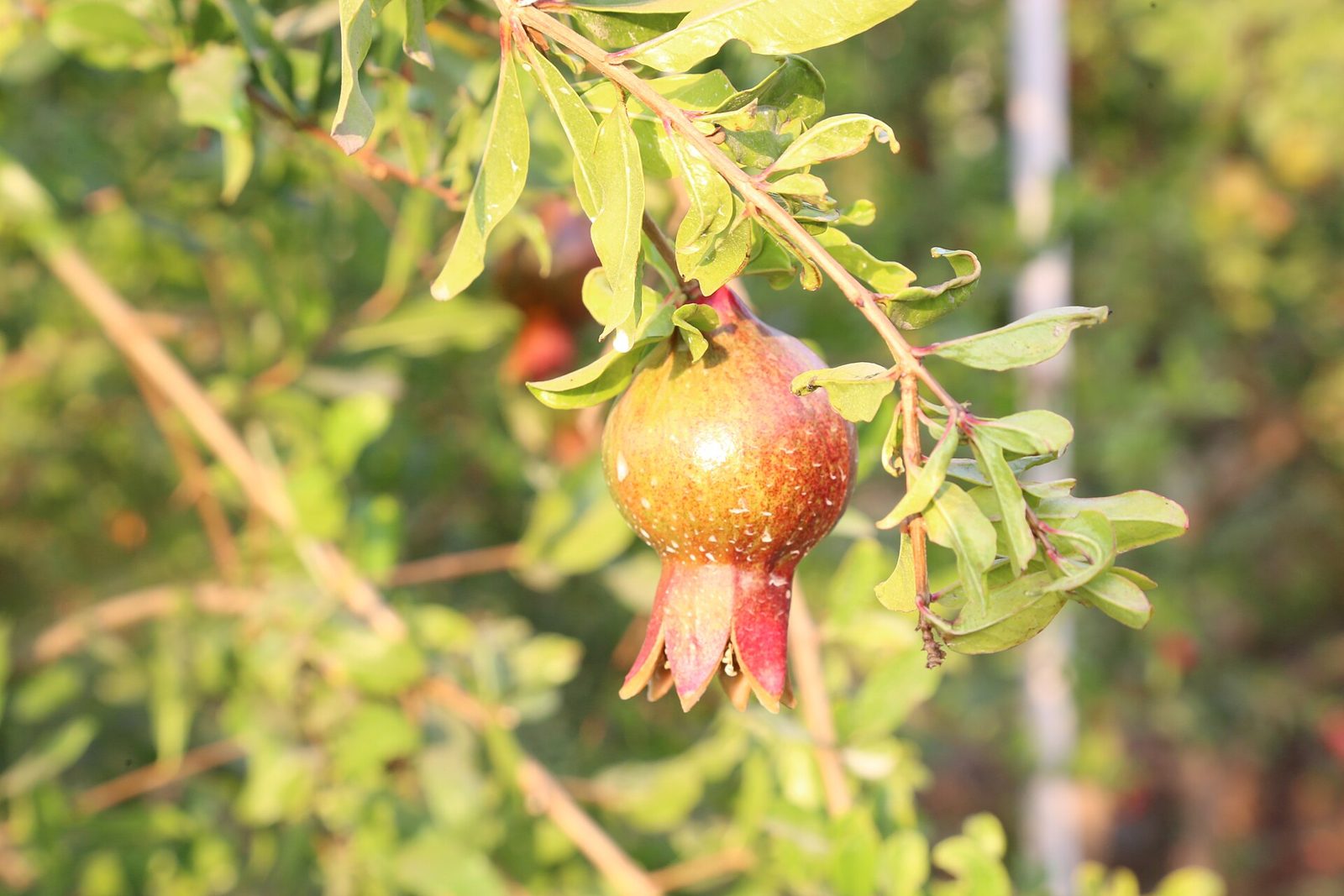
A pomegranate is ripe when it has developed a distinctive color and makes a metallic sound when you tap it (CRFG). Add the calendar: early cultivars ripen from the end of August, and late-maturing ones run into October or early November (UGA). This guide covers the signs, when to pick by variety and how to store the fruit. If you grow your own, our pomegranate tree guide explains how to get a crop worth picking.
How to tell if a pomegranate is ripe: 4 cues
Use these together. Color and sound are the two that extension sources give, and the calendar tells you when to start looking.
Color
Sound
Calendar
Look and feel
When to pick pomegranates by variety
Pomegranate varieties ripen across several weeks, so the variety you grow sets your window.
| Variety | Ripening |
|---|---|
| Early cultivars in general | From the end of August (UGA) |
| Granada | One month earlier than Wonderful (CRFG) |
| Wonderful | Late · NMSU lists maturity September 8 to October 13 |
| Late-maturing cultivars in general | Into October or early November (UGA) |
UGA says growers judge maturity by sugar, acid, sugar-to-acid ratio and color. At home you do not need a lab: color and sound are your guides, and you can taste one fruit to confirm. If the arils taste thin and sharp, give the rest more time.
How to pick a pomegranate
Cut the fruit from the plant with pruners, leaving a short stem. Pulling can tear the skin or the branch. Handle the fruit gently, because a bruise on the thick skin can hide damage underneath.
Pick all the fruit that passes the color and sound tests, and come back for the rest in a few days. Keep an eye on the weather as well. UF/IFAS says sudden changes in irrigation often lead to splitting, especially in the weeks before harvest, and UGA says splitting follows when rain returns after drought. A split fruit is still edible if you use it soon, and our guide on why pomegranates split explains how to prevent it.
Keep a harvest log
Write down the date you pick your first ripe fruit and the date of the last. Ripening depends on the variety, and a hot or cool season shifts it, so a few years of notes give you a window that fits your own plant. Next year, start tapping fruit a week or so before that first date, and you will rarely pick too early or leave fruit hanging past its best.
How to store pomegranates
Where you keep the fruit depends on how soon you want to use it.
- On the counter: NMSU says whole fruit keeps 1 to 3 weeks at room temperature.
- In cool storage: NMSU gives 2 to 3 months at 45–55°F. TAMU says fruit stores best at 40 to 45°F and 85 percent relative humidity, for up to 3 months. A cool basement, an unheated room or the refrigerator can fill that role.
- Once cut: keep the arils in an airtight container in the fridge, and use them soon. Our guide on how to cut a pomegranate shows how to get them out cleanly.
Choosing a ripe pomegranate in a store
The same cues work in a shop, with less information. Choose a fruit that feels heavy for its size, with firm skin and a deep, even color. Tap it if the store allows. Skip fruit with soft or leaking patches, mold or a split.
Common ripeness problems
- Fruit that never seems to color up: check the variety’s season first. A late variety such as Wonderful ripens well into autumn, and UF/IFAS says it might not suit Florida.
- Fruit that split before ripening: this comes from irregular watering, not a ripening problem. Water steadily next season.
- Fruit with a dull sound: wait a few more days and tap again.
- Fruit rotten inside with a normal-looking skin: UGA says Alternaria usually enters the fruit during bloom and fruit set, causing heart rot. It is not a ripeness issue, and you cannot always tell from the outside.
Want to grow your own? Start with the pomegranate tree guide and pick a variety from our pomegranate varieties guide. For a similar project, see how to tell if a fig is ripe.
Frequently asked questions
How can you tell if a pomegranate is ripe?
Look for a distinctive color and tap the fruit. CRFG says pomegranates are ripe when they have developed a distinctive color and make a metallic sound when tapped. Check the date too, because each variety has its own season.
When are pomegranates ripe?
UGA says early cultivars begin to ripen near the end of August and late-maturing ones continue through October or early November. NMSU lists Wonderful maturity from September 8 to October 13, and Granada ripens one month earlier than Wonderful (CRFG).
How long do pomegranates keep after picking?
NMSU says 1 to 3 weeks at room temperature and 2 to 3 months in cool storage at about 40–55°F. TAMU says pomegranates store best at 40 to 45°F and 85 percent relative humidity, for up to 3 months.
Why did my pomegranates split before I could pick them?
Irregular watering is the usual cause. UF/IFAS says sudden changes in irrigation often lead to splitting, especially in the weeks before harvest, and UGA says splitting follows when rain returns after drought. See our guide on why pomegranates split.
Is a split pomegranate ripe?
Not necessarily. A split comes from a water swing, not from ripeness, so check the color and sound before you decide. If the fruit is clearly ready, pick it promptly, because the open skin invites rot and pests.
Sources
- Pomegranate Fruit Facts, California Rare Fruit Growers
- Pomegranate Production (C997), UGA Extension
- Pomegranates, NMSU Extension, Doña Ana County
- Texas Fruit and Nut Production: Pomegranates, Texas A&M AgriLife Extension
- The Pomegranate (MG056), UF/IFAS Extension