

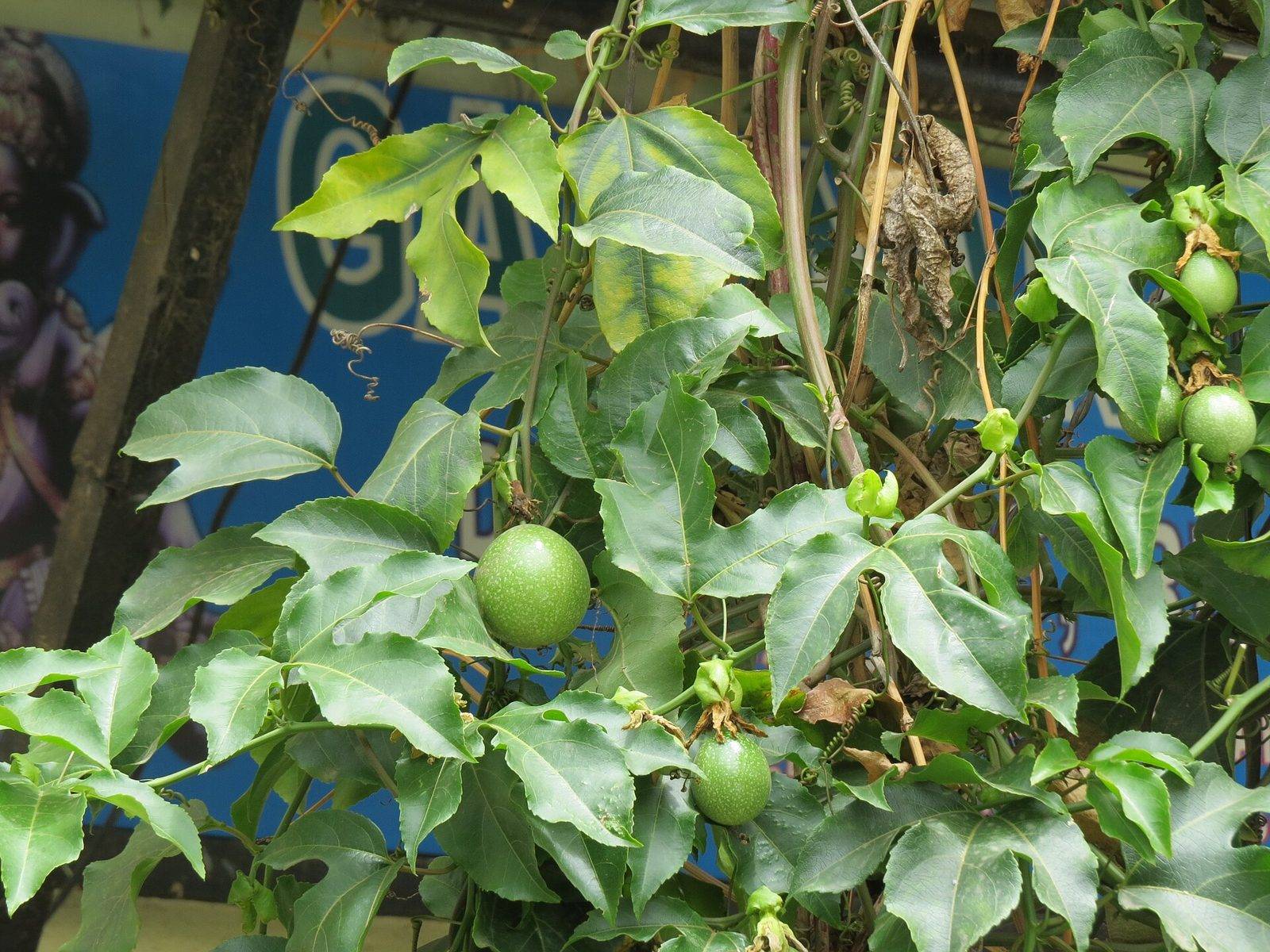
The first choice among passion fruit plants is purple or yellow, and the second is whether you need a cold-hardy alternative. UF/IFAS says the purple passion fruit is the most commonly cultivated type in the United States, with the yellow form grown less widely, and both are one species, Passiflora edulis. This guide compares the types you are likely to meet, plus maypop, a hardy native. For planting and care, see our passion fruit vine guide.
Passion fruit types compared
| Variety | Best for | Size | Flavor | Self-fertile? |
|---|---|---|---|---|
| Purple (P. edulis) | Most home growers · the most commonly cultivated type in the US (UF/IFAS) | — | Fruit ripens from dark purple or burgundy (UF/IFAS) | Yes, flowers are self-fertile (UF/IFAS) |
| Possum Purple | South Florida · the most widely grown and propagated cultivar there (UF/IFAS) | 2.5–3.5 in. long, about 2 in. across (UF/IFAS) | Pleasant aroma, sweet, moderately strong juice · medium-dark purple peel with light dots (UF/IFAS) | Yes, flowers are self-compatible (UF/IFAS) |
| Panama Red | A red-skinned, oval fruit · likely selected by Australian producers for higher yields (UF/IFAS) | Can be larger than Possum Purple (UF/IFAS) | Similar to Possum Purple (UF/IFAS) | — |
| Yellow (P. edulis f. flavicarpa) | Lower, warmer elevations (UF/IFAS) | — | Ripens yellow (UF/IFAS) | No, needs pollen from a genetically different vine (UF/IFAS) |
| Sweet Sunrise | A yellow type sold by nurseries in southern Florida (UF/IFAS) | About the size of a baseball (UF/IFAS) | — | — |
| Maypop (P. incarnata) | Cold gardens · hardy in zones 7b–11 (UF/IFAS) | — | Yellow to green fruit, insipid to slightly sweet (UF/IFAS) | — |
For close-ups, see our pages on Possum Purple and maypop.
Purple or yellow passion fruit?
This is the question that matters most, because it decides whether one vine is enough.
Purple. UF/IFAS says purple passion fruit flowers are self-fertile, so a single vine can fruit alone. The true purple passion fruit is said to be adapted to high-elevation environments in the tropics, and it ripens from dark purple or burgundy. UF/IFAS notes that parasitic nematodes are more likely to attack the roots of purple passion fruit than yellow, and says purple vines can be grafted onto a yellow rootstock to reduce disease problems that affect the roots.
Yellow. UF/IFAS says yellow passion vines are not self-fertile and need pollen from a compatible vine that is genetically different. Yellow types and purple-yellow hybrids are considered better adapted to lower, warmer elevations. If you grow yellow, plant two vines that are genetically different, or hand-pollinate.
Hybrids. Purple-yellow hybrids may or may not be self-fertile (UF/IFAS), so ask the nursery, or assume you will need to help pollination along.
Pick by situation
For the simplest start: a purple type
A self-fertile purple type needs no partner, so it is the easiest to get fruit from in a small garden or a pot. Possum Purple is the one UF/IFAS names as most widely grown in south Florida.
For a red or larger fruit: Panama Red
UF/IFAS says Panama Red has a red peel when ripe, is oval, and can be larger than Possum Purple with a similar flavor. It is likely a selection made by Australian producers for higher yields.
For the warmest, lowest sites: yellow
UF/IFAS says yellow types and purple-yellow hybrids are better adapted to lower, warmer elevations. Yellow Sweet Sunrise is described as a yellow type with fruit about the size of a baseball, sold by nurseries in southern Florida.
For cold winters: maypop
Other cultivars you may see
UF/IFAS names other cultivars of interest, including Australian Purple, Don’s Choice, Frederick and McGuffy, and lists yellow cultivars such as Kapoho Selection, Mike’s Choice and Panama Gold. UF/IFAS also describes Whitman, a yellow seedling selected by William Whitman, a well-known tropical fruit enthusiast in south Florida. Nurseries label and sell passion fruit under many names, so ask where a plant came from and whether it is purple, yellow or a hybrid.
How long until you get passion fruit?
UF/IFAS says the time from flowering to harvest is generally 70 to 75 days, and a one-year-old vine can be expected to produce 5 to 15 lb of fruit per plant. That figure is for passion fruit in general, not for a single cultivar.
Buying a variety
Buy a plant from a nursery in your region, or from a plant sale run by your county extension office or a local fruit-growers club, and check that the label says what type it is. You can also grow from seed, which UF/IFAS says germinates in about a week and a half to three weeks if kept warm, or from cuttings of healthy, productive plants. A seedling can vary from its parent, so a cutting is the safer way to copy a vine you like.
Next steps
Once you have a type in mind, read the passion fruit vine guide for planting and care. If your vine flowers but does not fruit, see why a passion fruit flowers but does not fruit. For other warm-climate fruit, try our dragon fruit guide or banana varieties guide, or browse the tropical fruit section.
Frequently asked questions
What is the difference between purple and yellow passion fruit?
UF/IFAS says purple passion fruit flowers are self-fertile, while yellow vines are not and need pollen from a genetically different vine. Yellow types and purple-yellow hybrids are better adapted to lower, warmer elevations, and the true purple passion fruit is said to be adapted to high-elevation environments in the tropics. Both are considered one species, Passiflora edulis.
Which passion fruit is the easiest to grow at home?
A purple type is the simpler choice, because a single vine can set fruit without a partner. UF/IFAS lists Possum Purple, a self-compatible cultivar, as the most widely grown and propagated cultivar in south Florida.
Which passion fruit is the most cold hardy?
Maypop (Passiflora incarnata), a native species that UF/IFAS lists for zones 7b through 11. UF/IFAS calls it the most cold-hardy species native to the southern United States. Passiflora edulis is suggested for zones 9b and above.
Do you need two passion fruit vines?
For a purple type, no. For a yellow one, yes, or hand-pollinate with pollen from a genetically different vine. Purple-yellow hybrids vary. Our guide on [why passion fruit flowers but does not fruit](/tropical/passion-fruit/not-fruiting/) explains how.
What is Possum Purple passion fruit?
A seedling selection from Possum Trot Nursery. UF/IFAS describes a medium-dark purple peel with light dots, fruit 2.5 to 3.5 inches long and about 2 inches across, and sweet, moderately strong juice. See our [Possum Purple page](/tropical/passion-fruit/varieties/possum-purple/).
Sources
- The Passion Fruit in Florida (HS1406), UF/IFAS Extension
- Passiflora incarnata: Wild Passion Flower, Maypop (FP457), UF/IFAS Extension