

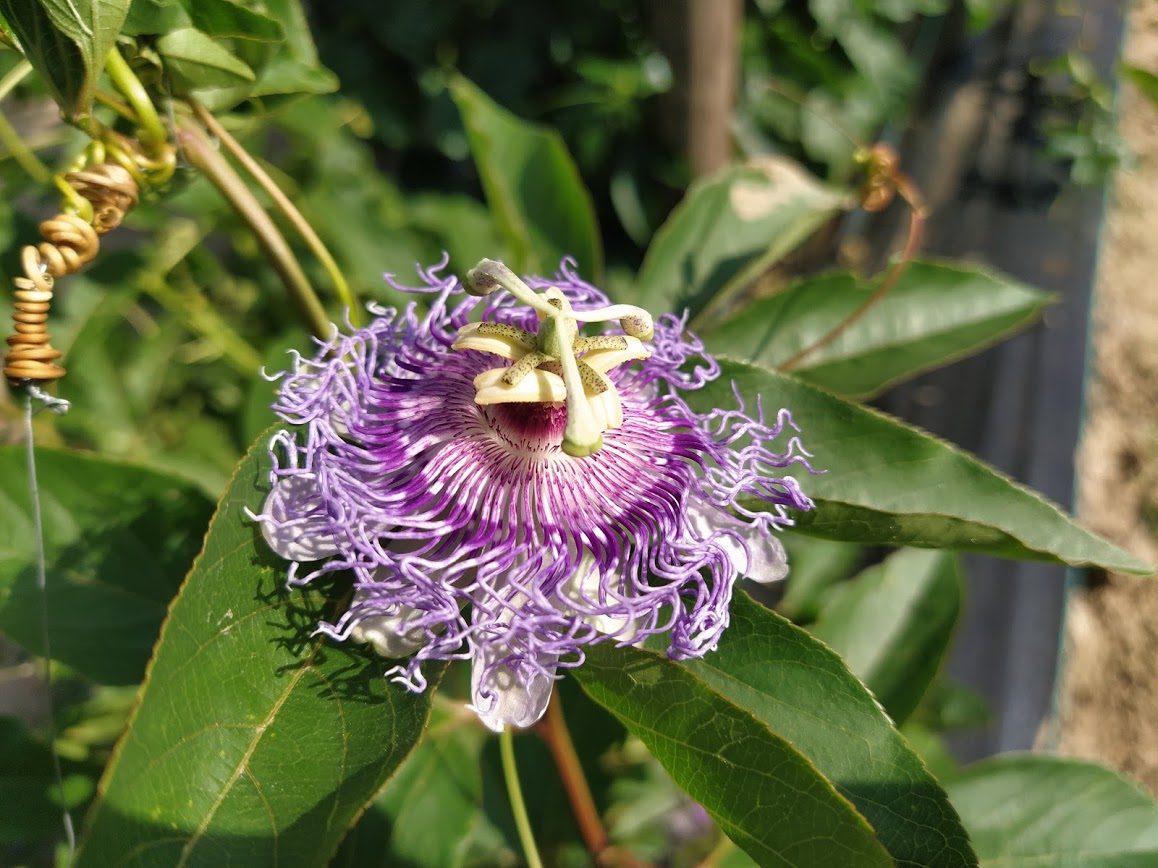
Maypop, Passiflora incarnata, is the cold-hardy native passion flower, and UF/IFAS lists it for USDA zones 7b through 11. UF/IFAS calls it the most cold-hardy species native to the southern United States. It is not the purple passion fruit sold in shops, and the fruit is milder. This page covers maypop only. For the common passion fruit, read our passion fruit vine guide, and to compare types, see the passion fruit varieties guide.
- USDA zones
- 7b–11 (UF/IFAS FP457)
- Sun
- Full sun
- Water
- Moderate
- Difficulty
- Easy
- Lifecycle
- Perennial
- Origin
- The Americas
- Container friendly
- Yes
- Species
- Passiflora incarnata, native to the southern US, not P. edulis (UF/IFAS)
- Fruit
- Ovoid, green to yellow, abundant on the vine with the flowers (UF/IFAS)
- Flavor
- Insipid to slightly sweet (UF/IFAS)
- Propagation
- Seeds or cuttings (UF/IFAS)
- Other names
- Wild passion flower, passion flower (UF/IFAS)
Maypop vs passion fruit
The passion fruit most gardeners want is Passiflora edulis, the purple or yellow vine that ripens a round fruit full of aromatic pulp. UF/IFAS says to avoid confusing it with maypop. They are different species, and the difference shows in where each grows and what you get from it.
| Maypop | Purple passion fruit | |
|---|---|---|
| Species | Passiflora incarnata | Passiflora edulis |
| USDA zones | 7b–11 (UF/IFAS) | 9b and above (UF/IFAS) |
| Fruit | Yellow to green, ovoid, insipid to slightly sweet (UF/IFAS) | Ripens dark purple or burgundy to yellow (UF/IFAS) |
| Native to | Southern United States (UF/IFAS) | — |
| Self-fertile? | — | Yes, flowers are self-fertile (UF/IFAS) |
The maypop fruit and flower
UF/IFAS describes ovoid green fruits, abundantly produced and found on the vine along with the flowers. It also says the fruit are yellow to green and insipid to slightly sweet. In plain terms, the fruit is mild, not the sharp, aromatic pulp of purple passion fruit, so you may want to grow maypop mainly for the vine and the flower, with the fruit as a bonus.
The flower is the real draw. It has a fringed, purple-and-white corona around a green central column, like the flower of any passion fruit vine. Our guide on why a passion fruit flowers but does not fruit describes the parts of the flower.
Where maypop grows
The zone range is the point. UF/IFAS lists maypop for zones 7b through 11, which takes in colder winters than those suited to purple passion fruit. UF/IFAS suggests zones 9b and above for P. edulis, and says mature P. edulis vines can be killed to the ground by prolonged freezing and temperatures in the low to mid 20s°F. If you live in zone 7b, 8 or 9a and want a passion flower in the ground, maypop is the species to choose.
At the cold end of that range, mulch the base of the vine well before winter, as you would for any perennial climber. Our passion fruit vine guide covers cold protection for the tropical types.
How to grow maypop
UF/IFAS says maypop is propagated by seeds or cuttings. You can start it from either, or buy a plant from a nursery that sells native plants. Ask for Passiflora incarnata by its Latin name, since maypop and passion flower are used loosely.
After that, treat it like other passion flower vines. Give it a sunny spot, well-drained soil and a trellis or fence to climb, and water it steadily while it establishes. The care in our passion fruit vine guide is a good starting point, though that guide’s temperature and fertilizing advice is written for P. edulis, so watch what your maypop does and adjust.
Should you grow maypop?
Choose maypop if your winters are too cold for purple passion fruit and you want a passion flower vine that is hardy in your ground. Choose purple passion fruit, such as Possum Purple, if you live in zones 9b–11 and want fruit you can scoop and eat. If you are in between, you can also grow a purple type in a pot and bring it in for winter, and grow a maypop in the ground.
Where to buy maypop
Look for maypop at nurseries that specialize in native plants, at county extension plant sales and at local fruit-growers clubs, and check the label for the Latin name. You can also grow it from seed or cuttings, as UF/IFAS describes. Once you have it planted, our passion fruit varieties guide can help you decide whether a second type is worth the space.
Frequently asked questions
What is a maypop?
Maypop is the common name of Passiflora incarnata, also called wild passion flower. UF/IFAS says it is the most cold-hardy species native to the southern United States and is not to be confused with Passiflora edulis, the passion fruit sold in shops.
What zones can you grow maypop in?
UF/IFAS lists USDA hardiness zones 7b through 11. That is colder than Passiflora edulis, which UF/IFAS suggests for zones 9b and above.
Is maypop fruit edible?
UF/IFAS describes the fruit as yellow to green and insipid to slightly sweet, so it is mild rather than punchy. UF/IFAS says ovoid, green fruits are abundantly produced and can be found on the vine along with the flowers.
How do you propagate maypop?
UF/IFAS says the wild passion flower is propagated by seeds or cuttings.
Is maypop the same as purple passion fruit?
No. Maypop is a different species, Passiflora incarnata, with different fruit and much better cold hardiness. Purple passion fruit is Passiflora edulis, which UF/IFAS suggests for zones 9b and above.
Sources
- Passiflora incarnata: Wild Passion Flower, Maypop (FP457), UF/IFAS Extension
- The Passion Fruit in Florida (HS1406), UF/IFAS Extension