

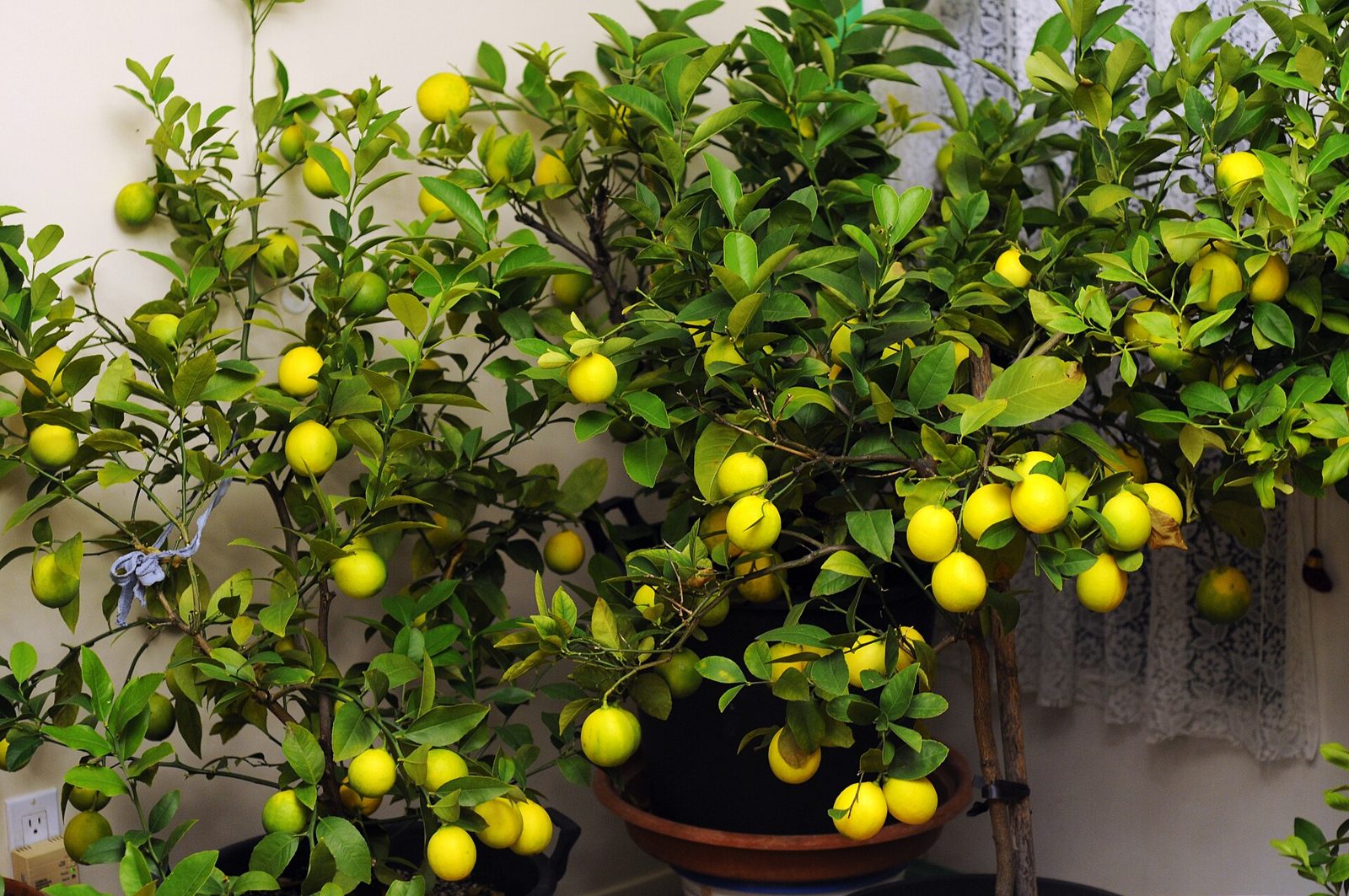
You can grow a Meyer lemon tree in a pot in any USDA zone if you use a pot with drainage holes, give the tree full sun and bring it indoors before a freeze. The Meyer is a naturally small citrus (UC ANR), which is why it is the lemon most people grow in a container. A potted tree is a good beginner project, and it is the way to grow one in zone 8 and colder. This guide expands on the container section of our Meyer lemon tree guide with pot size, a soil mix, watering, feeding and a winter plan.
What size pot does a Meyer lemon need?
Texas A&M AgriLife says container size is the most limiting factor. The pot should be large enough to permit maximum growth, yet small enough to be readily moved indoors in freezing weather. In practice, that means stepping up in stages rather than starting with a huge pot.
| Tree stage | Pot | Notes |
|---|---|---|
| Young nursery tree | A pot one or two sizes above the nursery pot | A pot that is too big holds wet soil around a small root system |
| Established tree | About 10 gallons (38 L) | A 10-gallon fabric pot is a good size for a tree you still need to move |
| Mature tree | The largest pot you can still shift | Put it on a wheeled plant caddy |
Every pot needs drainage holes. A fabric pot breathes, drains freely and is lighter to move than glazed ceramic. A big wet pot is heavy, so a wheeled base saves your back at the first frost.
Every few years, once the tree has reached its final pot, slide it out, trim an inch or two (2.5–5 cm) off the sides of the root ball and refresh the top of the mix. That keeps the tree compact without needing a bigger pot.
What soil mix is best?
Texas A&M AgriLife says potting soil is suitable, and that an adequate mix can be made from one part sand, one part peat moss and one part composted bark. UF/IFAS says lemons prefer a pH of 5.5 to 6.5, so avoid mixes that are heavily limed. Drainage matters more than any recipe: if water pools on the surface for more than a few seconds, add coarse bark or perlite.
How much sun does a potted Meyer lemon need?
Full sun gives the best growth and fruit on lemons (UF/IFAS). Put the pot on a south- or west-facing patio, deck or wall for the warm months. Citrus tolerates light shade, but partial shade reduces growth, and Texas A&M AgriLife says to avoid extremely low light for long periods because the trees become leggy and unattractive.
Watering and feeding a Meyer lemon in a pot
Water
Feed
Watch the leaves
Texas A&M AgriLife says overwatering is the most common cause of poor performance of container citrus trees. If you are unsure, lift the pot. A pot that feels heavy does not need water.
Pruning a potted Meyer lemon
Prune lightly to hold the tree at a size you can move. UF/IFAS says to prune a lemon to remove water sprouts and dead wood, and to shape the tree and control its height and spread. Our Meyer lemon pruning guide covers the cuts.
How to overwinter a potted Meyer lemon
Citrus is evergreen, so unlike a deciduous fig it keeps its leaves and needs light all winter. Put the pot in the brightest room you have, and use a grow light if the window is dim. Our guide to growing a Meyer lemon tree indoors covers light, watering and how to avoid leaf drop. In zones 9–11, a pot can stay outside in a sheltered spot and be covered or moved on the cold nights. Another evergreen tree with the same container routine is the mango, and our mango tree in a pot guide compares pot sizes and winter care.
Frequently asked questions
What size pot does a Meyer lemon tree need?
Texas A&M AgriLife says container size is the most limiting factor. The pot should be large enough to permit maximum growth, yet small enough to be moved indoors in freezing weather. Start in a pot a size or two above the nursery pot, and move up gradually as the roots fill it.
What is the best soil for a Meyer lemon in a pot?
Texas A&M AgriLife says potting soil is suitable, and an adequate mix can be made from one part sand, one part peat moss and one part composted bark. Whatever you use, the pot must have drainage holes.
How often should you water a potted Meyer lemon tree?
Texas A&M AgriLife says to let the upper inch of the mix dry before you water. Then water thoroughly until it runs out of the bottom. Overwatering is the most common cause of poor performance in container citrus.
Can a Meyer lemon tree stay in a pot permanently?
Yes, for years, if you feed it, water it carefully and trim the roots and refresh the mix every few years. Texas A&M AgriLife says container citrus needs some cold protection in winter, so keep the pot small enough to move.
Sources
- Citrus, Texas A&M AgriLife Extension
- The Lemon Tree: Lemon Growing in the Florida Home Landscape (HS402), UF/IFAS Extension
- Cultural Tips for Growing Citrus, UC IPM, University of California
- Home Citrus Guide, LSU AgCenter