

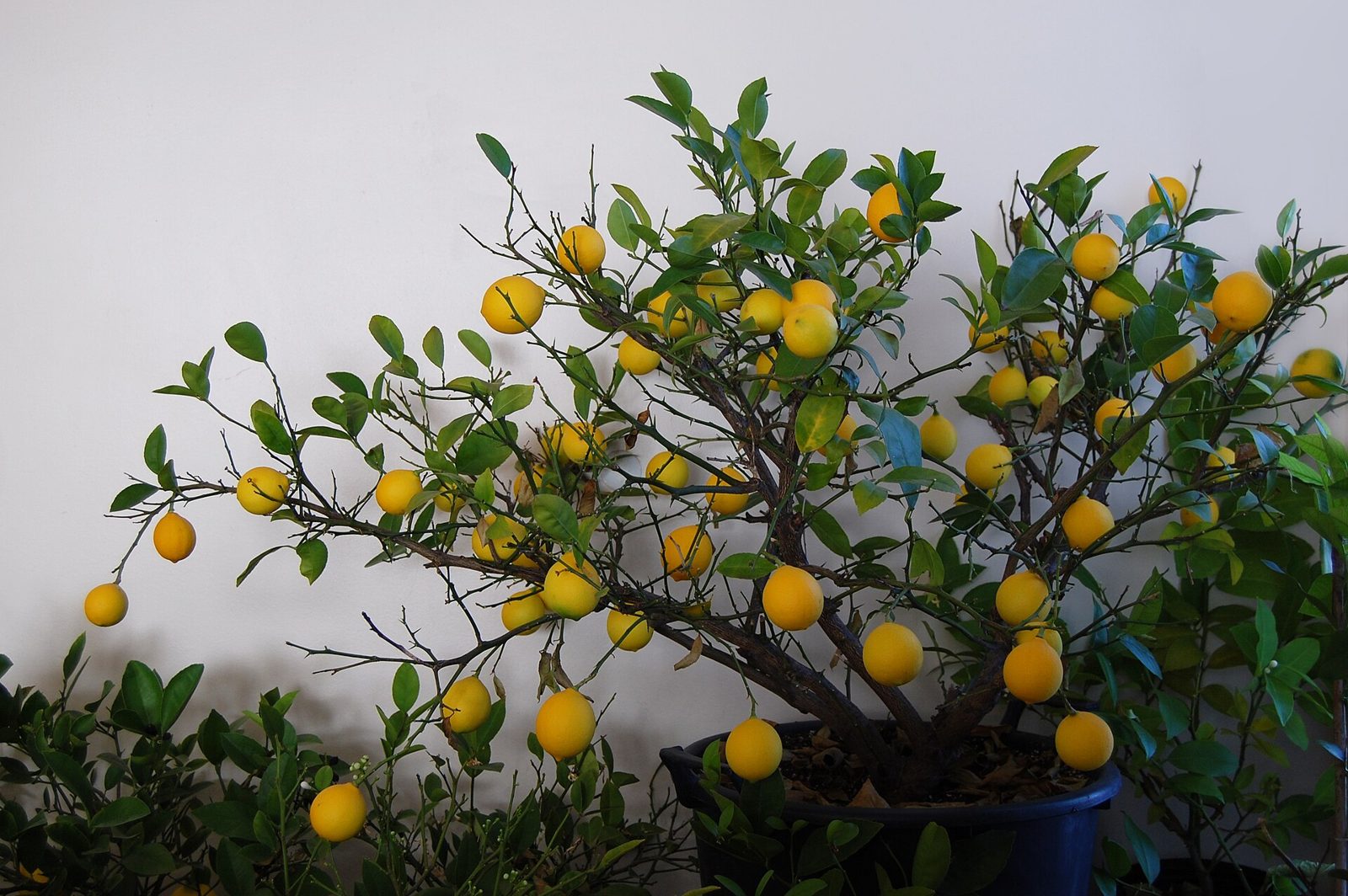
A Meyer lemon tree can live indoors through the winter if you give it your brightest window or a grow light, let the top inch of soil dry between waterings and move it in and out gradually. Texas A&M AgriLife is blunt that citrus trees generally do not perform well as houseplants, so treat the house as a winter shelter, not a permanent home. This page expands on the winter advice in our Meyer lemon tree guide with the move indoors, light, watering and the move back out.
When to bring a Meyer lemon indoors
Move the tree in before cold can touch it. Container citrus needs some form of cold protection to survive most freezing temperatures (Texas A&M AgriLife). A sensible rule is to bring the pot in when nights approach 40°F (4°C). That is well above the damage UF/IFAS lists for lemons: flowers and young fruit are killed near 29°F, leaves are damaged at 22–24°F and wood near 20°F.
How to move a Meyer lemon indoors without leaf drop
Texas A&M AgriLife says to avoid extremely rapid changes in light exposure to prevent excessive leaf drop, and that trees kept indoors for the whole winter should be acclimated gradually. Indoor light is far dimmer than even a shady patio, so the change is bigger than it feels.
- Check for pests first. Look under the leaves and along the stems for scale, aphids and sticky residue. UF/IFAS says scale species can damage bark, leaves and fruit, and the brown citrus aphid feeds on new growth. Deal with them outside, because they spread fast indoors.
- Move the pot to shade for a week. Put it in a shady spot outdoors before it comes in, so the light change is not abrupt.
- Bring it into the brightest spot you have. A south-facing window is the best choice. Keep the tree away from heater vents and from cold glass at night.
- Expect some leaf drop. A few leaves may yellow and fall as the tree adjusts. That is normal. Do not respond by watering more.
- Rotate the pot. Turn it a quarter turn each week so every side gets light and the tree does not lean.
Light: windows and grow lights
Light is the main limit indoors. Texas A&M AgriLife says to avoid extremely low light for prolonged periods, because the trees become leggy and unattractive. Even a south window is dim compared with outdoor sun, and lemons grow best in full sun (UF/IFAS). If the tree stretches, drops leaves or stops growing, add a light.
Hang a full-spectrum light above the canopy and raise it as the tree grows. Run it on a timer so the tree gets a regular day. Light fixtures are a supplement to the window, not a replacement for summer sun.
Watering and feeding indoors
Water
Feed
Air
Pollinating a Meyer lemon indoors
UF/IFAS says lemon does not require cross pollination to set fruit, although honey bees and other insects frequently visit the open flowers. Indoors those visitors are missing. When the tree flowers, brush the inside of each open flower with a small, soft paintbrush or a cotton swab, moving from flower to flower. One tree is enough.
Common indoor Meyer lemon problems
| What you see | Likely cause | What to do |
|---|---|---|
| Leaves yellow and drop a few weeks after the move | A sudden change in light (Texas A&M AgriLife) | Keep conditions steady, give it the brightest spot and do not overwater |
| Long, thin, pale growth with few leaves | Too little light | Add a grow light or move the pot closer to the window |
| Yellow leaves with soggy soil | Overwatering | Let the top inch dry before the next drink, and check the drainage holes |
| Sticky leaves, bumps on stems | Scale or aphids (UF/IFAS) | Wipe the insects off, repeat and treat as the label directs |
| Many leaves yellow at once | Several possible causes | See our Meyer lemon yellow leaves guide |
Moving the tree back outside
Wait until after the last frost, then reverse the process. Set the pot in full shade for a few days, then move it into morning sun, and finally into full sun over a week or two. Rushing causes leaf drop and scorch just as the move indoors does. After the tree is back outside, prune lightly to restore its shape (see our Meyer lemon pruning guide), and resume feeding.
A Meyer lemon does not rest the way a deciduous tree does. If you grow a fig too, compare how it spends winter in our fig overwintering guide, where the tree sits dark and dormant, whereas a citrus keeps its leaves and needs light. For pot sizes and soil, see growing a Meyer lemon tree in a pot.
Frequently asked questions
Can a Meyer lemon tree live indoors all year?
It can survive, but it is a demanding houseplant. Texas A&M AgriLife says citrus trees generally do not perform well as houseplants, although several kinds adapt to container culture. Most trees do better outside in summer sun and inside only for the cold months.
How much light does an indoor Meyer lemon need?
As much as you can give it. Put it in your brightest window, and add a grow light if the window is dim. Texas A&M AgriLife says to avoid extremely low light for prolonged periods, because the tree becomes leggy and unattractive.
Why is my Meyer lemon dropping leaves indoors?
A sudden change in light is the usual cause. Texas A&M AgriLife says to avoid extremely rapid changes in light exposure to prevent excessive leaf drop. Move the tree in stages, and keep the soil from staying wet.
Do indoor Meyer lemon trees need hand pollination?
Lemons do not require cross pollination to set fruit (UF/IFAS), so one tree can fruit. Indoors there are few insects to move the pollen, so brushing each open flower with a small soft brush helps.
When should I move a Meyer lemon tree back outside?
After the last frost, once nights are well above freezing. Set the pot in shade first and move it into more sun over a week or two, because a sudden change in light causes leaf drop in both directions.
Sources
- Citrus, Texas A&M AgriLife Extension
- The Lemon Tree: Lemon Growing in the Florida Home Landscape (HS402), UF/IFAS Extension
- Cultural Tips for Growing Citrus, UC IPM, University of California