

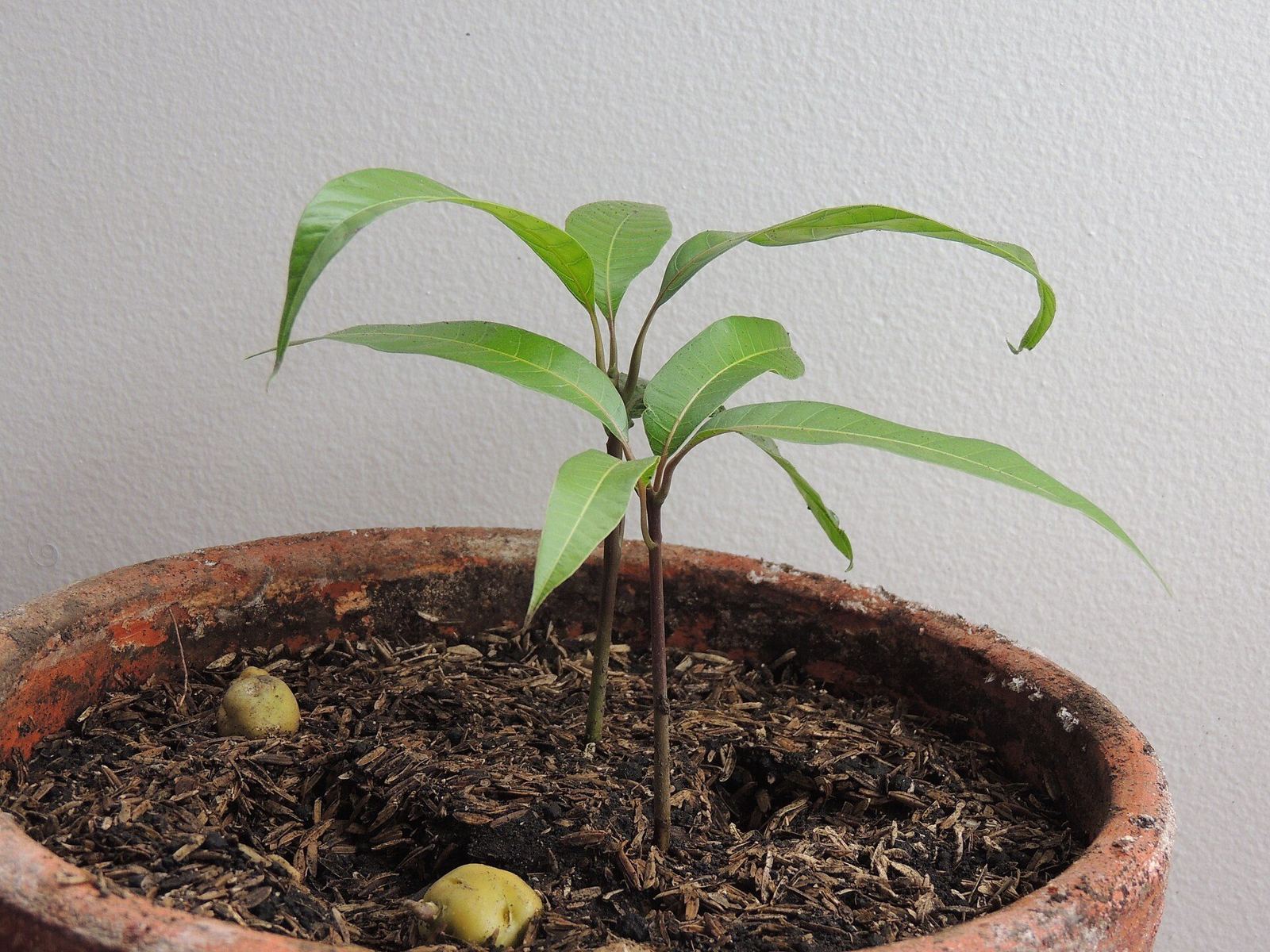
You can grow a mango tree in a pot in any USDA zone if you pick a grafted dwarf variety, start it in a 7–10 gallon container and keep it in full sun all summer. Bring it indoors when nights fall below 40°F (4°C) and prune it to 6–8 ft. A potted mango is a medium-difficulty project: it is easy to keep alive and harder to coax into fruit. This guide expands on the container section of our mango tree guide with pot sizes by age, a soil recipe and a winter plan for your zone.
Which mango varieties suit a pot?
Choose a grafted tree of a compact “condo” type. Seedlings and standard varieties such as Tommy Atkins, Kent and Keitt grow to 30–40 ft, and keeping them in a pot is a losing fight.
- Carrie is our top pick for containers: compact, reliable and a good flavor.
- Nam Doc Mai is a Thai variety that UF/IFAS rates medium to high vigor, so in a pot it needs firm pruning every year. Grow it if you want to start from seed: its seeds come true.
- Pickering, Julie, Cogshall and Angie are other compact types that growers use in pots. Compare their zones and flavors in the mango varieties guide.
Buy a tree in a 3-gallon pot rather than a tiny starter. It is more forgiving and closer to fruiting size.
What size pot does a mango tree need?
Step up gradually. A pot that is too big holds wet soil around a small root system and invites root rot.
| Tree age | Pot size | Notes |
|---|---|---|
| Nursery tree, year 0 | 7–10 gallons (26–38 L) | Move up from the 3-gallon nursery pot |
| Years 1–3 | 15 gallons (57 L) | Repot when roots fill the pot or water runs straight through |
| Year 3+ | 20–25 gallons (76–95 L) | Stop here and root-prune instead |
Every pot needs drainage holes. Fabric pots breathe, drain well and are lighter to move than plastic or ceramic. Put a 25-gallon pot on a wheeled plant caddy, because a wet one can weigh well over 100 lb (45 kg).
When the tree outgrows its final pot, slide it out every 2–3 years, shave 1–2 inches (2.5–5 cm) off the sides of the root ball and refresh the top third of the mix. It keeps the tree compact without a bigger pot.
What soil mix is best for a potted mango?
Mangoes need fast drainage. Regular potting soil on its own stays wet for too long, and mango roots hate sitting in water.
Our mix: 2 parts quality potting mix, 1 part pine bark fines and 1 part perlite or coarse sand. A bagged citrus or palm mix works too, or cut regular potting soil with one-third pine bark fines or perlite. Mangoes are not fussy about pH and do well in the slightly acidic to neutral range, roughly 5.5–7.5.
How much sun does a potted mango need?
Full sun means at least 8 hours of direct light, and more is better. Put the pot against a south- or west-facing wall outside, where reflected heat helps. Mangoes want warmth: growth slows below about 50°F (10°C).
Indoors, even a south window is dim for a mango. Add full-spectrum grow lights for 12–14 hours a day, set within a foot or so of the canopy. Follow the light’s own distance guidance. A 4-pack of T5 tube lights (shown above) can keep one small tree going through winter, but lights alone rarely produce flowers. Plan on summer outdoors for the sun it needs.
Watering and feeding a mango in a pot
Water
Feed
Watch the leaves
How to prune a mango tree to stay small
Mangoes flower on the tips of shoots that matured the previous fall, so prune at the right time or you cut off next year’s fruit. Prune right after harvest, and finish by midsummer. In Florida, the cutoff is the end of July.
- Take each branch back by one growth flush, roughly 6–12 inches (15–30 cm), cutting just above a leaf node.
- Cut out crossing branches and thin the center so light and air reach the fruit.
- Aim for 6–8 ft (1.8–2.4 m) tall and as wide as you can comfortably move.
- Wear gloves. Mango sap can irritate skin, and it is related to poison ivy.
Avoid heavy pruning in fall or winter. The tree will grow a flush of leaves instead of flowers.
How to overwinter a potted mango by zone
Inside, put the tree in your brightest spot or under grow lights, in a room that stays above about 50°F (10°C), ideally 60–70°F (16–21°C). Keep it away from heating vents, water less and wipe the leaves occasionally. Watch for scale insects and mealybugs, which love stressed indoor trees. A dark garage is not enough, because mangoes are evergreen and keep their leaves.
Move it back outside when nights stay above about 55°F (13°C). Harden it off over 7–10 days, starting in shade, or the leaves will sunburn.
If you want flowers, give the tree a cool, dry rest in winter. Several weeks of nights in the 50s°F (10–15°C) and very little water encourage bloom.
How to hand-pollinate a potted mango
A mango panicle carries hundreds of tiny flowers, some male and some bisexual, and only the bisexual ones can set fruit. The flowers are mostly pollinated by flies and other small insects, so a tree in a sunroom or garage may set no fruit. When you see open flowers, brush a soft paintbrush gently across several panicles every few days. Even outdoors, only a small fraction of flowers set, so a few fruit per tree is a good result. In the first fruiting years, let just 2–4 fruit ripen so the tree is not overloaded. When they come, learn the signs in how to tell if a mango is ripe.
Frequently asked questions
What size pot does a mango tree need?
Start a 3-gallon nursery tree in a 7–10 gallon pot, move to 15 gallons after 1–2 years, and finish in a 20–25 gallon pot. Anything larger gets too heavy to move indoors for winter.
Will a potted mango tree produce fruit?
Yes, if it is a grafted dwarf variety with full sun, a cool dry rest in winter and pollination help. Expect the first fruit 3–5 years after planting. Trees kept indoors all year rarely set fruit.
Can a mango tree live indoors all year?
It can live there, but it will not thrive without very strong light. Even a south window is weak for mango. Use grow lights for 12–14 hours a day in winter, and put the tree outside in summer for the sun it needs to flower.
When should I bring my mango tree inside?
Bring it in when nights drop below 40°F (4°C), and sooner if frost is forecast. Move it back out once nights stay above about 55°F (13°C), hardening it off over 7–10 days.
Sources
- Mango Growing in the Florida Home Landscape (HS2/MG216), UF/IFAS Extension
- Mango Fruit Facts, California Rare Fruit Growers
- Mangifera indica: Mango (ENH563/ST404), UF/IFAS Extension