

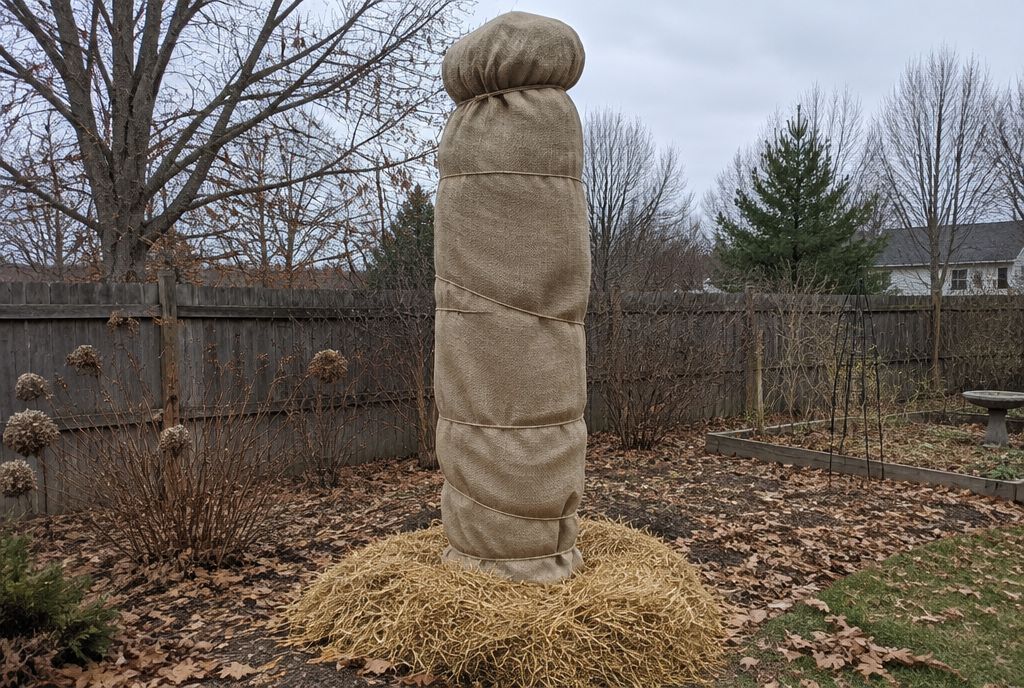
To winterize a fig tree, mulch the base, wrap the dormant branches in something breathable, bury the tree or move a potted one into an unheated garage or shed. The right method depends on your zone. Fully dormant figs are damaged somewhere around 15–20°F (−9 to −7°C), so in zones 8–11 a mulch layer is usually enough. In zones 5–7 wrap, bury or move the tree, or accept that the top will die back and regrow from the roots. This guide expands on the overwintering section of our fig tree guide with each method, when to start and when to stop.
How cold hurts a fig tree
UF/IFAS says fully dormant trees are hardy to about 15–20°F (−9 to −7°C). The California Rare Fruit Growers put it at 12–15°F (−11 to −9°C), and add that a tree in active growth can be damaged near 30°F (−1°C). That is why a late spring frost after the leaves have come out can hurt more than a colder midwinter night.
A fig that freezes back is not always dead. UF/IFAS notes that fig trees often freeze back and regrow in bush form, and the roots of hardy varieties survive much colder than the branches. Chicago Hardy is listed by Iowa State for zones 5–10 and is the most cold-tolerant of the figs we cover, but Iowa State says that in zone 5a it may not always overwinter.
Which method for which zone?
| Your zone | What to do |
|---|---|
| 9–11 | Mulch the base. Cover young trees with frost cloth if a hard freeze is forecast. |
| 8 | Mulch the base, and wrap the tree in the coldest winters. Expect some branch damage in a hard freeze, and regrowth from below. |
| 5–7 | Choose a hardy variety, then wrap it, bury it or let it die back each winter. |
| Any zone, in a pot | Move the pot to an unheated, preferably dark garage, shed or cool basement. |
Method 1: Mulch the base
Mulching protects the crown and the lower trunk, which is where a hardy fig will regrow from. Penn State Extension recommends mulching the base of the plant 6–12 inches (15–30 cm) deep with leaves, straw or other organic material. Do it after the leaves have dropped and the soil has started to cool, and pull the mulch back a little in spring so the base can warm up.
Method 2: Wrap the tree
Wrapping protects the branches. Penn State recommends covering the tree with burlap, canvas, row cover, a quilt or other breathable wrapping, not plastic, to protect it from the wind.
- Wait until the leaves have dropped. Wrap a dormant tree, not one in active growth. Wrapping too early keeps the tree warm and growing when it should be resting.
- Tie the branches up loosely. Gather the branches into a bundle with soft twine so you can wrap a narrow column rather than a sprawling shrub. Do not force stiff branches or they will snap.
- Wrap with a breathable material. Cover the tree from the ground to the tip with burlap, canvas, row cover or a quilt. Overlap the layers and tie them in place. Do not use plastic.
- Pack in extra insulation. Fill the space between the wrap and the branches with straw or dry leaves if you want more protection, and keep it dry.
- Mulch the base. Pile leaves or straw 6–12 inches (15–30 cm) deep around the trunk, as in method 1, and weigh the wrap down at the base so it does not blow open.
Method 3: Bury or trench the tree
Penn State Extension notes that Italian immigrants who brought their fig trees to the United States developed the practice of trenching or burying them to protect them. It is the most work, and it suits the coldest zones and gardeners who want a bigger tree than a regrown bush. The idea is simple: once the tree is dormant, lay it down gently in a shallow trench, cover it with soil or straw, and uncover it in spring. Bend slowly, because brittle branches break, and keep the covering as dry as you can. Details vary with your climate, so check with your local extension office before you try it on a prized tree.
Method 4: Move a potted tree
A pot makes winter easy. Penn State says to place containers in an insulated, unheated, preferably dark room, garage or cool basement. A fig loses its leaves in winter, so it needs no light while it rests. Move the pot in once the leaves have dropped, and keep the soil barely moist. See our fig tree in a pot guide for pot sizes and care. A Penn State Extension author also keeps one Black Mission fig in a 3-by-3-foot pot that stays outdoors and is protected as if it were in the ground, which suits a pot too big to move.
When to wrap and when to unwrap
- Wrap after the leaves have dropped and before the coldest weather, when the tree is fully dormant.
- Check the wrap on mild days in winter. Wet, rotting wrap or mold means too much moisture, and an open wrap lets the cold in.
- Unwrap in spring once the hardest freezes have passed. If new growth starts under the wrap, remove it sooner.
- Prune in late winter before growth starts, and wait for buds to show before you cut off wood you think is dead. Brebas form on last year’s wood, so a tree that froze back may skip its spring crop and give a main crop on new growth.
When the tree finally fruits, our guides on how to tell if a fig is ripe and how to eat a fig help you make the most of it.
Frequently asked questions
What temperature kills a fig tree?
UF/IFAS says fully dormant trees are hardy to about 15–20°F (−9 to −7°C), and the California Rare Fruit Growers put the limit at 12–15°F (−11 to −9°C). A tree in active growth can be hurt near 30°F (−1°C). The roots of hardy varieties survive much colder, and the tree often regrows in bush form.
Should I wrap a fig tree in plastic?
No. Penn State Extension recommends breathable wrapping such as burlap, canvas, row cover or a quilt, not plastic. Plastic traps moisture and can heat up on sunny days.
When should I unwrap a fig tree?
In spring, once the hardest freezes have passed. Unwrap gradually if you can, and do it on a mild, cloudy day. Wait for new growth to show before you cut away any wood you think is dead.
Do I need to protect a fig tree in zone 8 or 9?
Usually only young trees and cold snaps. A mulch layer over the base is cheap insurance, and a wrap helps when a hard freeze is forecast. Even if the top freezes, UF/IFAS says trees often freeze back and regrow in bush form.
Sources
- Winterizing Your Fig Tree, Penn State Extension
- The Fig (HS27/MG214), UF/IFAS Extension
- Fig Fruit Facts, California Rare Fruit Growers
- Growing Hardy Figs in Iowa, Iowa State University Extension