

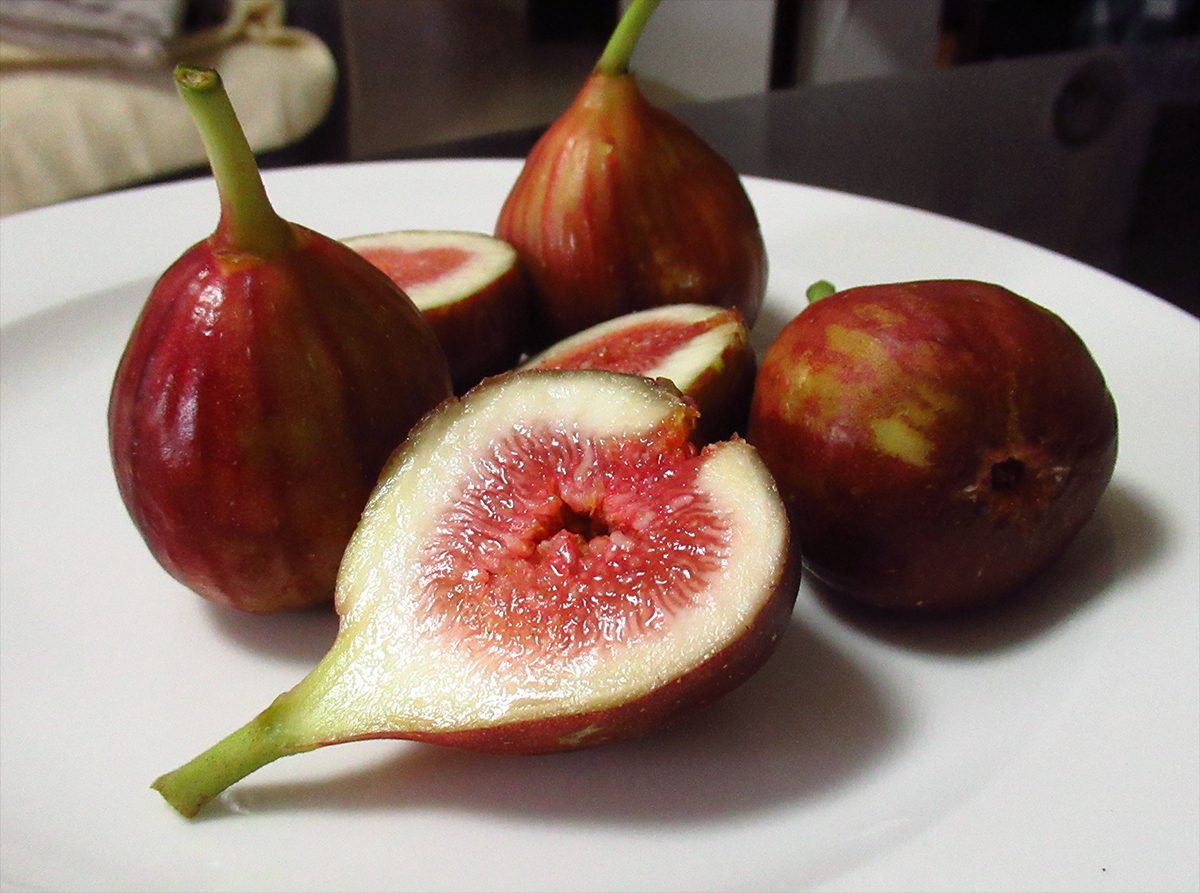
To eat a fresh fig, wash it, trim off the hard stem and eat it whole, skin and all, or tear or cut it in half. A ripe fig is soft and sweet, with a skin so thin you do not need to peel it. Choose figs that are ready: they should yield slightly, because figs do not ripen after they are picked. If you grow your own, our fig tree guide shows you how to get fruit like this at home.
Before you eat: check the fig is ripe
A ripe fig changes color, softens, hangs with its stem bent downward and has an open eye (Penn State Extension). Illinois Extension says figs will not ripen once they are off the tree, so a hard fig will not improve on the counter. Our guide to how to tell if a fig is ripe covers each cue and shows the color of ripe figs by variety.
Fresh figs do not keep well. The California Rare Fruit Growers say they can be stored in the refrigerator for only 2–3 days, so buy or pick only what you will eat. Wash them just before you eat them, in cool water, and pat them dry. Handle them gently, because the skin splits and bruises easily.
How to eat a fresh fig
- Wash and dry. Rinse the fig under cool water and pat it dry with a paper towel.
- Trim the stem. Pinch or cut off the tough stem end. Leave the rest of the neck, which is edible.
- Eat it whole or halve it. Bite in, or cut it from stem to base in half to see the pink flesh and seeds. The skin is edible, so there is nothing to peel.
- Cut it for serving. Slice into quarters, or into rounds if you want to lay them on a platter or a slice of bread.
Ways to serve figs
Fresh figs are sweet and soft, so they work with salty, creamy or sharp partners.
- With cheese: halve a fig and top it with soft cheese, or lay quarters beside a hard cheese on a board.
- With cured meat: wrap a half fig in thin ham for a quick starter.
- With honey or yogurt: spoon thick yogurt over halves and drizzle with honey or nuts.
- Roasted or grilled: halve figs, brush with a little oil or butter and cook until the cut sides soften and turn glossy.
- On toast or a salad: use slices on toast with ricotta, or toss quarters through leaves and nuts.
- Jam: the usual way to use a glut. Cook chopped figs with sugar and lemon until thick.
- Dried: the California Rare Fruit Growers note that Celeste is very sweet and usually dried. Dry halves or slices in a low oven or a dehydrator until leathery.
How to roast figs
Roasting turns a firm or slightly underwhelming fig into something jammy, and it is the easiest cooked fig dish.
- Heat the oven. Set it to a moderate heat, about 375°F (190°C), and line a small dish with baking paper.
- Halve the figs. Cut them in half from stem to base and set them cut side up in the dish.
- Add a little sweetness and fat. Brush with oil or dot with butter, and add a drizzle of honey if you like.
- Roast until soft. Bake for 10–15 minutes, until the cut sides are glossy and the fruit has softened. Serve warm with yogurt or cheese.
Which fig varieties are best to eat fresh?
Taste is a matter of variety and ripeness. The California Rare Fruit Growers describe Brown Turkey as having good flavor and being best when fresh, Kadota as rich in flavor, and Black Mission as fairly good in taste. Celeste is very sweet and is usually dried. Chicago Hardy and LSU Purple flavor varies with climate and ripeness, so taste a few before you decide. Compare the types in our fig varieties guide, and learn more about two of them on the Brown Turkey and Chicago Hardy pages.
Common questions about eating figs
Do you eat the skin? Yes. The skin of a ripe fig is soft and thin, and most people eat the whole fruit. Peel it only if you do not like the texture.
What about the seeds? The small seeds inside are part of the fruit and give it its slight crunch. You do not need to remove them.
What about the sap? The milky sap from a freshly picked stem can irritate sensitive skin, so wear gloves when you pick if it bothers you, and rinse the figs before you eat them.
Can you freeze figs? Yes. Freeze whole or halved figs on a tray, then bag them. They soften when thawed, so use them for jam, sauces or baking rather than eating them raw.
Want to grow your own? Start with the fig tree guide, then pick a variety that suits your zone.
Frequently asked questions
Do you peel a fig before eating it?
No. The skin is edible and soft on a ripe fig, and most people eat the fruit whole. Wash it, trim the hard stem and bite in. Peel it only if you dislike the texture of the skin.
How do you know a fig is ready to eat?
Look for a fig that has changed color, feels soft, hangs with a bent neck and has an open eye (Penn State Extension). Figs do not ripen after picking (Illinois Extension), so a hard fig will stay hard.
How long do fresh figs keep?
Only 2–3 days in the refrigerator (CRFG). Eat them soon after picking or buying, or turn extras into jam, or dry them.
Which fig varieties are best fresh, and which are dried?
The California Rare Fruit Growers describe Brown Turkey as best when fresh and Celeste as very sweet and usually dried. Flavor varies with variety, climate and how ripe the fruit is when picked.
Sources
- Fig Fruit Facts, California Rare Fruit Growers
- Go Figure: Figs Are a Great Addition to Home Gardens, University of Illinois Extension
- Figs in the Home Garden, Penn State Extension