

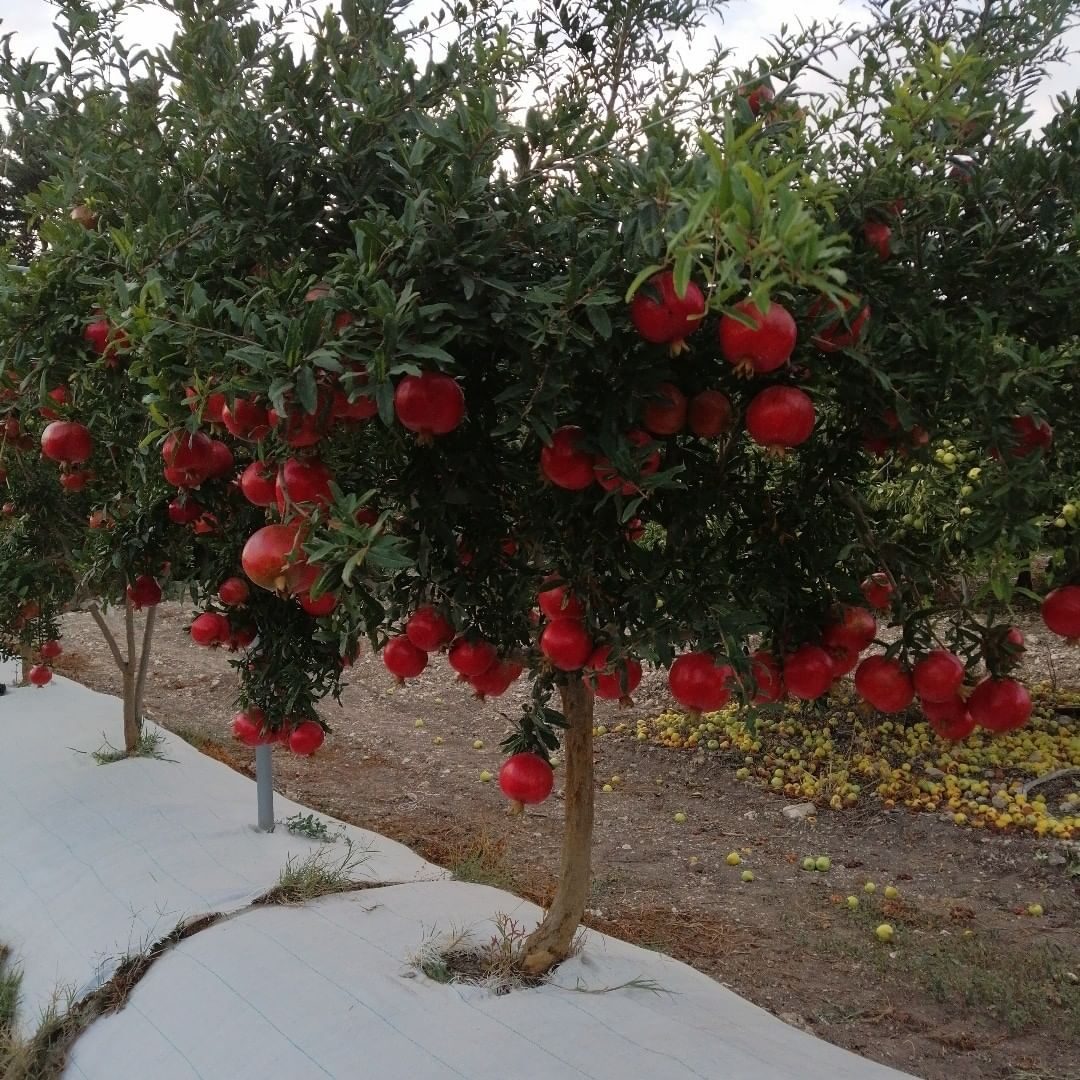
Which pomegranate to grow comes down to your winters and your harvest window. Wonderful is the best-known variety and a late ripener, Granada comes in a month earlier and is less tart, Eversweet is prized for sweetness, and Kazake and Salavatski are the cold-hardy names. This guide compares the five. For planting and care, see our pomegranate tree guide.
Pomegranate varieties compared
| Variety | Best for | Size | Flavor | Cold hardiness |
|---|---|---|---|---|
| Wonderful | Leading commercial variety in California (CRFG) · late ripening, with NMSU listing maturity from September 8 to October 13 | — | Better for juicing than for eating out of hand; seeds not very hard (CRFG) | — |
| Granada | An earlier harvest · ripens one month earlier than Wonderful (CRFG) | — | Darker red and less tart than Wonderful (CRFG) | — |
| Eversweet | Sweet fruit for home or commercial use (NMSU) | — | One of the sweetest varieties (NMSU) | — |
| Kazake | Colder sites · a good hedgerow plant (NMSU) | — | — | Can be grown as far north as zone 5 (NMSU) |
| Salavatski | The coldest winters · TAMU lists it among varieties under study for north central Texas | — | — | Withstands 0°F, very cold hardy (NMSU) |
For a close look at the best-known one, see our Wonderful pomegranate page.
Pick by situation
For the classic: Wonderful
Wonderful originated in Florida (CRFG) and is the leading commercial variety in California. CRFG says its seeds are not very hard, and that it is better for juicing than for eating out of hand. It ripens late, which is a drawback in some places. UF/IFAS says the late-ripening Wonderful might not be the suitable cultivar for Florida. Read the Wonderful page for the full picture.
For a sweeter, less tart fruit: Eversweet or Granada
NMSU calls Eversweet one of the sweetest varieties for both home and commercial use. Granada is a bud mutation of Wonderful, darker red and less tart (CRFG), so it is the pick if you like the Wonderful look with a softer flavor.
For an earlier crop: Granada
Granada ripens one month earlier than Wonderful (CRFG), so you pick sooner. UGA says early cultivars begin to ripen near the end of August, and late-maturing ones continue through October or early November.
For cold winters: Kazake or Salavatski
UGA says most pomegranate cultivars are hardy to 12°F, and the hardier types survive down to 7°F without damage. Kazake and Salavatski go further. NMSU says Kazake is one of the pomegranates that can be grown as far north as zone 5 and is a good hedgerow plant, and Salavatski can withstand temperatures as low as 0°F. TAMU lists Salavatski among the varieties under study for north central Texas winters. If you garden in zones 5–7, start with one of these.
Pollination and chill
You do not need a partner variety. UGA says pomegranates are self-fruitful. CRFG says cross-pollination increases fruit set, so two varieties near each other may give you a better crop, and it is a good excuse to try a second one, such as Granada beside Wonderful.
Chill is rarely a limit. UGA says the majority of pomegranate varieties do not require winter chill hours, with the exception of a few cold-hardy cultivars. If you pick a very cold-hardy type for a mild-winter area, ask your nursery whether it needs some winter chill.
Ripening time at a glance
| Variety | Ripening |
|---|---|
| Granada | One month earlier than Wonderful (CRFG) |
| Wonderful | Late. NMSU lists maturity September 8 to October 13 |
| Early cultivars in general | From the end of August (UGA) |
| Late-maturing cultivars in general | Into October or early November (UGA) |
Buying a variety
Buy a plant from a nursery in your region, or from a plant sale run by your county extension office or a local fruit-growers club, and check that the label gives the variety name. You can also take hardwood cuttings from a plant you know, and our guide to growing a pomegranate from cuttings shows how.
Next steps
Once you have a variety in mind, read the pomegranate tree guide for planting and care. When fruit arrives, learn how to tell if a pomegranate is ripe and how to cut a pomegranate. For other warm-climate fruit, browse the Mediterranean fruit section.
Frequently asked questions
What is the best pomegranate variety for a home garden?
Wonderful is the best known, and CRFG calls it the leading commercial variety in California. It ripens late, though. Granada ripens a month earlier (CRFG), and NMSU calls Eversweet one of the sweetest varieties for home and commercial use.
Which pomegranate is the most cold hardy?
NMSU says Salavatski can withstand temperatures as low as 0°F, and Kazake can be grown as far north as zone 5. For comparison, UGA says most pomegranate cultivars are hardy to 12°F, with hardier types surviving 7°F without damage.
What is the difference between Wonderful and Granada pomegranates?
CRFG describes Granada as a bud mutation of Wonderful that originated in Lindsay, California. Its fruit is darker red and less tart, and it ripens one month earlier than Wonderful.
Do you need two pomegranate varieties to get fruit?
No. UGA says pomegranates are self-fruitful, so one plant fruits alone. CRFG says cross-pollination increases fruit set, so a second variety can help.
Sources
- Pomegranate Fruit Facts, California Rare Fruit Growers
- Pomegranates, NMSU Extension, Doña Ana County
- The Pomegranate (MG056), UF/IFAS Extension
- Pomegranate Production (C997), UGA Extension
- Texas Fruit and Nut Production: Pomegranates, Texas A&M AgriLife Extension