

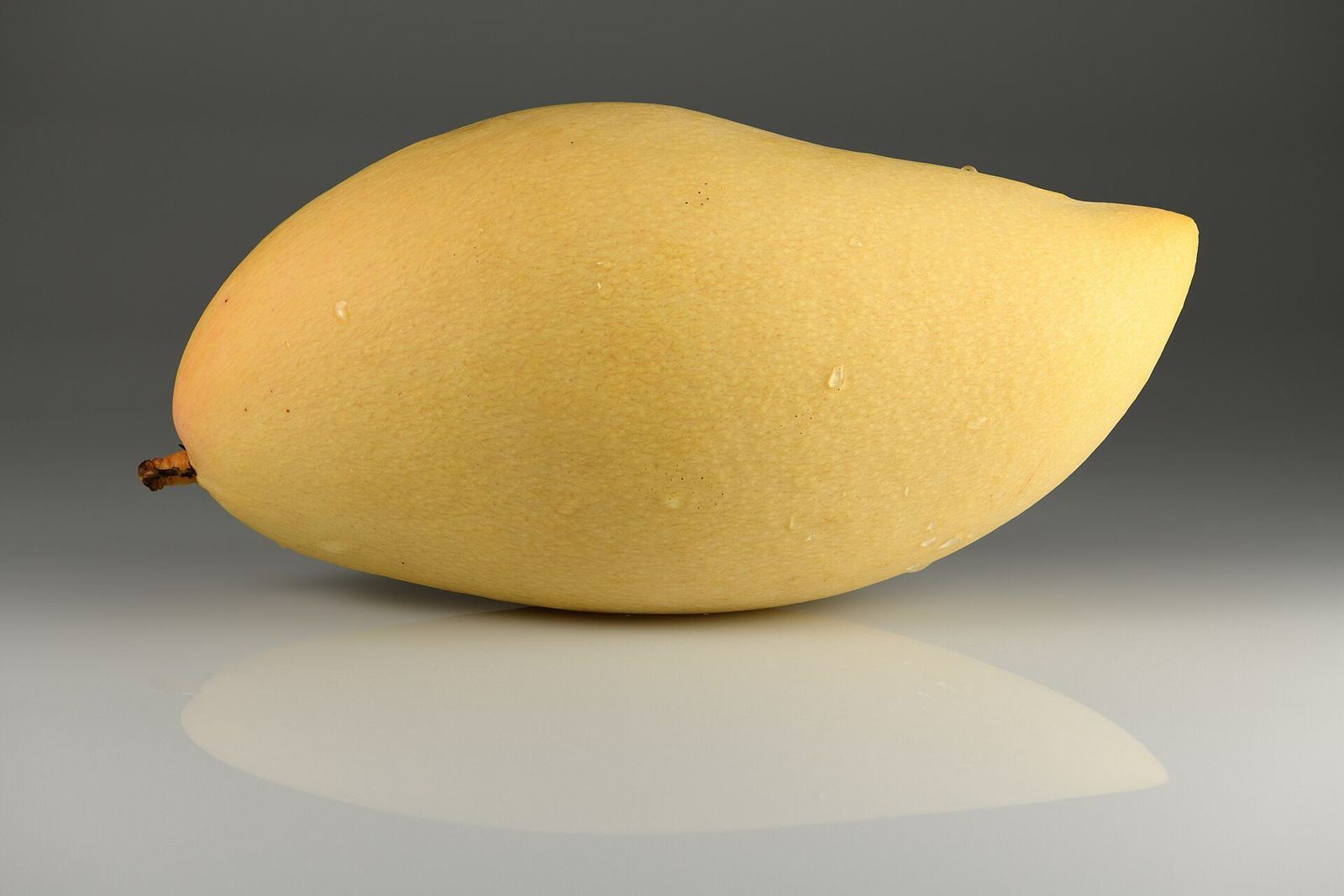
Nam Doc Mai is a very sweet, fiberless Thai mango, and it is the variety to grow if you want to start from seed. Its seeds are polyembryonic, so most sprouts are clones of the parent tree. It ripens in June and July in South Florida, gives 12–20 oz fruit and is moderately susceptible to anthracnose. Plant it in the ground in zones 10–11, or in a large pot anywhere else. For planting and care, see our mango tree guide. To compare it with other types, read the mango varieties guide.
- USDA zones
- 10–11 in ground · any zone in a pot
- Sun
- Full sun
- Water
- Moderate
- Difficulty
- Medium
- Lifecycle
- Perennial
- Origin
- Thailand
- Container friendly
- Possible; prune firmly each year
- Tree size
- Medium to large; prune yearly
- Fruit weight
- 12–20 oz (340–570 g)
- Flavor
- Fiberless, very sweet, spicy
- Ripe skin
- Yellow and pink
- Florida season
- June–July
- Anthracnose
- Moderately susceptible
- Seed type
- Polyembryonic
Nam Doc Mai flavor and fruit
Nam Doc Mai has no fiber, so the flesh is smooth. UF/IFAS describes a rich, spicy and very sweet flavor. The fruit weighs 12–20 oz, which is heavier than Carrie. When ripe, the skin is yellow and pink. UF/IFAS also notes that Nam Doc Mai can be eaten at the green, firm stage. Learn the ripe signs in how to tell if a mango is ripe, and see how to cut a mango for the easiest cuts.
In South Florida it ripens in June and July. UF/IFAS Mango Science calls it early midseason.
The Nam Doc Mai tree and how big it gets
UF/IFAS rates the tree’s vigor medium to high. Plan for a medium to large tree that needs pruning every year. Prune right after harvest, and finish by the end of July in Florida, because mangoes flower on shoots that mature in fall and late pruning removes next year’s flowers. Our sources do not give a mature height for this variety. In a pot, aim for 6–8 ft, and in the ground tip-prune to keep the tree 8–12 ft.
Growing Nam Doc Mai: zones, seed and pots
Zones. In the ground it needs zones 10–11, with the sunniest, warmest spot you have. Young trees can die at 29–30°F (−1.5°C), so protect them from frost. Everywhere colder, grow it in a container and bring it inside when nights drop below 40°F (4°C).
From seed. This is where Nam Doc Mai stands out. Because the seed is polyembryonic, most sprouts are clones of the parent, so the fruit should be similar. A seedling takes 5–8 years to fruit, against 3–5 years for a grafted tree, and some seedlings still disappoint. Our mango from seed guide covers husking, sprouting and grafting.
In a pot. It can be done, but you will fight the tree’s vigor. Use a 10-gallon pot, move up to 15–25 gallons and prune firmly every year. If you only have room for a pot, Carrie is the easier choice. Our mango in containers guide has the details.
Disease. Moderately susceptible means anthracnose can cost you fruit in a wet spring. In a humid area, spray copper from flowering until fruit sets.
Mangoes are self-fertile, so one tree is enough.
How Nam Doc Mai compares with other mango varieties
| Variety | Tree | Fruit weight | Flavor | Florida season | Anthracnose |
|---|---|---|---|---|---|
| Nam Doc Mai | Medium to high vigor | 12–20 oz | Fiberless, very sweet, spicy | June–July | Moderately susceptible |
| Carrie | Compact; low vigor per Mango Science | 10–12 oz | Fiberless, rich, sweet, spicy aroma | June–July | Moderately resistant |
| Glenn | Moderate vigor | 12–18 oz | Fiberless, rich, spicy | June–July | Moderately susceptible |
| Keitt | Medium to high vigor | 20–40 oz | Little fiber, sweet, mild | August–September | Moderately resistant |
Pick Nam Doc Mai over Carrie if you want to grow from seed or like a very sweet mango, and you have room to prune a larger tree. Carrie is monoembryonic, so its seeds do not come true. Glenn has the same season and a similar rating, but UF/IFAS lists it as monoembryonic. Keitt is more resistant to anthracnose and ripens in August and September, and its fruit weighs 20–40 oz.
Where to buy a Nam Doc Mai mango tree
We do not have a Nam Doc Mai tree in our product catalogue yet. Look for grafted trees at Florida and California tropical-fruit nurseries, and check that the label names the variety and that the tree is grafted. Grafted trees fruit years sooner than seedlings and come true to the label. Order in spring so the tree has a full warm season before its first winter.
If you would rather start from seed, you do not need to buy anything. Our mango from seed guide explains how. Browse the other types in the mango varieties guide.
Frequently asked questions
Does Nam Doc Mai mango come true from seed?
Usually, yes. UF/IFAS lists it as polyembryonic, so most sprouts are clones of the parent tree and the fruit should be similar. A grafted tree still fruits sooner, usually 3–5 years after planting against 5–8 from seed.
Can you grow Nam Doc Mai in a pot?
You can, but it is not the easiest choice. UF/IFAS rates its vigor medium to high, so it needs firm pruning every year to stay manageable. If space is tight, Carrie is more compact.
When does Nam Doc Mai ripen?
In South Florida it ripens in June and July, early to midseason. UF/IFAS notes it can also be eaten at the green, firm stage.
Sources
- Mango Growing in the Florida Home Landscape (HS2/MG216), UF/IFAS Extension
- Nam Doc Mai mango phenology, UF/IFAS Mango Science