

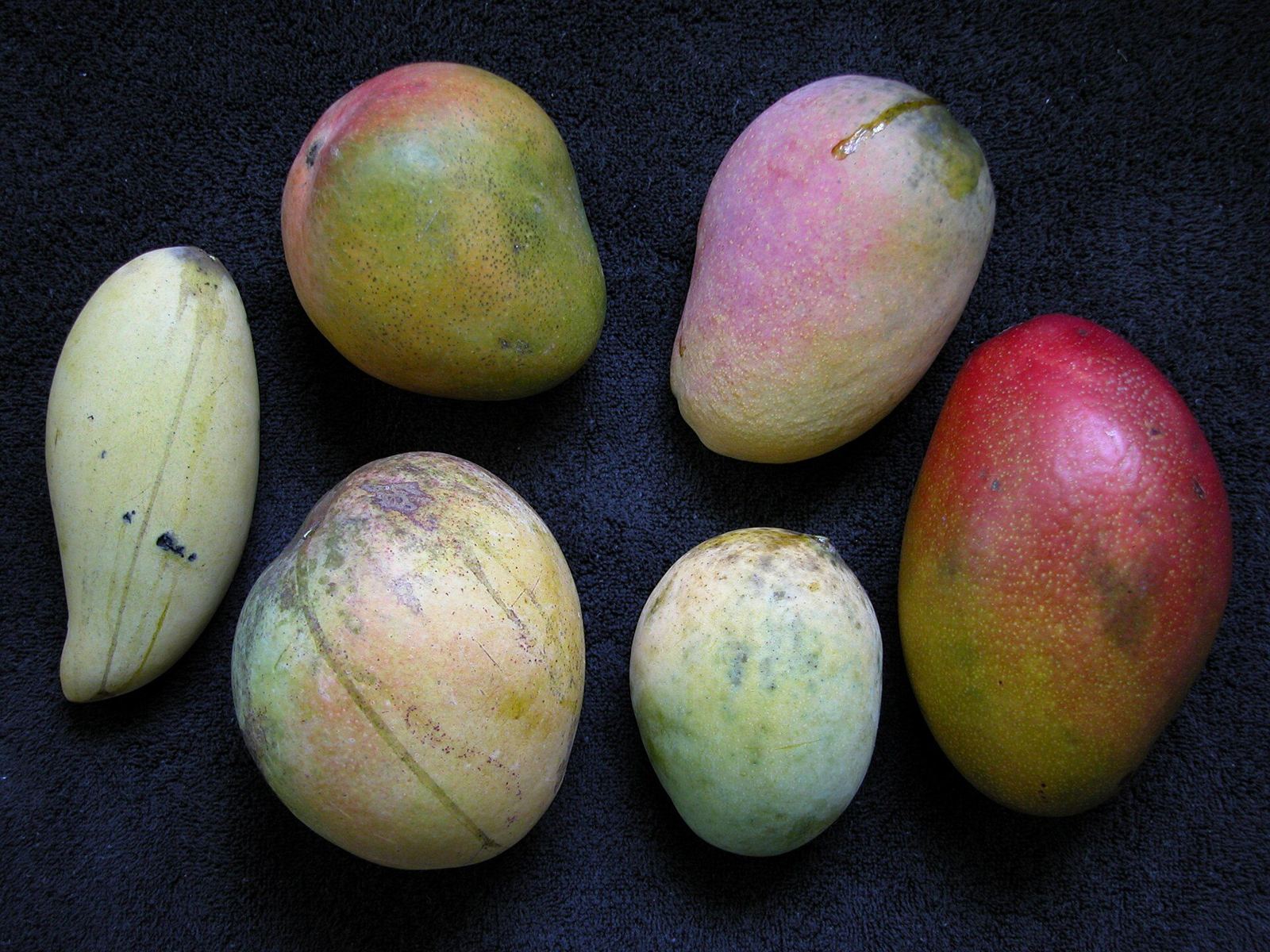
Which mango to grow depends on your climate, your space and whether you want to start from seed. For a pot or a small yard, grow Carrie. To start from seed, grow Nam Doc Mai. In humid Florida, favor the moderately resistant varieties, Carrie and Keitt. In dry Southern California, Kent does well. This guide compares six types of mangoes grown in US gardens so you can pick one before you buy. For planting and care, see our mango tree guide.
Mango varieties compared
| Variety | Best for | Size | Flavor | Disease |
|---|---|---|---|---|
| Carrie | Pots and small yards · June–July | Compact (dwarf per CRFG) | Fiberless, rich, spicy aroma | Moderately resistant to anthracnose |
| Nam Doc Mai | Growing from seed (comes true) · June–July | Medium to large; prune yearly | Fiberless, very sweet, spicy | Moderately susceptible |
| Glenn | Early-summer fruit · June–July | Moderate | Fiberless, rich, spicy | Moderately susceptible |
| Keitt | Late fruit · August–September | Medium to large | Little fiber, sweet, mild | Moderately resistant |
| Kent | Dry climates · July–August | Large, vigorous | Little fiber, sweet, rich | Very susceptible |
| Valencia Pride | Big fruit · July–August | Large, vigorous | Little fiber, mild, sweet | Susceptible |
Seasons are for South Florida, and disease ratings are UF/IFAS anthracnose ratings. Every variety here is sold as a grafted tree. In the ground it needs zones 10–11, while in a pot it works in any zone. A grafted tree usually fruits 3–5 years after planting.
Pick by situation
Pots and small yards: Carrie
Carrie is the one to grow in a container. UF/IFAS Mango Science describes a low-vigor tree with a rounded, compact canopy, and the California Rare Fruit Growers call it dwarf. The fruit weighs 10–12 oz and has no fiber. Do not treat “dwarf” as “never prune”: the UF/IFAS landscape guide rates Carrie’s vigor as high, so plan on pruning it every year. Our mango in containers guide covers pots, soil and winter care.
Starting from seed: Nam Doc Mai
Nam Doc Mai is the variety to try if you want to plant a seed. It is a very sweet, fiberless Thai mango, and its seeds are polyembryonic. The tree is medium to large, so it needs firm pruning every year. The mango from seed guide walks through the steps.
Humid Florida: choose for anthracnose resistance
Anthracnose is a fungus that spreads in rain and dew, and it is the main reason mango crops fail in humid areas. UF/IFAS rates Carrie and Keitt moderately resistant, Glenn and Nam Doc Mai moderately susceptible, Valencia Pride susceptible and Kent very susceptible. None is rated fully resistant, so also spray copper from flowering until fruit sets. Keitt is a good choice if you have room for a medium to large tree and want late fruit, in August and September.
Dry California: Kent is fine
Kent is very susceptible to anthracnose, which makes it a poor bet in a rainy Florida spring, but it does well in dry Southern California. It is a large, vigorous tree with 16–30 oz fruit that has little fiber and a sweet, rich flavor. Give it room, because it is the opposite of a pot variety.
Early or late fruit
Carrie, Nam Doc Mai and Glenn all ripen in June and July in South Florida. Kent and Valencia Pride follow in July and August, and Keitt comes last, in August and September. Mangoes are self-fertile, so one tree is enough. Plant a second variety only if you want a longer harvest.
Polyembryonic and monoembryonic mangoes
UF/IFAS lists a seed type for each variety. Nam Doc Mai is polyembryonic: the seed holds several embryos, and most sprouts are clones of the parent, so the fruit should be similar. Carrie, Glenn, Keitt, Kent and Valencia Pride are monoembryonic. A seedling of one of these will not match its parent, and the tree may give small, fibrous fruit. If you want a named variety, buy it grafted, and read our mango from seed guide before you plant a pit.
Next steps
Pickering and Ataulfo are also sold in the US. UF/IFAS describes Pickering as low in fiber, very sweet and mildly coconut-like, and Ataulfo as low in fiber and sweet with a slight acidity, but we have not written full guides to them yet.
Once your tree fruits, learn the signs in how to tell if a mango is ripe and then how to cut a mango. For more fruit that grows in warm climates, browse tropical fruit.
Frequently asked questions
What is the best mango variety for a small yard or a pot?
Carrie. UF/IFAS Mango Science describes it as a low-vigor tree with a compact canopy and the California Rare Fruit Growers call it dwarf. It still needs yearly pruning, but it is the most manageable of the six varieties here.
Which mango varieties have no fiber?
Carrie, Nam Doc Mai and Glenn are listed by UF/IFAS as fiberless. Keitt, Kent and Valencia Pride have little fiber. Fiberless fruit is smooth to eat and easy to cube.
Which mango varieties come true from seed?
Nam Doc Mai. UF/IFAS lists it as polyembryonic, so most sprouts are clones of the parent tree. Carrie, Glenn, Keitt, Kent and Valencia Pride are monoembryonic, and a seedling of one of these will not match its parent.
Which mango variety resists anthracnose best?
Carrie and Keitt, which UF/IFAS rates moderately resistant. None of the six is rated fully resistant, so in a humid climate you should still protect the flowers. Kent is rated very susceptible.
Sources
- Mango Growing in the Florida Home Landscape (HS2/MG216), UF/IFAS Extension
- Mango Fruit Facts, California Rare Fruit Growers
- Carrie mango phenology, UF/IFAS Mango Science
- Nam Doc Mai mango phenology, UF/IFAS Mango Science
- Glenn mango phenology, UF/IFAS Mango Science
- Keitt mango phenology, UF/IFAS Mango Science
- Kent mango phenology, UF/IFAS Mango Science
- Valencia Pride mango phenology, UF/IFAS Mango Science