

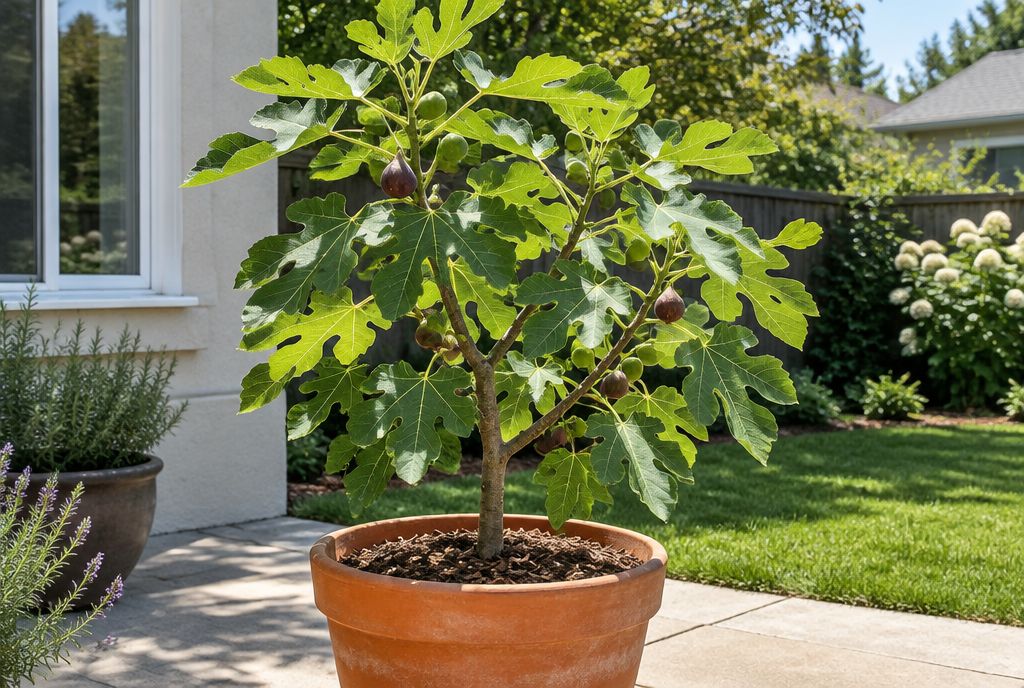
You can grow a fig tree in a pot in any USDA zone if you use a large container, give it full sun and shelter it from hard freezes in winter. Penn State Extension recommends pots at least 18 inches (45 cm) wide, filled with a sterile potting mix and compost. A pot also lets you move the tree to an unheated garage or shed in cold zones, which is how many northern gardeners keep a fig alive. A potted fig is an easy project. This guide expands on the container section of our fig tree guide with pot sizes, a soil recipe, pruning and a winter plan.
Which fig varieties suit a pot?
Choose by tree size and winter hardiness. A smaller tree is easier to manage in a pot.
- Chicago Hardy grows 10–15 ft tall in the ground, but Illinois Extension says it can be pruned and kept at 6 ft (1.8 m). It is also the most cold-tolerant fig, which gives you a margin in a cold snap.
- Brown Turkey and Celeste are described by the California Rare Fruit Growers as small trees, and UF/IFAS reports both as more cold hardy than many figs.
- Black Mission is a very large tree in the ground, but a Penn State Extension author keeps one in a 3-by-3-foot pot (about 90 cm) that stays outside and is protected as if it were in the ground.
Compare more in the fig varieties guide. Buy a plant from a regional nursery or an extension plant sale, and check the label for the variety name.
What size pot does a fig tree need?
Step up gradually. A pot that is too big for a small root system holds wet soil and invites root rot. Aim for a final pot at least 18 inches (45 cm) across, as Penn State recommends.
| Tree stage | Pot | Notes |
|---|---|---|
| Small nursery plant | About 10 gallons (38 L) | A 10-gallon fabric pot is a good first home |
| Established tree | 18 inches (45 cm) wide or more | Penn State’s minimum for figs |
| Mature | Up to a 3-by-3-foot pot | The size one Penn State author keeps a Black Mission in |
Every pot needs drainage holes. Fabric pots breathe, drain well and are lighter to move than ceramic. Put a big pot on a wheeled plant caddy, because a wet one can weigh well over 100 lb (45 kg). Once the tree reaches its final pot, slide it out every few years, shave an inch or two (2.5–5 cm) off the sides of the root ball and refresh the top third of the mix. That keeps the tree compact without a bigger pot.
What soil mix is best for a potted fig?
Penn State Extension recommends a sterile potting mix with compost or other organic matter. Use a free-draining mix, and cut regular potting soil with one-third pine bark fines or perlite if it stays soggy. Figs like slightly acidic soil, with a pH of 6.0–6.5 (Penn State).
How much sun does a potted fig need?
Figs perform best in full sun (UF/IFAS). Aim for 8 or more hours of direct light, and at least 6. Put the pot on a south- or west-facing patio, deck or against a wall that stores heat. Indoors, even a south window is dim for a fig, so keep the tree outside in summer for the sun it needs to fruit.
Watering and feeding a fig in a pot
Water
Feed
Watch the leaves
How to prune a potted fig tree
Pruning keeps a potted fig to a size you can move and net. For most US gardeners, prune in late winter before growth starts, when the tree is dormant and easy to see. Sources disagree on timing: UF/IFAS and CRFG recommend pruning after harvest in late summer, while Clemson recommends winter. Whichever you choose, be light-handed on varieties that bear a breba crop, because brebas form on last year’s wood.
- Cut out dead, crossing and weak branches first.
- Shorten the tallest branches to hold the tree at a height you can reach. For Chicago Hardy that can be 6 ft (1.8 m).
- Thin the center so light and air reach the fruit.
- Wear gloves, because fig sap irritates some people’s skin.
How to overwinter a potted fig
Penn State Extension says to place containers in an insulated, unheated, preferably dark room, garage or cool basement. A fig is deciduous, so unlike an evergreen mango or citrus it does not need light while it rests. Check the soil every few weeks and water lightly if it is bone dry. Move the tree back outside after the hardest freezes pass, harden it off over a week, starting in shade, and cut away any dead wood once new growth shows. Our guide to overwintering a fig tree covers wrapping and mulching, and the ripe fig guide helps you pick your first crop at the right moment.
Frequently asked questions
What size pot does a fig tree need?
Penn State Extension recommends large pots at least 18 inches (45 cm) in diameter. Start a small nursery plant in a smaller pot, such as a 10-gallon fabric pot, and move up as the roots fill it. A wide, stable pot also helps the tree stand up to wind.
Will a potted fig tree produce fruit?
Yes. Common figs need no pollination, so one potted tree can fruit. Give it full sun, regular water and winter shelter. Young figs may take 3–4 years to bear reliable crops (Clemson).
Can a fig tree live indoors all year?
It can survive, but it will not do well. Figs perform best in full sun (UF/IFAS), and most windows are too dim. Keep the tree outside in summer in the sun it needs and bring it into an unheated space to rest in winter.
What do you do with a potted fig tree in winter?
In cold zones, move it to an insulated, unheated, preferably dark room, garage or cool basement once it is dormant (Penn State Extension). Water lightly so the mix does not dry out completely, and move it back outside after the hardest freezes pass.
Sources
- Figs in the Home Garden, Penn State Extension
- Winterizing Your Fig Tree, Penn State Extension
- The Fig (HS27/MG214), UF/IFAS Extension
- Go Figure: Figs Are a Great Addition to Home Gardens, University of Illinois Extension