

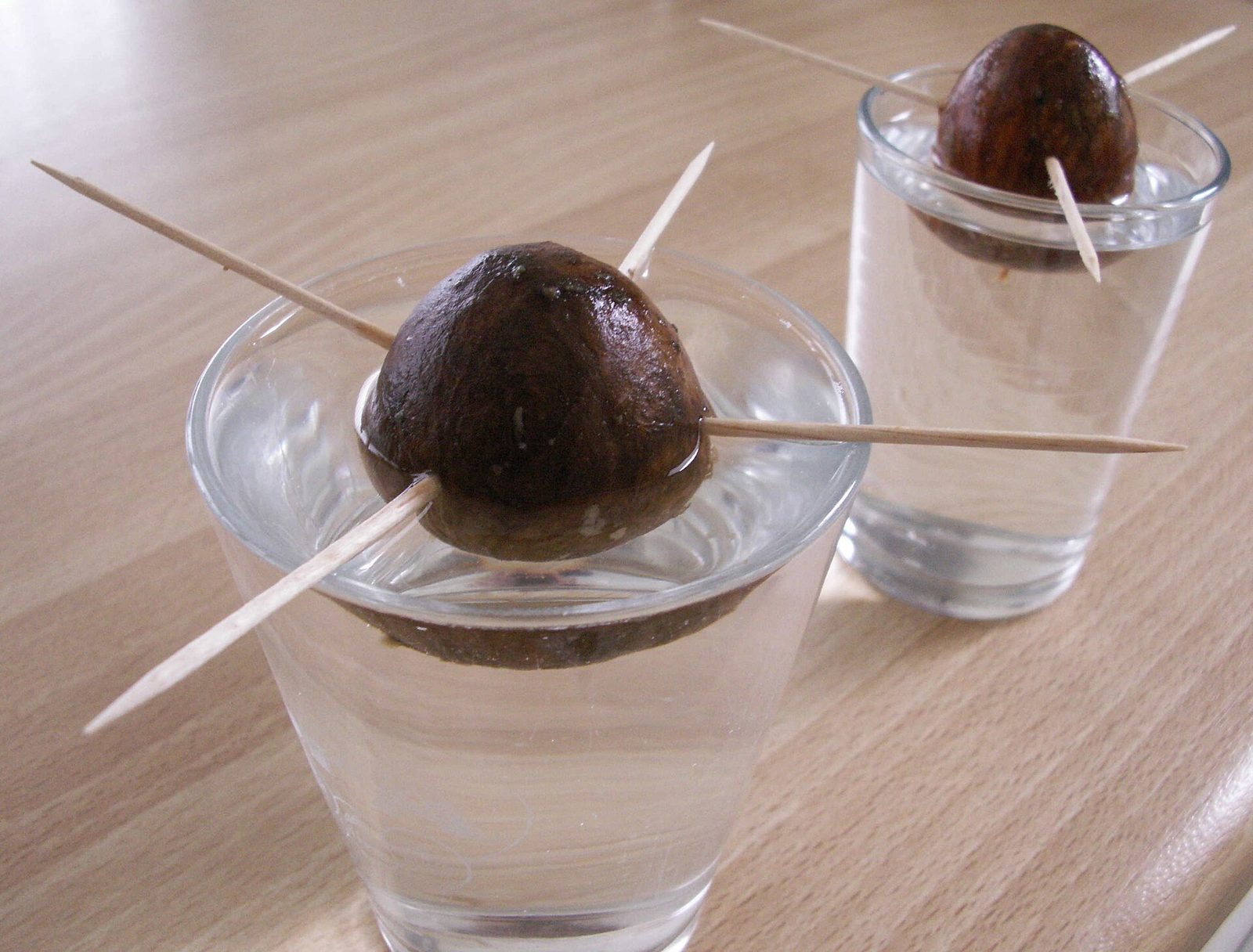
You can grow an avocado from a pit, but think of it as a houseplant experiment, not a fruit plan. Pot the pit in soil or sprout it in water, and you will have a leafy little tree in a few months. Fruit is the long game. UC Riverside says a tree from seed can take 5–13 years before it is mature enough to set fruit, and Texas A&M says avocados do not come true from seed, so the fruit may be poor. This guide goes deeper than the pit tip in our avocado tree guide, including both sprouting methods, what to expect year by year and how to get fruit sooner.
Will an avocado pit grow true to the fruit you ate?
No. Avocados do not come true from seed (Texas A&M). Each seedling is a new, one-of-a-kind tree, and the fruit may be larger, smaller, later or simply worse than the one you ate. That is why avocados are grown commercially from grafted trees, and why a grafted nursery tree begins to produce after only 3–4 years (UF/IFAS, UC Riverside).
Mangoes can behave differently, because some mango seeds produce clones of the parent. See how to grow a mango tree from seed if you want a seed project with better odds. If you want avocado fruit, buy a grafted tree, and grow pits for fun.
Choosing and preparing a pit
Start with a pit from a ripe avocado, and plant it soon after you eat the fruit, before it dries out. Wash off every scrap of flesh, which otherwise grows mold, and pat the pit dry. Handle the pit gently, since a damaged seed can rot.
Method 1: Plant the pit in soil
This is the method UC Riverside describes, and it avoids moving a fragile root later.
- Trim the tip. Cut about ¼ inch (6 mm) off the pointed tip of the pit.
- Pot it up. Plant the pit in a pot of potting soil with the cut top showing above the surface. The pot needs drainage holes and should be deep enough for a long root.
- Water lightly. Keep the mix just moist. A soggy pot rots the pit, and UC IPM warns that poorly drained soil leads to root rots.
- Give it warmth and light. A warm, bright spot works best. Once a shoot appears, move the pot into the sunniest place you have.
Method 2: The toothpick method
This is the popular home method, and fun to watch. It is not the extension-documented one, but it works for many people.
- Push three or four toothpicks into the sides of the pit, about halfway up, spaced evenly around it.
- Rest the toothpicks on the rim of a glass of water, so the broad, flat end of the pit sits in the water and the pointed top stays dry.
- Put the glass in a warm, bright spot and top up the water so the base of the pit stays wet. Change the water every week or so if it clouds.
- Wait. A few weeks to a couple of months later, the pit splits and a root grows down, followed by a shoot from the top.
- Pot it up in potting soil once there is a healthy root and a shoot a few inches tall, leaving the top of the pit showing above the soil.
Do not leave a sprouted pit in the glass for months. The root tangles and the plant struggles once the water runs low. Move it to soil, and keep the mix moist while it adapts.
What to expect: the seedling timeline
Weeks 1–8: Sprout
Year 1: Leaves
Years 1–5: Pot up
Years 5–13+: First fruit
Use a free-draining planting mix. CRFG says container trees do well in a planting mix combined with topsoil. Water when the top of the mix is dry, and never leave the pot standing in water. Avocado is a sun lover: UF/IFAS says full sun is best for growth and fruit.
How to get fruit sooner
If fruit matters more than the experiment, the answer is a grafted tree. Grafting joins a cutting of a named variety onto a seedling’s root system, which is how avocados are grown for fruit. A grafted tree begins to produce after about 3–4 years (UF/IFAS, UC Riverside), against 5–13 years or more for a seedling. Grafting your own is a learnable skill, but it takes practice, so a local fruit-growers club or your county extension office is the place to learn it. Otherwise, browse our avocado varieties guide and buy a grafted tree for your zone, such as Hass.
Common avocado-from-seed mistakes
- Letting the pit dry out. Plant it soon after eating the fruit.
- Overwatering. Soggy mix rots the pit and the roots. Water when the top of the mix is dry.
- Leaving it in water too long. Move the sprouted pit into soil once it has a root and a shoot.
- Too little light. A seedling in a dim corner turns leggy. Give it the sunniest window you have.
- Expecting fruit in three years. It takes longer, and may never taste right. Treat the tree as a gift, not an orchard.
Ready for a tree that fruits sooner? Our avocado tree guide explains how to choose a grafted tree for your zone.
Frequently asked questions
How long does an avocado pit take to sprout?
In water, expect a few weeks to a couple of months before the pit splits and a root appears, and sometimes longer. Not every pit sprouts. Planted in soil, a pit also takes weeks, so keep the mix lightly moist and be patient.
Will an avocado tree grown from a pit produce fruit?
Possibly, but not for years. UC Riverside says a tree from seed can take 5–13 years before it is mature enough to set fruit. Texas A&M says avocados do not come true from seed, so the fruit can differ from the avocado you ate and may be poor.
Can I grow a Hass avocado tree from a grocery store pit?
You can grow a tree from it, but not a Hass tree. Avocados do not come true from seed (Texas A&M), so the seedling is a new, unpredictable tree. For true Hass fruit, buy a grafted Hass tree.
Should I use the toothpick method or plant the pit in soil?
Either works. The soil method is the one UC Riverside describes, and it avoids moving a fragile root later. The toothpick method lets you watch the roots appear. Whichever you choose, move a sprouted pit into potting soil.
How big will an avocado seedling get?
In a pot it stays as small as you keep it, but in the ground an unpruned avocado tree can reach 40–80 ft (Texas A&M). Prune lightly, and be ready to pot it up as the roots fill each container.
Sources
- Avocado FAQs, UC Riverside Avocado Variety Collection
- Avocados, Texas A&M AgriLife Extension
- Avocado Growing in the Florida Home Landscape (CIR1034/MG213), UF/IFAS Extension
- Avocado Fruit Facts, California Rare Fruit Growers
- Cultural Tips for Growing Avocado, UC Statewide IPM Program