

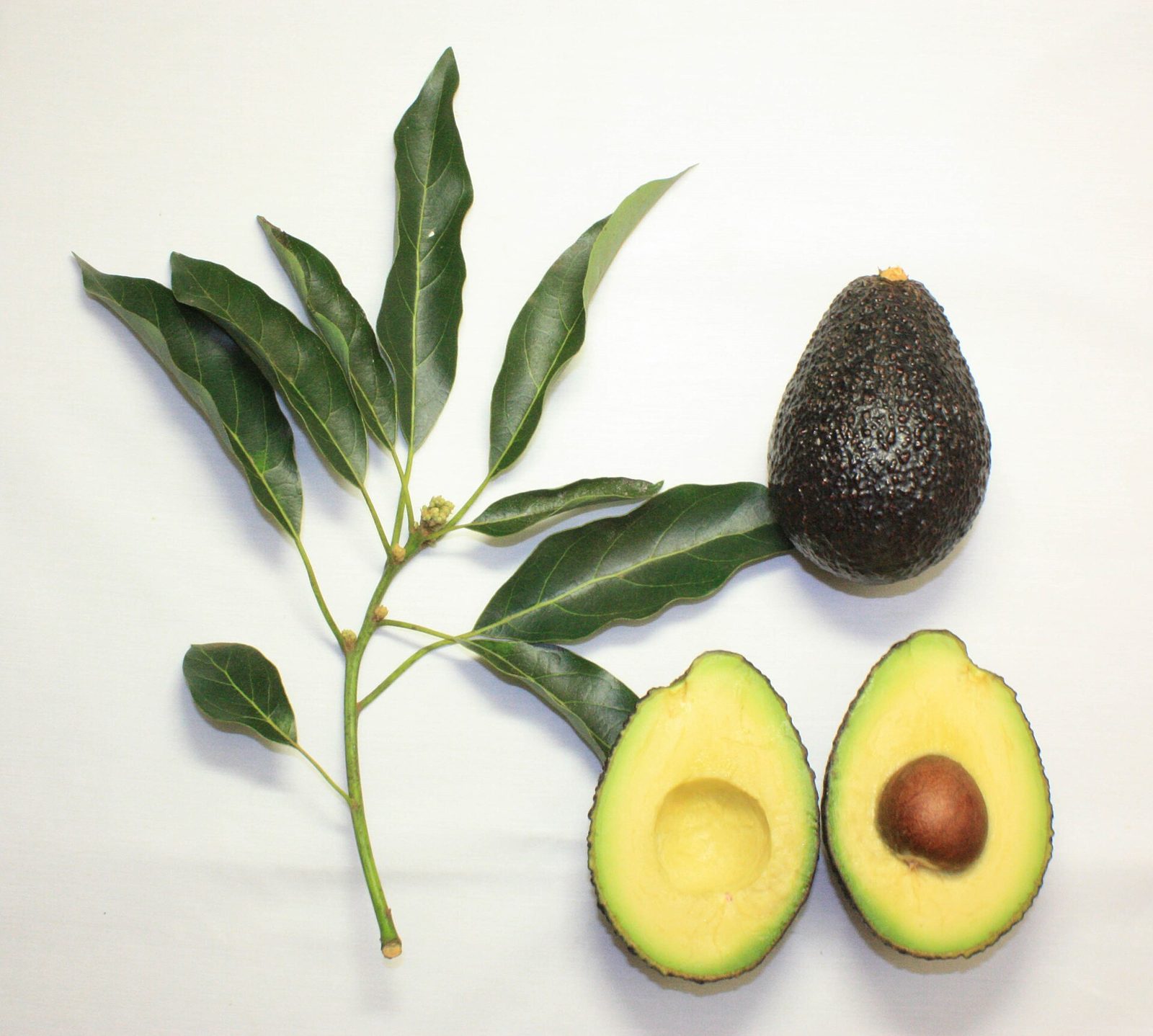
Which avocado to grow depends on your winter low, your region and your space. For the coldest sites, grow Mexicola. In California, Hass is the best-known type, with Fuerte and Bacon as alternatives. In Florida, look at Choquette, Reed or Brogdon. This guide compares seven types of avocados grown in US gardens so you can pick one before you buy. For planting and care, see our avocado tree guide.
Avocado varieties compared
| Variety | Best for | Size | Flavor | Flower type / cold hardiness |
|---|---|---|---|---|
| Hass | California's leading commercial variety (UC Riverside) · February to June or July at Irvine | Open tree, not tall (CRFG); fruit 6–14 oz (UC Riverside) | Thick, pebbled, coppery-purple skin; good flesh, 19% oil | A · hardy to 26°F (CRFG) |
| Mexicola | The coldest sites · hardiest cultivar known (CRFG) · ripe in September | Tall, spreading, vigorous; fruit about 5 oz | Paper-thin, purplish-black skin; highest-quality flesh, very large seed | A · low 20s°F (UF); trunk killed at 17°F (CRFG) |
| Fuerte | Formerly California's standard (CRFG) · December to March at Irvine | Open, spreading, tall; fruit 9–16 oz | Thin dark-green skin with pale raised spots; good flesh, 18% oil | B · hardy to 26°F (CRFG) |
| Bacon | Cooler California, including the Bay Area and Central Valley (CRFG) · November to January in Orange County | Columnar, takes less room (UC Riverside); fruit 10–18 oz | Smooth, thin green skin; unusually pale yellow-green flesh | B · hardy to 25°F (CRFG) |
| Reed | June to September at Irvine, California (UC Riverside) · mid-December to early March in Florida (UF/IFAS) | Columnar, takes less room than umbrella types; fruit 17–24 oz (UC Riverside) | Thick, pebbled green skin; good flesh | A · moderately cold-tolerant, 25–30°F (UF) |
| Choquette | Florida · late October to mid-January (UF/IFAS) | Very large fruit, 18–40 oz | Green skin | A · moderately cold-tolerant, 25–30°F (UF) |
| Brogdon | Florida · mid-July to mid-September (UF/IFAS) · also grown in Texas (Texas A&M) | Fruit 8–12 oz | Purple skin | B · may withstand the low 20s°F (UF) |
The last column shows flower type, which affects pollination, then cold hardiness. For every variety here, grow in the ground in zones 9–11 only, and in a pot anywhere colder. In zone 9, the hardier Mexican types are the ones to choose. The size column gives tree shape or fruit weight, whichever the sources describe.
Pick by situation
Cold winters: Mexicola
Mexicola is the one to grow when winters are the worry. The California Rare Fruit Growers call it the hardiest cultivar known and say its seedlings are used as rootstock in the far north. UF/IFAS says it may withstand the low 20s°F. The fruit is small, about 5 oz, with paper-thin purplish-black skin, and the tree is tall and spreading. Brogdon, a Mexican hybrid, is also listed by UF/IFAS as able to take the low 20s.
California: Hass, Fuerte and Bacon
Hass is the leading commercial variety in California (UC Riverside), with fruit ripening from February through June or July at Irvine. Fuerte was formerly the standard cultivar of the California industry (CRFG), with a season of December to March at Irvine. Bacon is the cool-climate pick: the CRFG call it hardy for the Bay Area and the Central Valley, and it is hardy to 25°F. UC Riverside describes both Bacon and Reed as columnar trees that take less room than umbrella-shaped types.
Florida: Choquette, Reed and Brogdon
UF/IFAS lists Choquette for Florida with very large fruit, 18–40 oz, ripening from late October to mid-January. Reed ripens in Florida from mid-December to early March (UF/IFAS), a very different season from the June-to-September crop UC Riverside records at Irvine, California. Brogdon is the early one, mid-July to mid-September, and is also grown in Texas (Texas A&M).
Think twice about Lula
Lula comes from a seed of the Taft tree planted by Mrs. Lula Cellon at Miami (UC Riverside). It is more cold tolerant than most Florida types, at 24–28°F for infrequent freezes (UF/IFAS), and UF/IFAS lists it among varieties that fruit well planted alone. But UF/IFAS says it is very susceptible to scab and not recommended for home landscapes in Florida. It is grown commercially in the Lower Rio Grande Valley of Texas (Texas A&M).
A-type and B-type flowers
Every avocado flower opens twice, once as female and once as male. In A types the female phase is in the morning and the male phase in the afternoon, and in B types it is the reverse (UC Riverside). In this guide, Hass, Mexicola, Reed and Choquette are A types, and Fuerte, Bacon and Brogdon are B types. UF/IFAS says varieties differ in how much self- or cross-pollination they need, so some fruit well alone and others may do better with a partner of the opposite type nearby. If space allows only one tree, choose a variety UF/IFAS lists as fruiting well alone, or ask your nursery.
Why sources disagree on avocado varieties
Avocado records are patchy because many varieties began as chance seedlings, and sources describe them differently. UC Riverside lists Hass as a hybrid, the California Rare Fruit Growers call it Guatemalan and Texas A&M calls it a Guatemalan and Mexican hybrid. Reed fruit is up to 15 oz in the CRFG description and 17–24 oz in UC Riverside’s. Lula is B type in UC Riverside’s list and A type in UF/IFAS’s table. Treat sizes and seasons as a guide, and go by the nursery’s description of the tree you are buying.
Next steps
Once your tree fruits, learn the signs in how to tell if an avocado is ripe and then how to cut an avocado. If you want to grow in a pot, see avocado tree in a pot, and if you have a grocery store pit, read how to grow an avocado from a seed. For more fruit that loves warmth, browse tropical fruit.
Frequently asked questions
What is the best avocado variety for cold climates?
Mexicola. The California Rare Fruit Growers call it the hardiest cultivar known, and UF/IFAS says it may withstand temperatures in the low 20s°F. The CRFG record is that Mexicola is defoliated at 20°F and the trunk is killed at 17°F. Brogdon, a Mexican hybrid, is also listed by UF/IFAS as able to take the low 20s.
What is the difference between A-type and B-type avocados?
It is about when the flowers open. On an A-type tree they open female in the morning and male in the afternoon, and on a B-type tree the reverse (UC Riverside). Hass, Mexicola and Reed are A types, while Fuerte, Bacon and Brogdon are B types.
Do I need an A-type and a B-type tree to get fruit?
Not always. UF/IFAS says varieties vary in how much self- or cross-pollination they need, and that Waldin, Lula and Taylor fruit well planted alone. For other varieties, a second tree of the other flower type is the safer bet.
Which avocado is best for Florida?
UF/IFAS describes Choquette, Reed, Brogdon and others for Florida landscapes. Choquette fruit is large, 18–40 oz, and ripens from late October to mid-January. UF/IFAS says Lula is very susceptible to scab and is not recommended for home landscapes there.
Is Hass the best avocado to grow at home?
It is the leading commercial variety in California (UC Riverside), but best depends on your winter. Hass is hardy to about 26°F (CRFG), so in colder spots a Mexican-race type such as Mexicola is the safer choice.
Sources
- Avocado Growing in the Florida Home Landscape (CIR1034/MG213), UF/IFAS Extension
- Variety List, UC Riverside Avocado Variety Collection
- Avocado FAQs, UC Riverside Avocado Variety Collection
- Avocado Fruit Facts, California Rare Fruit Growers
- Avocados, Texas A&M AgriLife Extension