

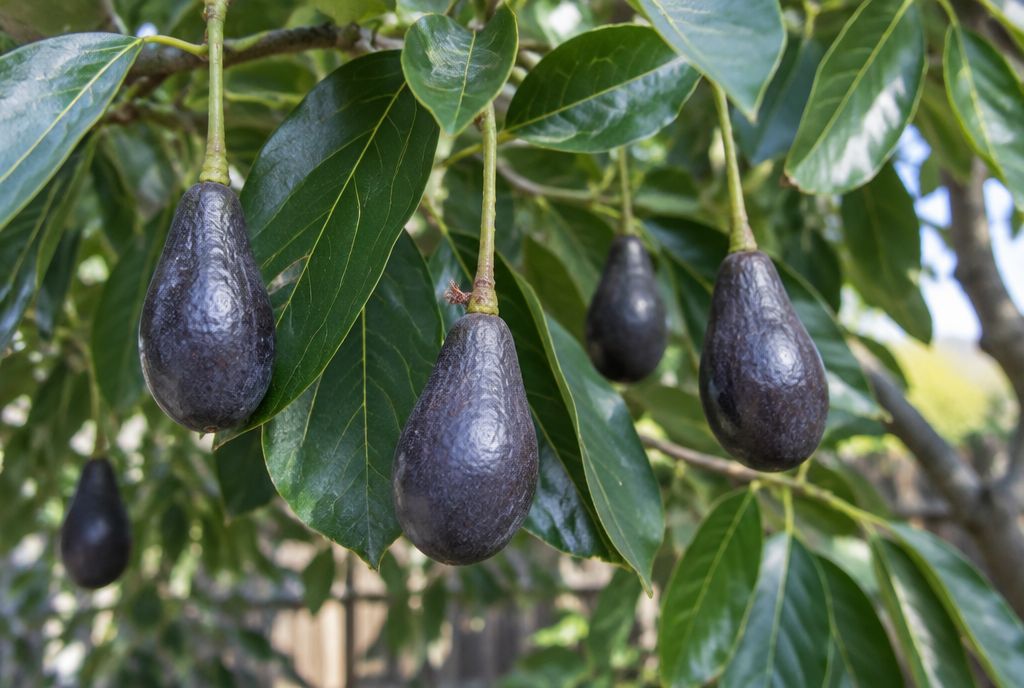
Mexicola is the avocado to grow if cold is your worry. The California Rare Fruit Growers call it the hardiest cultivar known, and UF/IFAS says it may withstand temperatures in the low 20s°F. The tree is tall, spreading and vigorous, and the fruit is small, about 5 oz, with paper-thin, purplish-black skin. This page covers Mexicola only. For planting and care, read our avocado tree guide, and to compare it with other types, see the avocado varieties guide.
- USDA zones
- 9–11 · best bet for zone 9 · pot elsewhere
- Sun
- Full sun
- Water
- Moderate
- Difficulty
- Medium
- Lifecycle
- Perennial
- Origin
- Pasadena, California, 1910
- Container friendly
- Yes
- Cold limit
- Low 20s°F (UF/IFAS) · defoliated at 20°F, trunk killed at 17°F (CRFG)
- Race
- Mexican
- Flower type
- A (UC Riverside)
- Fruit size
- About 5 oz (CRFG) · 4–6.5 oz (UC Riverside)
- Season
- September (CRFG)
Mexicola fruit
Mexicola fruit is small, about 5 oz (CRFG), and UC Riverside lists 4–6.5 oz. The skin is paper-thin and purplish black, with a waxy bloom, and the seed is very large (CRFG). The California Rare Fruit Growers rate the flesh as the highest quality. Fruit ripens around September in their record.
Because the seed is large and the fruit small, you get less flesh per avocado than from a Hass. See how to tell if an avocado is ripe for the signs. Like every avocado, it does not ripen on the tree (UF/IFAS), so pick mature fruit and let it soften at room temperature.
The Mexicola tree and how big it gets
The tree is tall and spreading, and vigorous (CRFG). Texas A&M says an unpruned avocado tree can reach 40–80 ft, so give it plenty of room or prune lightly. UC IPM says pruning is not required for productivity, and that you can keep a tree smaller by pruning just before bloom or just after fruit set. UF/IFAS suggests after harvest, so timing depends on your region. Avoid heavy cuts.
Mexicola dates to 1910 in Pasadena, California (CRFG). The California Rare Fruit Growers say its seedlings are useful as rootstock in the far north, which fits its cold tolerance.
Growing Mexicola: zones, cold and pots
In the ground. UF/IFAS puts Mexican-race trees as the hardiest, with damage at about 18–26°F for mature trees, and says Mexicola may withstand the low 20s. CRFG record defoliation at 20°F and a trunk killed at 17°F. So Mexicola is the one to try at the warmest sites in zone 9, and an easy fit in zones 10–11. Young trees are less hardy than mature ones, so drape a blanket or quilt over a small tree before a freeze, but don’t wrap it (Texas A&M). Plant in full sun (UF/IFAS) in well-drained soil, because UC IPM says poorly drained soil may lead to root rots.
Salt. Texas A&M says Mexican varieties are not salt tolerant. If your soil or water is salty, test it first.
In a pot. Colder than zone 9, grow a grafted Mexicola in a large pot and move it under cover for winter. Our avocado tree in a pot guide covers pot size, watering and pruning. Mexicola is tall and vigorous, so expect to prune it.
Pollination. UC Riverside lists Mexicola as an A type. UF/IFAS says varieties differ in how much self- or cross-pollination they need, and names Waldin, Lula and Taylor as varieties that fruit well alone. If you have room, a B-type tree nearby, such as Fuerte or Bacon, is a safer bet.
How Mexicola compares with other avocado varieties
| Variety | Cold hardiness | Flower type | Fruit |
|---|---|---|---|
| Mexicola | Hardiest known; low 20s°F (UF) | A | About 5 oz, paper-thin purplish-black skin |
| Hass | Hardy to 26°F (CRFG) | A | 6–14 oz, thick pebbled skin |
| Fuerte | Hardy to 26°F (CRFG) | B | 9–16 oz, thin dark-green skin |
| Brogdon | May withstand low 20s°F (UF) | B | 8–12 oz, purple skin |
Choose Mexicola over Hass if your winters are cold, since Hass is hardy to 26°F and Mexicola to the low 20s. Choose Hass if you are in a frost-free spot and want bigger fruit. Brogdon is another Mexican hybrid that UF/IFAS says may withstand the low 20s, with larger fruit, 8–12 oz, and it ripens mid-July to mid-September in Florida.
Where to buy a Mexicola avocado tree
Buy a grafted tree from a nursery in your region, or from a plant sale run by your county extension office or a local fruit-growers club. Ask a nursery that specializes in fruit trees, and check that the label says Mexicola and whether the tree was grown in your zone. Plant in spring after your last freeze so the tree has a full warm season to settle in before its first winter.
Once you have the tree, our avocado varieties guide can help you decide whether a second variety is worth the space.
Frequently asked questions
How cold hardy is Mexicola avocado?
It is the hardiest avocado known, according to the California Rare Fruit Growers. UF/IFAS says Mexicola may withstand temperatures in the low 20s°F. In CRFG's record, Mexicola is defoliated at 20°F (−7°C) and the trunk is killed at 17°F (−8°C). Young trees are less hardy than mature ones.
Can I grow Mexicola in zone 9?
It is the avocado to try there, planted at the warmest, most sheltered spot you have. It is a gamble below the low 20s°F, so drape a young tree before a freeze, or grow it in a pot you can move. In zone 8 and colder, a pot moved indoors is the realistic route.
Is Mexicola an A-type or B-type avocado?
UC Riverside lists Mexicola as an A type, so the flowers open female in the morning and male in the afternoon. UF/IFAS says varieties differ in how much cross-pollination they need to set fruit, so ask your nursery about a B-type partner if you have room.
How big are Mexicola avocados?
Small. The California Rare Fruit Growers give about 5 oz (140 g), and UC Riverside lists 4–6.5 oz. The skin is paper-thin and purplish black, and the seed is very large.
When does Mexicola ripen?
The California Rare Fruit Growers record September. Like all avocados, the fruit does not ripen on the tree (UF/IFAS), so pick it mature and let it soften indoors.
Sources
- Avocado Fruit Facts, California Rare Fruit Growers
- Avocado Growing in the Florida Home Landscape (CIR1034/MG213), UF/IFAS Extension
- Variety List, UC Riverside Avocado Variety Collection
- Avocados, Texas A&M AgriLife Extension