

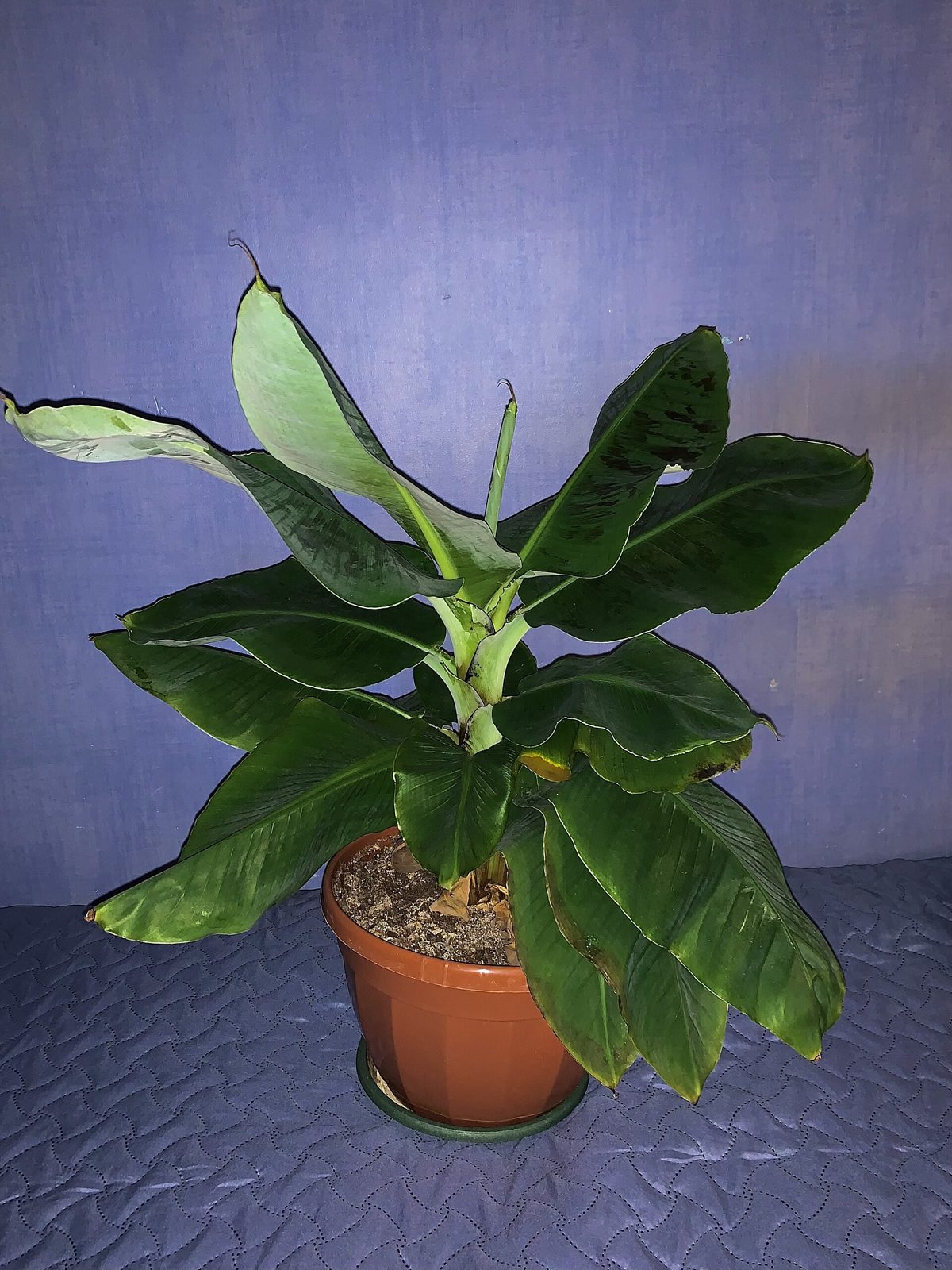
You can grow a banana plant in a pot in any USDA zone if you choose a dwarf variety, use a large pot with drainage holes, give it full sun and bring it under cover before a freeze. CRFG says bananas, especially dwarf varieties, make good container specimens if given careful attention. A potted banana is a fun, fast-growing project, and it is the way to grow one in zone 8 and colder. This guide expands on the container section of our banana plant guide with the best varieties, pot size, soil, watering, feeding and a winter plan.
Which banana suits a pot?
Choose a dwarf type. Dwarf Cavendish is the standard pick. CRFG says it is the smallest banana at 4 to 7 feet, and TAMU describes it as short and compact, with fruit typical of the supermarket. TAMU also notes that wind damage is less severe on it because of its size, which helps on an exposed patio.
Avoid the tall types in a pot. Lady Finger reaches 20 to 25 feet and Blue Java 15 to 20 feet (CRFG), and a pot can’t hold a plant that big upright. They want the ground. Compare sizes in our banana varieties guide.
What size pot does a banana need?
A big one. A banana is a fast-growing herb with a thick, thirsty root system, and it fills a small pot quickly. Step up in stages rather than starting with a huge pot, because a pot that is too big for a small plant holds wet soil around the roots.
| Plant stage | Pot | Notes |
|---|---|---|
| Young nursery plant | A pot one or two sizes above the nursery pot | Do not start in a giant pot |
| Growing plant | About 10 gallons (38 L) | A 10-gallon fabric pot is a good size to start from |
| Mature plant | The largest pot you can still shift | Put it on a wheeled plant caddy |
Every pot needs drainage holes. TAMU says to avoid standing water, because bananas do not tolerate overly wet conditions. A fabric pot breathes, drains freely and is lighter to move than glazed ceramic, and a wheeled base saves your back at the first frost.
Every year or two, check the roots. If they circle the pot or water runs straight through, move the plant up a size, or slide it out, trim some root from the sides and refresh the mix.
What soil mix is best?
Use a loose, rich potting mix that drains fast and holds some moisture. UF/IFAS says bananas do best in deep, well-drained soil high in organic matter, so mix in compost with a free-draining potting mix, and add coarse bark or perlite if water pools on the surface. Aim for a pH of about 5.5–6.5 (CRFG). Drainage matters more than any recipe.
How much sun does a potted banana need?
Full sun grows best (CRFG). Put the pot on a south- or west-facing patio, deck or wall for the warm months. CRFG says bright sunlight and high temperatures can scorch the leaves and fruit, and UF/IFAS says temperatures at or above 98°F (37°C) may scorch leaves, so move the pot out of the hottest afternoon sun if the leaves start to bleach. Wind shreds the big leaves, so choose a sheltered corner.
Watering and feeding a banana in a pot
Water
Feed
Watch the leaves
If you are unsure whether to water, lift the pot. A pot that feels heavy does not need water yet.
Keeping the pot to one or two stalks
In the ground, UF/IFAS says to keep 3 to 4 pseudostems of different ages. In a pot, keep fewer. Let the main stalk grow and keep one sucker coming up behind it as a successor, and remove the rest. Each stalk fruits once and is then finished (TAMU), so the sucker takes over when you cut the old one down. The extras you remove make fine new plants, as our guide on how to grow a banana tree from a banana explains.
Will a potted banana fruit?
It can. UF/IFAS says the flowering stalk emerges 10 to 15 months after planting, and LSU says fruit takes three to six months to mature after flowering. A plant needs full sun, steady water, steady feeding and a warm place to get there. A banana kept indoors all year in a dim room usually stays a leafy houseplant. If you want fruit, put the pot outside for the warm months in the sunniest spot you have, and bring it in for winter.
When the bunch looks plump and rounded, cut it, hang it in a cool, shaded place and let it ripen indoors (TAMU). Our banana plant guide covers harvest and what to do with the stalk afterward.
How to overwinter a potted banana
Put the pot in the brightest frost-free place you have, such as a sunroom, a greenhouse or a window with a grow light. Water less often, because growth is slow, and keep the plant away from drafts. Move it back outside in spring once nights stay warm, hardening it off over a week or so.
In zones 9–11, a pot can stay outdoors in a sheltered spot and be covered or moved on the cold nights. If winter is long and cold where you live, you can also let the plant rest. TAMU says some people dig the entire plant, remove the leaves and store it dry in a heated area over winter, which also works for a small potted one. Our banana overwintering guide covers the options.
Another tropical fruit with the same container routine is the mango, and our mango tree in a pot guide compares pot sizes and winter care.
Frequently asked questions
Can you grow a banana plant in a pot?
Yes. CRFG says bananas, especially dwarf varieties, make good container specimens if given careful attention. Choose a dwarf variety, use a large pot with drainage holes, give it full sun and water and feed it often.
What is the best banana for a pot?
Dwarf Cavendish. CRFG says it is the smallest banana, at 4 to 7 feet, and TAMU describes it as short and compact with fruit typical of the supermarket. TAMU also says wind damage is less severe on it because of its size.
How big a pot does a banana plant need?
A large one. Start a young plant in a pot such as a 10-gallon fabric pot, and step up to a bigger one as the roots fill it. Every pot needs drainage holes, because TAMU says bananas do not tolerate overly wet conditions.
Will a potted banana plant fruit?
It can, with patience. UF/IFAS says the flowering stalk emerges 10 to 15 months after planting, and LSU says fruit takes three to six months to mature after that. It needs full sun, regular deep watering and steady feeding, and a place that stays warm.
How do you overwinter a potted banana plant?
Move it under cover before the first frost. UF/IFAS says growth slows below 60°F and stops at 50°F, and that freeze damage may occur at or below 32°F. Keep it in a bright, frost-free place and water less while it is not growing.
Sources
- Banana Fruit Facts, California Rare Fruit Growers
- Banana Growing in the Florida Home Landscape (HS10/MG040), UF/IFAS Extension
- Banana, Texas A&M AgriLife Extension
- Louisiana Bananas, LSU AgCenter