

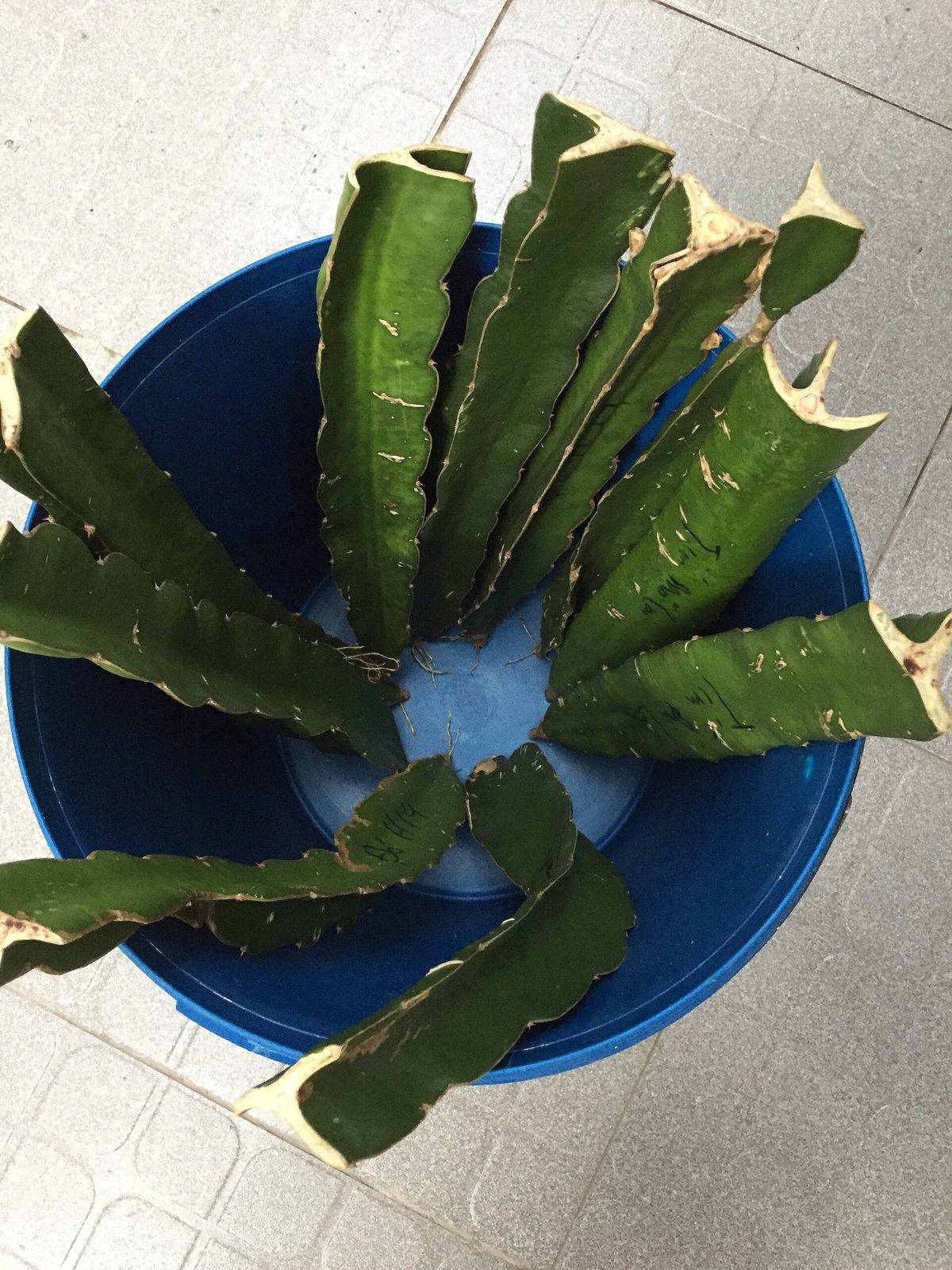
To grow dragon fruit from a cutting, take a mature stem section, cut the base at a slant, let it dry in the shade for about 5–8 days, then plant it in a pot of well-drained mix and wait for roots. Cuttings are the standard way to propagate dragon fruit. UF/IFAS says many cuttings fruit 6–9 months after planting, while a plant from seed can take up to 7 years. This guide goes deeper than the quick start in our dragon fruit guide, including how to cut, cure and root a stem, what to expect month by month and how to get a first crop.
Cuttings or seed?
Cuttings. Dragon fruit can be grown from seed, but UF/IFAS says fruit and stem characteristics are variable and the time to fruit may be up to 7 years. A cutting is a piece of a plant whose fruit you already know, and it starts producing within a year or two.
| Cutting | Seed | |
|---|---|---|
| Time to fruit | 6–9 months after planting for many cuttings (UF/IFAS); second year (UH CTAHR) | Up to 7 years (UF/IFAS) |
| Fruit | Same as the parent plant | Variable |
| Effort | Cut, cure, root | Sow and wait |
Choosing and cutting a stem
Take a healthy, mature stem from a plant that fruits well. A friend’s plant, a fruit-growers club swap or a nursery is the easiest source. UH CTAHR says mature stems are preferred because they resist insect and snail damage. Wear thick gloves, because the wings have short spines.
- Choose the stem. Pick a firm, green, mature stem with no soft spots or discoloration.
- Cut a section. UH CTAHR says to use an entire stem segment or 6–8 inch (15–20 cm) sections. Use a clean, sharp knife.
- Cut the base at a slant. UF/IFAS makes a slanted cut at the stem base. Note which end is the base, because the cutting must go in the soil right way up.
- Treat the cut. UF/IFAS treats cuttings with a fungicide, which reduces stem rot. Follow the label on whatever product you use.
Curing: let the cut end dry and callus
Do not plant a fresh cutting. A wet cut end is an open door for rot, so let it dry first. UF/IFAS says to cure, meaning dry and heal, for 7–8 days in a dry, shady location, and UH CTAHR says 5–7 days in a cool, dry area. Aim for about 5–8 days: until the cut end is dry and sealed.
Lay the cuttings flat or stand them upright, out of the sun and out of the rain. Do not water them while they cure.
Planting the cutting
UF/IFAS says to plant cured cuttings in pots, or in the field. A pot is the safer choice, because you can watch the roots and control the water.
- Fill a pot with well-drained mix. Use a free-draining mix with some organic matter, in a pot with drainage holes. UF/IFAS says dragon fruit needs well-drained soil, and CRFG says it thrives in soil high in organic matter.
- Plant the base end down. Push the cured base 1–2 inches (2.5–5 cm) into the mix, and firm it in. Tie the cutting to a small stake if it leans.
- Water lightly. Moisten the mix, then let it dry a little between waterings. Too much water causes root rot (UF/IFAS).
- Give it light. Put the pot in a bright spot. Move it into full sun gradually, because a new cutting can scorch.
- Wait for roots. UF/IFAS says plants need about 4–6 months in pots to develop a good root system before they go out.
What to expect: the cutting timeline
Days 1–8: Cure
Months 1–6: Root
Months 6–9+: Plant out and first fruit
Years 2–5: Full crop
Planting out and training
Once the plant has a good root system, plant it at the foot of a sturdy post or trellis in full or almost full sun, and tie the main stem to the support. UF/IFAS suggests removing lateral stems until the main stem reaches the top of the post, then cutting the tips to induce branching. Our dragon fruit guide covers the support and training steps. If you live in zone 9b or colder, keep the plant in its pot and read our dragon fruit in a pot guide.
Take cuttings from more than one cultivar
Dragon fruit often needs a partner. CRFG says some types are self-fruitful but many others need cross-pollination, and UF/IFAS reports self-incompatibility in several nursery cultivars and recommends 2 or 3 genetic types. So take cuttings from different cultivars, or buy one from a nursery. Our dragon fruit varieties guide compares your options, and American Beauty is a well-documented red cultivar to start with.
Common cutting mistakes
- Planting a fresh cutting. The cut end rots. Cure it first.
- Overwatering. Soggy mix causes root rot (UF/IFAS). Let the mix dry a little between waterings.
- Planting it upside down. The base must go in the soil. Mark it before you cure.
- Skipping the fungicide on the cut. UF/IFAS treats cuts with fungicide to reduce stem rot.
- Expecting fruit with one plant. Without pollination, even a healthy plant can stay barren.
Ready to grow on? Start with our dragon fruit guide, then read how to tell if dragon fruit is ripe so you pick your first fruit at the right moment.
Frequently asked questions
How long should dragon fruit cuttings dry before planting?
About 5–8 days. UH CTAHR says to cure cuttings for 5–7 days in a cool, dry area, and UF/IFAS says 7–8 days in a dry, shady location. The cut end should look dry and sealed before it goes into a pot.
How long does a dragon fruit cutting take to fruit?
Many cuttings fruit 6–9 months after planting (UF/IFAS). UH CTAHR describes production in the second year after planting and full production in about 5 years. Fruit also needs pollination, which is the usual reason a grown plant stays barren.
How long should a dragon fruit cutting be?
UH CTAHR says to propagate from either an entire stem segment or 6–8 inch (15–20 cm) stem sections. Mature stems are preferred, because they resist insect and snail damage.
Can you grow dragon fruit from seed instead?
Yes, but it is slow and variable. UF/IFAS says fruit and stem characteristics from seed vary and time to fruit may be up to 7 years. Cuttings reproduce the parent plant, so they are the better route to fruit.
Do I need cuttings from more than one plant?
It helps. CRFG says many dragon fruit types need cross-pollination, and UF/IFAS recommends planting two or three genetic types. Take cuttings from different cultivars, not from one plant.
Sources
- Pitaya (Dragonfruit) Growing in the Florida Home Landscape (HS303), UF/IFAS Extension
- Pitaya (F_N-9), University of Hawaii CTAHR
- Pitaya and Pitahaya (Dragon Fruit), California Rare Fruit Growers