

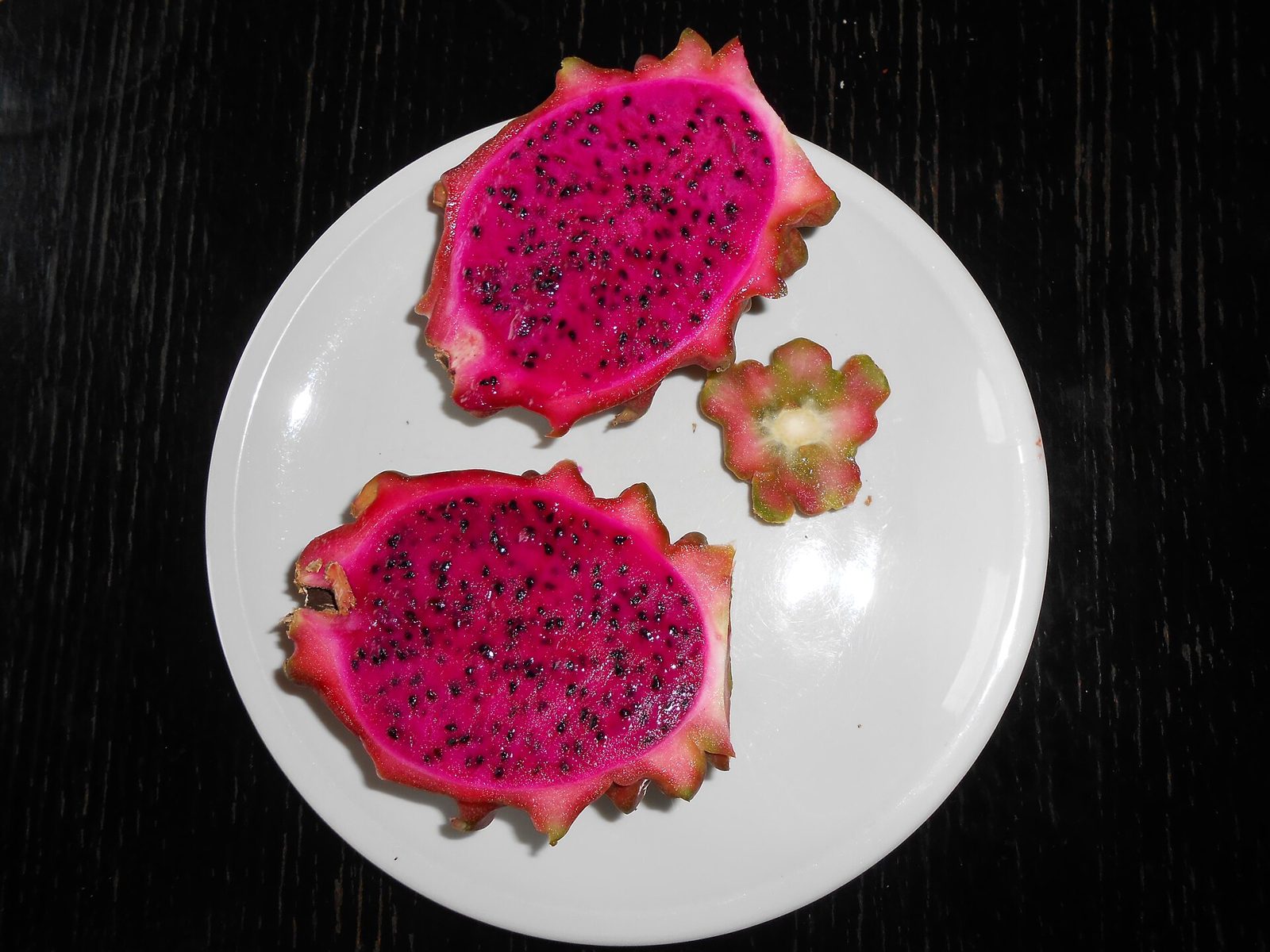
American Beauty is a red-fleshed dragon fruit that did well in UC’s variety trial: a medium fruit of about 13 oz with a Brix of 18.5, rated highest in flavor in a blind test. The photo above shows a red-fleshed dragon fruit, not a labeled American Beauty, but it gives you an idea of the color. This page covers American Beauty only. For planting and care, read our dragon fruit guide, and to compare it with other types, see the dragon fruit varieties guide.
- USDA zones
- 10–11 outdoors · colder: in a pot
- Sun
- Full sun
- Water
- Moderate
- Difficulty
- Easy
- Lifecycle
- Perennial
- Origin
- Florida, as labeled in the UC trial
- Container friendly
- Yes
- Type
- Red-fleshed Hylocereus, as sold
- Fruit weight
- About 13 oz (380 g) in the UC trial
- Brix
- 18.5 in the UC trial (CRFG range for dragon fruit: 12–21%)
- Days to harvest
- 43 in the UC trial
- Pollination
- Plant with a different type, or hand-pollinate
What the UC trial found
UC Cooperative Extension in San Diego ran a trial of dragon fruit cultivars, and its 2013 research update records how American Beauty performed. The trial lists the origin as Florida, an average fruit weight of 380 g (about 13 oz), a Brix score of 18.51 and 43 days to harvest. CRFG gives about 45 days from pollination to ripe fruit for Hylocereus, so the trial figure is in the same range.
Panelists rated American Beauty highest in flavor in a blind test, and it was among the cultivars rated highest in external appearance. Brix figures from a single trial are a guide, not a promise, because fruit sweetness changes with season, weather and the plant’s age.
American Beauty vs Bien Hoa Red and its relatives
UC’s DNA work considers American Beauty and Bien Hoa Red the same plant, even though the trial table lists them in separate rows. Physical Graffiti, Delight and Halley’s Comet form a separate close family, so they are not the same as American Beauty.
| Cultivar | Origin (UC trial) | Fruit weight | Brix | Days to harvest |
|---|---|---|---|---|
| American Beauty | Florida | About 13 oz (380 g) | 18.5 | 43 |
| Bien Hoa Red | San Diego | About 13 oz (360 g) | 18.9 | 41 |
| Physical Graffiti | Florida | About 13 oz (374 g) | 17.9 | 40 |
| Delight | San Diego | About 13 oz (371 g) | 18.1 | 41 |
| Halley’s Comet | Florida | About 17 oz (482 g) | 16.7 | 38 |
Choose American Beauty or Bien Hoa Red if you want the flavor result from the blind test. Choose Halley’s Comet if you want a bigger fruit, and choose Physical Graffiti or Delight if appearance matters most to you, since UC rated both highest on looks.
Who should grow American Beauty
It suits gardeners in zones 10–11, or in a pot anywhere, who want a named cultivar with trial results behind it. It is a red type, so it is a good partner for a different Hylocereus cultivar if you want two plants for cross-pollination. It is a poor pick if you want one plant to fruit alone, because UF/IFAS reports self-incompatibility in several nursery cultivars. For that, look at yellow dragon fruit, which CRFG describes as self-fruitful.
Growing American Beauty
Care matches the main guide: full sun, well-drained soil, a post with a frame on top and a feed plan by age. It is a Hylocereus type, so CRFG’s cold figure applies, with brief dips near 28°F survivable for established plants and long freezes damaging stems (UF/IFAS). Protect young plants from any frost, or grow it in a pot you can bring inside.
Pollination is where this plant needs a plan. Plant it alongside a different type, and keep a soft brush handy. UF/IFAS says to hand-pollinate during the night and early morning by moving pollen, or a whole stamen, from one flower to the stigma of another. Our pollination guide has the full steps.
Where to buy American Beauty
Buy a rooted plant or cuttings from a nursery that names the cultivar on the label, and accept Bien Hoa Red as the same plant. Cultivar names are not always reliable, so favor a nursery that propagates from its own mother plants. Local fruit-growers clubs and extension plant sales are a good source of cuttings. Our dragon fruit from cuttings guide explains how to start them. Once you have a plant, read how to tell if dragon fruit is ripe to pick it at the right moment.
Frequently asked questions
Is American Beauty the same as Bien Hoa Red?
UC's DNA work considers them the same plant. Its trial table still lists them as separate rows, with slightly different numbers (380 g and Brix 18.5 for American Beauty, 360 g and Brix 18.9 for Bien Hoa Red). Treat the two names as one cultivar when you shop.
How big is an American Beauty dragon fruit?
About 13 oz (380 g) on average in UC's trial. Across Hylocereus, CRFG says fruit runs from about ½ lb to over 3 lb, so American Beauty sits toward the smaller end of that range.
How long does American Beauty take to ripen?
UC's trial table lists 43 days to harvest. CRFG gives about 45 days from pollination to ripe fruit for Hylocereus, so tag each flower with its pollination date and start checking at about six weeks.
Does American Beauty need a second plant to set fruit?
Plant it with a different type to be safe. UF/IFAS reports self-incompatibility in several nursery cultivars and says cross-pollination assures better fruit set and size. You can also hand-pollinate at night or in the early morning.
Sources
- 2013 Pitahaya Production Seminar and Field Day, UC Cooperative Extension, San Diego
- Pitaya and Pitahaya (Dragon Fruit), California Rare Fruit Growers
- Pitaya (Dragonfruit) Growing in the Florida Home Landscape (HS303), UF/IFAS Extension