

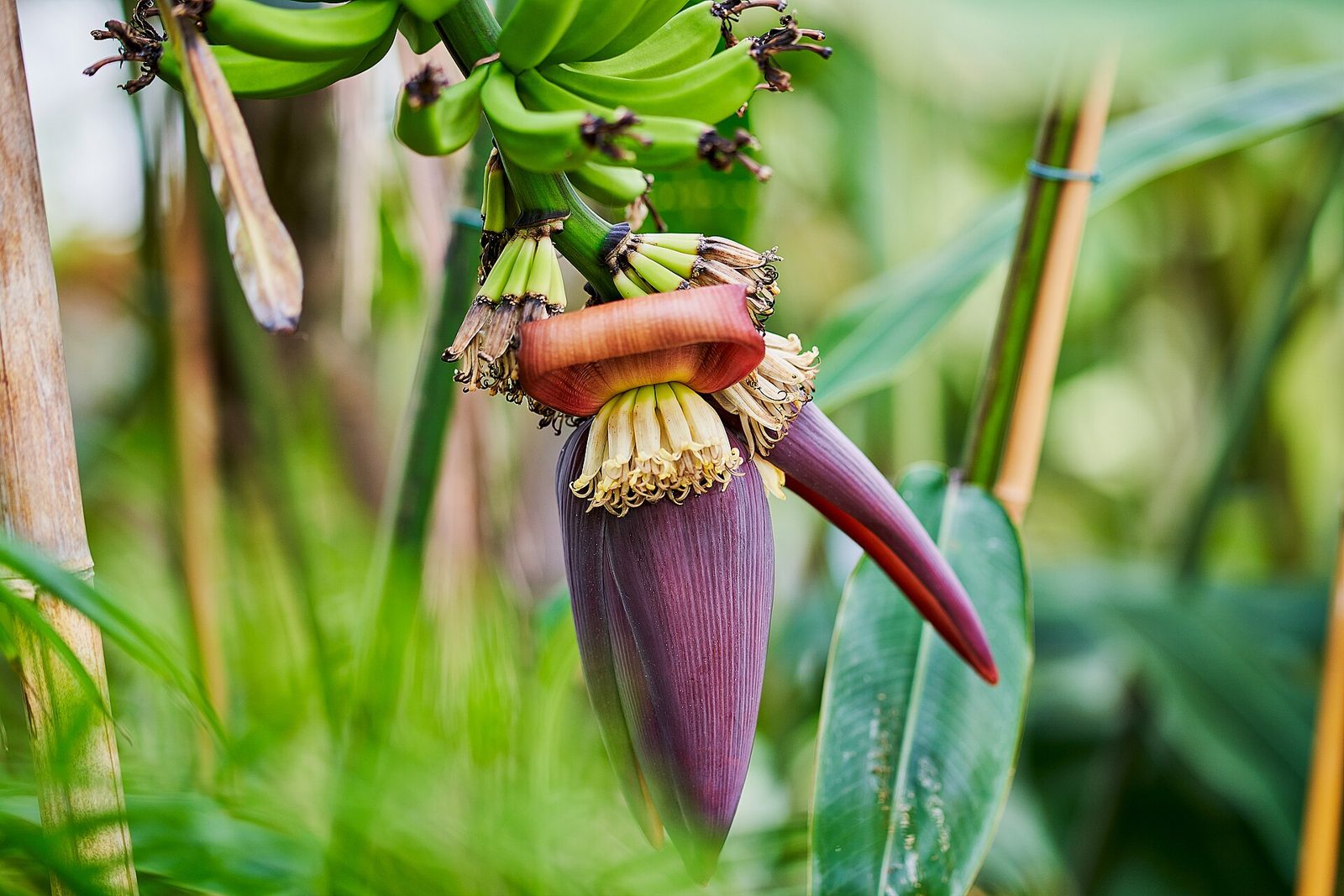
When fertilizing fruit trees, feed in the growing season, give a balanced fruit-tree or citrus fertilizer in small amounts, and stop nitrogen in late summer so new growth can harden before cold. That one rule covers most of our fruit. The exceptions are banana, a heavy feeder that wants potassium, and persimmon, pomegranate and fig, which need very little. Below are the amounts from our fruit pages, the difference between a pot and the ground, and the signs that you are feeding too much.
The late-summer rule for fertilizing fruit trees
Nitrogen pushes soft, leafy growth. A late dose produces shoots that the first cold snap can damage. Our pages put the rule in different words:
- Mango: stop feeding nitrogen in late summer so the tree hardens off.
- Fig: stop by July, so new growth can harden before winter (CRFG).
- Citrus: avoid late-season feeding, because it pushes tender growth that the first cold snap can damage (UC IPM).
- Passion fruit: after the first year, reduce nitrogen substantially so the vine flowers rather than making leaves (UF/IFAS).
Persimmon is the one to note. UF/IFAS gives a split plan with a balanced fertilizer, 50% in March and 25% each in June and September, so sources differ there. Go light either way.
How much fertilizer for each fruit
Rates differ by fruit. Follow the label of whatever product you buy, and use these as a guide.
| Fruit | What to use | How much and when |
|---|---|---|
| Mango | Balanced fruit-tree fertilizer with magnesium and micronutrients | Young trees every 1–2 months in the growing season, starting at about ¼ lb per tree. Mature trees 2–3 times a year |
| Avocado | A nitrogen source | ½–1 lb (0.2–0.45 kg) of actual nitrogen per tree per year for young trees (UC Riverside). Correct zinc or iron shortage with a chelated foliar spray or a sulfate |
| Banana | High potassium, such as 3-1-6, with magnesium | Every 4–8 weeks all year. About ½ lb of a 6-2-12 for young plants every 2 months, rising to 5–6 lb at flowering (UF/IFAS) |
| Pineapple | 6–10% each of nitrogen, phosphoric acid and potash, plus 4–6% magnesium | 1–2 oz (28–57 g) or less every 8 weeks for young plants (UF/IFAS) |
| Dragon fruit | Fertilizer plus manure or compost | Year 1: 0.25 lb every 2 months plus about 4 lb of manure or compost. Years 2–3: 0.3–0.4 lb every 2 months. Year 4 on: 0.50–0.75 lb in 3–4 applications |
| Passion fruit | A common blend such as 10-10-10 or 8-3-9 | First feeding after late-winter pruning. Cut nitrogen after year one |
| Meyer lemon | A citrus fertilizer with micronutrients | Year 1: 1 tablespoon of nitrogen fertilizer, three times. Year 2: 0.25 lb actual nitrogen. Year 3: 0.5 lb. Mature trees: 3–4 lb of product, 2–3 times a year |
| Fig | Light feeding | ½–1 lb of actual nitrogen a year in 3–4 applications, late winter to July |
| Pomegranate | Nitrogen, the only nutrient needed each year (TAMU) | A light application. More is not better |
| Persimmon | A balanced fertilizer | Most trees need a minimum (CRFG). UF/IFAS split: 50% March, 25% June, 25% September |
For the Meyer lemon, the two sources use different bases. The UC IPM numbers are pounds of actual nitrogen, and the UF/IFAS number is pounds of product, so do not mix them.
Reading the fertilizer label
Every bag shows three numbers, the percentages of nitrogen, phosphate and potash. Our pages quote ratios such as 3-1-6 and 6-2-12 for banana, which is hungry for potassium, and 10-10-10 or 8-3-9 for passion fruit. For citrus, choose a fertilizer that includes micronutrients, because iron, zinc and magnesium shortages each show up as a distinct yellowing pattern (UF/IFAS CH142). For mango, look for one with magnesium and micronutrients too.
Weight matters as well. The percentage tells you how much of the bag is nitrogen, so a 10 lb bag of a product with 10% nitrogen holds about 1 lb of actual nitrogen. That is the figure our fig, avocado and Meyer lemon numbers refer to, so check it before you scale up.
A simple feeding calendar
Use this as a rough sequence, then follow the label of the product you buy.
- Late winter: feed passion fruit after pruning, and start fig feedings, which run from late winter to July.
- March: persimmon gets half of its split dose under the UF/IFAS plan.
- Spring to summer: feed young mango every 1–2 months, banana every 4–8 weeks and pineapple every 8 weeks. Persimmon gets another quarter in June.
- July: the last fig feeding.
- Late summer: stop nitrogen on mango and avoid late citrus feeding. UF/IFAS puts the third persimmon application in September, so go light there.
UF/IFAS says banana should be fed every 4 to 8 weeks throughout the year, because it keeps growing.
Fertilizing potted fruit trees
A pot holds little soil, and nutrients wash out every time you water. Use a fertilizer rated for container plants, follow the label rate, and apply smaller amounts more often than you would to a tree in the ground. Flush the pot with plain water every few months to wash out built-up salts. Yellow, dropping leaves in a pot that stays wet usually mean wet roots, not hunger. Our guide to growing fruit trees in containers has the full pot routine, and the Meyer lemon yellow leaves guide shows how to read the pattern.
Fertilizing fruit trees in the ground
Spread dry fertilizer in a ring around the plant, away from the stem or pseudostem, and water it in. For young trees, start low and increase as the tree grows, as the mango and banana schedules do. Mature trees need fewer, larger feeds, such as the 2–3 a year for mango and citrus.
Signs you are feeding too much
More fertilizer is not better. Too much nitrogen shows up as:
- Flowers but no fruit. Mango and passion fruit can do this when nitrogen runs high. Our passion fruit not fruiting guide walks through the checklist.
- Fruit drop. UF/IFAS says pomegranate fruit drop is aggravated by over-fertilization, and heavy nitrogen worsens persimmon drop. See why a persimmon drops fruit and why a pomegranate flowers but gives no fruit.
- Lots of leaves. The tree is spending energy on foliage, not fruit.
The opposite problem exists too. Pale, slow growth can mean too little food, as our pineapple not fruiting guide shows for plants that miss their schedule.
What to feed first
If you are new to fruit trees, start with the low-effort ones from our best fruit trees for beginners. Fig, pomegranate and persimmon need the least feeding, while banana is the one that rewards a regular schedule. If you want the plants that reach fruit fastest, see fast-growing fruit trees.
Frequently asked questions
When should you fertilize fruit trees?
Feed during the growing season and stop nitrogen in late summer. Our mango page says to stop nitrogen in late summer so the tree hardens off, figs stop by July, and UC IPM says to avoid late-season feeding of citrus because tender growth can be damaged by the first cold snap.
Can you give fruit trees too much fertilizer?
Yes. Too much nitrogen can make a tree grow leaves instead of fruit. UF/IFAS says pomegranate fruit drop is aggravated by over-fertilization, and CRFG and UGA say too much nitrogen causes persimmon fruit drop.
How do you fertilize a fruit tree in a pot?
Use the label rate for container plants, and apply smaller amounts more often than you would to a tree in the ground. A pot holds little soil and nutrients wash out with each watering. Flush the pot with plain water every few months to clear built-up salts.
What does actual nitrogen mean?
Actual nitrogen is the nitrogen in the bag, not the weight of the bag. Read the nitrogen percentage on the label and work back from it to the amount of product.
Sources
- Mango Growing in the Florida Home Landscape (HS2/MG216), UF/IFAS Extension
- Cultural Tips for Growing Citrus, UC IPM, University of California
- Banana Growing in the Florida Home Landscape (HS10/MG040), UF/IFAS Extension
- Fig Fruit Facts, California Rare Fruit Growers
- Pitaya (Dragonfruit) Growing in the Florida Home Landscape (HS303), UF/IFAS Extension
- Pineapple Growing in the Florida Home Landscape (HS7/MG055), UF/IFAS Extension
- Japanese Persimmon Cultural Practices (HS1389), UF/IFAS Extension