

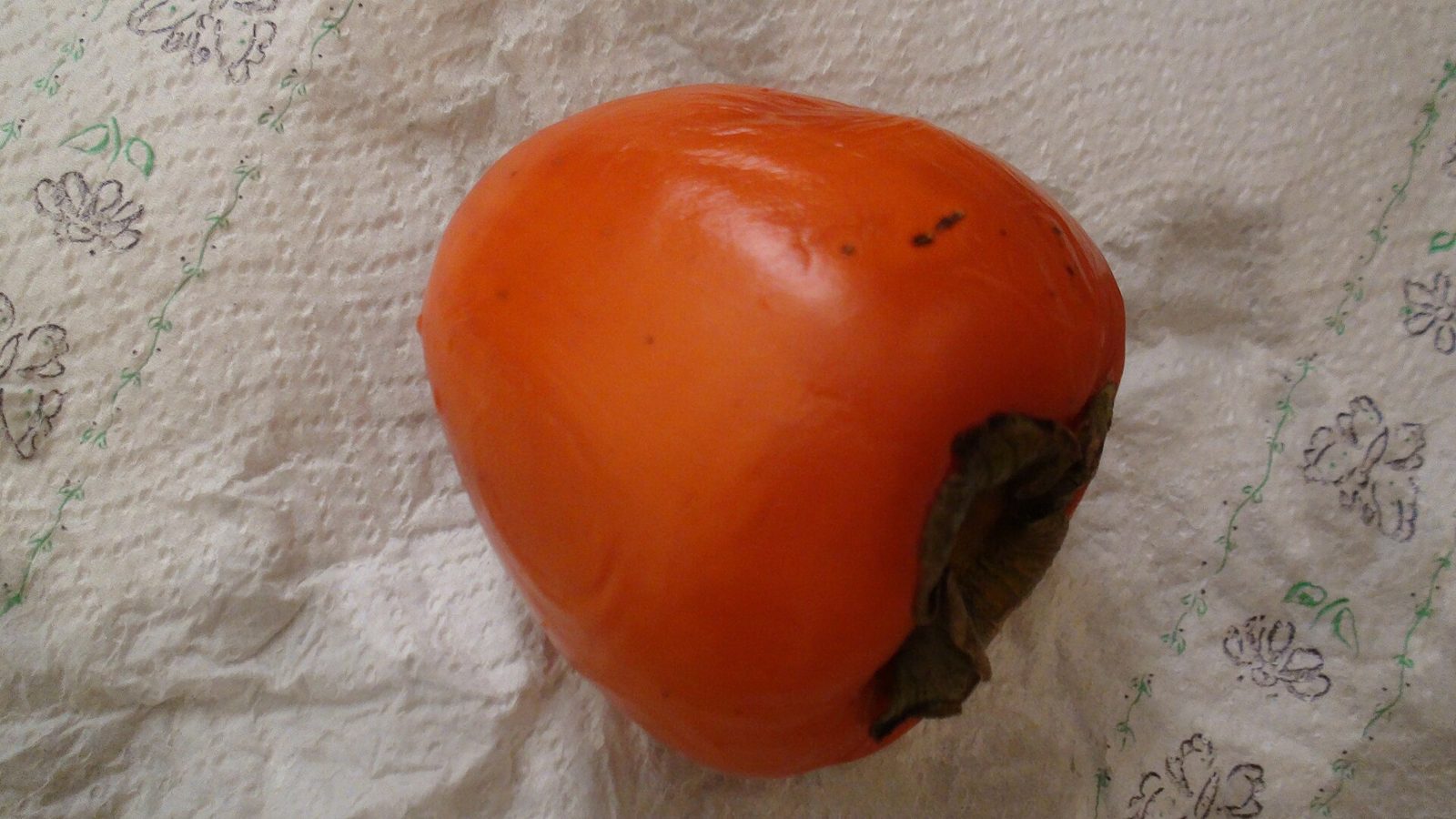
Hachiya is the large, cone-shaped persimmon that must be soft before you eat it. It is astringent, so a firm one makes your mouth pucker, but when it is soft-ripe the flesh is sweet and rich (CRFG). Hachiya is a commercial cultivar in California (UF/IFAS) and an outstanding Texas variety (TAMU). This page covers Hachiya only. For planting and care, read our persimmon tree guide, and to compare it with other types, see the persimmon varieties guide.
- USDA zones
- 7–10, the range CRFG gives for Asian persimmons
- Sun
- Full sun
- Water
- Moderate
- Difficulty
- Easy
- Lifecycle
- Perennial
- Origin
- Asia
- Container friendly
- Yes
- Astringency
- Astringent · eat only when soft (CRFG)
- Tree
- Vigorous, upright-spreading (CRFG)
- Fruit
- Large, oblong-conical, glossy deep orange skin (CRFG)
- Flesh
- Dark yellow, sweet and rich (CRFG)
- Seeds
- Seedless (TAMU)
- Time to fruit
- About 3 yrs · full production at 8–10 yrs
Hachiya fruit
CRFG describes Hachiya as a large, oblong-conical fruit with glossy deep orange skin and dark yellow flesh that is sweet and rich. Texas A&M calls it very large and cone-shaped, and a seedless persimmon with bright orange skin. In Japan, UF/IFAS says Hachiya is mostly dried.
The catch is astringency. Eat Hachiya firm and it is intensely puckery. It is ready when it is soft, and the flesh turns to jelly. Our guide to how to tell if a persimmon is ripe shows the signs, and how to eat a persimmon covers scooping a soft one.
How to ripen Hachiya
CRFG says astringent persimmons will ripen off the tree at room temperature, and Texas A&M says fruit ripens equally on or off the tree. Pick when fully colored. CRFG says to harvest astringent varieties when they are hard but fully colored, while UF/IFAS says to pick at full color when soft or nearing softness. Then pick a method.
- On the counter. Leave the fruit at room temperature until it is soft.
- With rice. UF/IFAS says covering the fruit with uncooked dry rice for 3–5 days induces softening and removes astringency.
- In the freezer. CRFG says freezing overnight and then thawing works, and UF/IFAS gives 24 hours.
CRFG says mature, hard astringent fruit can be kept in the refrigerator for at least a month, which gives you time to ripen a few at a time.
The Hachiya tree
CRFG calls the tree vigorous and upright-spreading, so it needs room, and some persimmons reach 30 ft tall and 15–25 ft wide (LSU AgCenter). Train it to a strong framework of main branches while it is young. CRFG says to cut young trees back to about 3 feet at planting, and that heavy pruning is often not needed.
Growing Hachiya: zones, pollination and pots
In the ground. CRFG gives zones 7–10 for Asian persimmons. A fully dormant tree tolerates about 0°F, though Clemson and UGA warn of injury below about 10°F, so zone 7 is the edge. The bigger risk is a late frost after bud break, with UF/IFAS reporting damage at 27°F for an hour. Plant in full sun in well-drained soil.
In a pot. A young grafted tree can live in a large pot, which lets you shelter it in a freeze. See our persimmon tree in a pot guide.
Pollination. CRFG says many Asian cultivars set seedless fruit without pollination, although some climates need pollination for adequate production. Ask your nursery about Hachiya in your region.
Fruit drop. A first drop after petal fall and lighter drops in June are normal (UF/IFAS). See why a persimmon tree drops fruit.
How Hachiya compares with other persimmons
| Variety | Astringency | Fruit | Tree |
|---|---|---|---|
| Hachiya | Astringent until soft | Large, oblong-conical, glossy deep orange | Vigorous, upright-spreading |
| Fuyu | Non-astringent, edible firm | Medium-large, oblate, deep orange | Vigorous, spreading |
| Tanenashi | Astringent until ripe (Clemson) | Large, cone-shaped, seedless | Vigorous, rounded, prolific |
| Saijo | Astringent | Small, elongated | Medium height; cold hardy to −10°F |
Choose Hachiya if you want a big, rich, soft fruit and do not mind letting it ripen. Choose Fuyu if you want to eat it firm. Choose Tanenashi for an early, seedless astringent type, which UF/IFAS calls the most popular astringent in Florida. Choose Saijo if cold is the worry, since CRFG lists it as cold hardy to −10°F.
Where to buy a Hachiya persimmon tree
Buy a grafted tree from a nursery in your region, or from a plant sale run by your county extension office or a local fruit-growers club. Check that the label says Hachiya and ask what rootstock it is on. Plant after your last hard freeze so the tree has a full season to settle in. A tree from a Hachiya seed will not match the fruit you ate, so a grafted tree is the way to get true Hachiya.
Once you have the tree, our persimmon varieties guide can help you decide whether a second variety is worth the space.
Frequently asked questions
Is Hachiya persimmon astringent?
Yes. CRFG lists Hachiya among the astringent varieties, which are only edible once soft-ripe. Bite into a firm one and your mouth puckers. Wait until it is soft like jelly, or use a ripening method.
How do you ripen Hachiya persimmons?
Leave the picked fruit at room temperature until it softens (CRFG). UF/IFAS says covering the fruit with uncooked dry rice for 3–5 days softens it and removes astringency, and CRFG says freezing overnight, then thawing, also works. UF/IFAS gives 24 hours for freezing.
Is Hachiya better than Fuyu?
It depends how you like persimmons. Hachiya is sweet and rich when soft (CRFG), while Fuyu is crisp and mild and can be eaten firm. Hachiya is a commercial cultivar in California (UF/IFAS), and Texas A&M calls it an outstanding Texas variety.
Does Hachiya have seeds?
Texas A&M describes it as a seedless persimmon. CRFG says that when trees that do not need pollination are pollinated, they produce fruit with seeds, and the fruit may differ in size, flavor and texture.
How long until a Hachiya tree fruits?
About 3 years to the first fruit and 8–10 years to full production (LSU AgCenter, UF/IFAS). Buy a grafted tree, because a tree grown from seed will not match the variety.
Sources
- Persimmon Fruit Facts, California Rare Fruit Growers
- Japanese Persimmon Cultivars in Florida (MG242), UF/IFAS Extension
- Japanese Persimmon Cultural Practices (HS1389), UF/IFAS Extension
- Persimmons, Texas A&M AgriLife Extension
- Persimmons, LSU AgCenter