

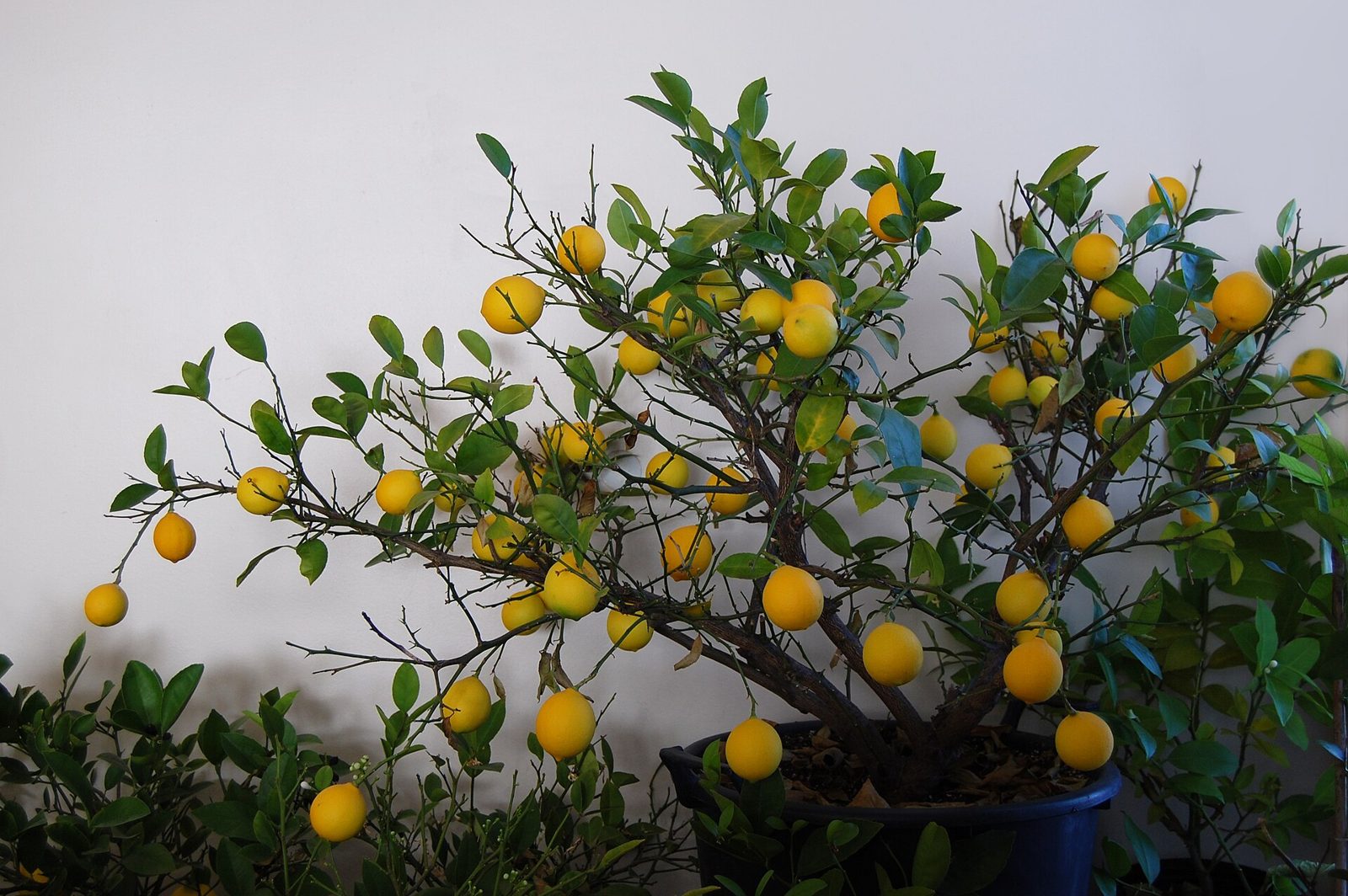
Most of the fruit trees we cover can spend winter indoors in a pot, but they do not all want the same room. Mango, avocado and Meyer lemon are evergreen and need your brightest spot. A fig or persimmon drops its leaves and is happier in a cold, unheated garage than in a warm living room. This guide pulls the winter advice from each plant’s page into one plan, with a table you can use to decide which pot goes where and when.
Which fruit trees come in, and when
Bring a tree in before the cold can touch it. A pot has less soil to insulate the roots than the ground does, and roots in a pot freeze faster than roots in the ground, so move pots in early.
| Fruit | Bring in below | Winter care indoors | Full details |
|---|---|---|---|
| Mango | Nights near 40°F (4°C) | Brightest spot or grow lights, in a room above about 50°F (10°C), ideally 60–70°F. Water less, keep away from heating vents. A dark garage is not enough. | Mango in a pot |
| Avocado | Before the first freeze in zones 8 and colder · zone 9 when a freeze is forecast | Brightest spot, away from vents. Water less but never let the mix dry out completely. A garage is only a short-term shelter on cold nights. | Avocado in a pot |
| Meyer lemon | Nights near 40°F (4°C) | Brightest window or a grow light. Let the top inch of mix dry between waterings. Skip late feeding. | Meyer lemon indoors |
| Banana | Before the first frost · growth stops at 50°F (10°C) | Brightest frost-free spot such as a sunroom or greenhouse. Water less, avoid drafts. | Banana overwintering |
| Pineapple | Before frost · growth slows below 60°F (15.5°C) | Brightest window or sunroom, away from cold drafts. Water every 10–14 days. Hold off on fertilizer. | Pineapple in a pot |
| Dragon fruit | Before the first frost in zone 9a and colder · yellow types sooner | Brightest spot such as a south window or greenhouse. Water just enough to keep the mix from drying out completely. | Dragon fruit in a pot |
| Passion fruit | Before the first frost · chilling injury is possible below about 59°F (15°C) | A bright, sheltered place. | Passion fruit in cold weather |
| Fig | Once the leaves have dropped · dormant branches are damaged near 15–20°F (−9 to −7°C) | Unheated, preferably dark garage, shed or cool basement. Check the soil every few weeks. | Fig overwintering |
| Persimmon | Zone 6 and colder, once dormant · Asian trees are injured below about 10°F (−12°C) | Unheated garage or shed. It needs some winter cold, not a warm room. | Persimmon in a pot |
| Pomegranate | Before a hard freeze · dormant trees take roughly 10–12°F (−12 to −11°C) | Unheated garage or shed. Shelter young plants before a hard freeze. | Pomegranate guide |
Light or dark: the decision that matters
Fruit trees fall into two groups, and mixing them up is the usual way to lose one.
Trees that keep their leaves need light. The mango page puts it bluntly: mangoes are evergreen and keep their leaves, so a dark garage will not do. The avocado page says the same, and the Meyer lemon page adds that a citrus keeps its leaves and needs light all winter, unlike a fig, which sits dark and dormant. Banana, pineapple and dragon fruit also go into the brightest frost-free place you have.
Trees that drop their leaves want the cold and the dark. A fig is deciduous, so unlike an evergreen mango or citrus it does not need light while it rests. A persimmon is deciduous too, and UF/IFAS says it does well with only 100–200 hours below 45°F, so an unheated space suits it better than a warm room.
How to move a tree indoors without shock
Texas A&M AgriLife says to avoid extremely rapid changes in light exposure to prevent excessive leaf drop in citrus, and indoor light is far dimmer than a shady patio.
- Check for pests outside. Look under the leaves and along the stems for scale, aphids and mealybugs. The mango page warns that scale insects and mealybugs love stressed indoor trees, and they spread fast in a warm room. Deal with them before the pot comes in.
- Give it a week of shade. Stand the pot in a shady spot outdoors first, so the light change is not abrupt.
- Pick the brightest spot you have. A south-facing window is the best choice. Keep the tree away from heater vents, radiators and cold glass at night.
- Expect a few yellow leaves. Some leaf drop as the tree adjusts is normal. Do not respond by watering more.
- Rotate the pot. Turn it a quarter turn each week so every side gets light.
For a dormant fig or persimmon, skip the shade week. Wait until the leaves have dropped, then carry the pot straight to the garage or shed.
Light: windows and grow lights
Light is the main limit indoors. Even a south window is dim for a mango or a fig compared with the sun outdoors, and lemons grow best in full sun. If a tree stretches, drops leaves or stops growing, add a light.
The mango page suggests full-spectrum grow lights for 12–14 hours a day, set within a foot or so of the canopy, and says to follow the light’s own distance guidance. The Meyer lemon page adds that you should run the light on a timer and raise it as the tree grows.
Lights are a supplement, not a substitute. Our mango page says lights alone rarely produce flowers, so plan on summer outdoors for the sun the tree needs.
Watering and feeding in winter
Water less
Hold the fertilizer
Keep the air moving, not hot
A winter rest still matters
A tree that sits in a warm room all winter may skip flowering. The mango page says mangoes flower most heavily after several weeks of nights in the 50s°F (10–15°C) and very little water. UH CTAHR says dragon fruit bloom needs a dry winter and early spring, so a drier rest period helps. A persimmon needs some winter chill, which is another reason for the unheated garage.
Fruit is also a summer job. A banana or pineapple kept in a dim room all year usually stays a leafy houseplant, so put the pot outside in the sunniest spot for the warm months. If a potted mango or Meyer lemon flowers indoors, there are few insects to move the pollen. Brush the open flowers gently with a soft paintbrush.
Moving the tree back outside
Reverse the process in spring, and do it slowly.
- Evergreens and tropicals: wait until nights stay warm. The mango page says nights above about 55°F (13°C), and the Meyer lemon page says after the last frost. Start in shade, then move into more sun over a week or two. Rushing causes leaf drop and scorch.
- Fig and persimmon: move them out after the hardest freezes have passed, and harden them off over a week, starting in shade. Watch for a late frost after bud break, since UF/IFAS reports damage to persimmon at 27°F for an hour.
- Prune after the move. Wait for buds to show on a fig before cutting wood you think is dead. Our fig overwintering guide covers when to wrap, unwrap and prune.
For pot sizes, soil and the rest of the year, see our guide to growing fruit trees in containers. To check how cold your zone gets before you decide what to leave outside, read fruit trees by zone, or browse our tropical fruit collection.
Frequently asked questions
Can I keep a fruit tree indoors all winter in a sunny window?
For most of the fruit we cover, yes, as a winter shelter. Mango, avocado and Meyer lemon are evergreen and want your brightest spot, with a grow light if the window is dim. Texas A&M AgriLife says citrus trees generally do not perform well as houseplants, so treat the house as a place to get through winter, and put the tree back outside in sun for the warm months.
Should a fig tree go in a dark garage for winter?
Yes, once it has dropped its leaves. Penn State Extension says to place containers in an insulated, unheated, preferably dark room, garage or cool basement. A fig is deciduous, so it needs no light while it rests. Check the soil every few weeks and water lightly only if it is bone dry.
When should I bring potted fruit trees inside?
It depends on the tree. Mango and Meyer lemon come in when nights approach 40°F (4°C). Banana, pineapple, dragon fruit and passion fruit come in before the first frost. Fig and persimmon come in once they are dormant and before a hard freeze, and go to an unheated space, not a warm room.
Sources
- Citrus, Texas A&M AgriLife Extension
- Winterizing Your Fig Tree, Penn State Extension
- Banana Growing in the Florida Home Landscape (HS10/MG040), UF/IFAS Extension
- Mango Growing in the Florida Home Landscape (HS2/MG216), UF/IFAS Extension